Packing dirt back into an iguana burrow feels like a fix. Here's why it's re-dug by morning — and what has to happen alongside it to hold.
It's one of the most satisfying-feeling things a homeowner can do: find the burrow undermining the seawall, shovel the dirt back in, tamp it down, done. And it's one of the most common reasons people conclude iguana control is hopeless — because the hole is back within days, sometimes overnight, often a foot to one side of where they filled it.
Filling burrows isn't wrong; it's incomplete. The dirt isn't the problem — the animal that dug it and the bank that suited it are. Move the soil without addressing either and you've bought yourself a day. Here's why, and what has to go with it.
The animal is still there
The most obvious reason filling fails: if the iguana that dug the burrow still lives on the bank, it just digs again. That backfill is the softest, sunniest, water's-edge real estate on the property — exactly what it wanted the first time. Packing the hole doesn't change the animal's reasons for choosing that spot; it only makes it redo an afternoon's work.
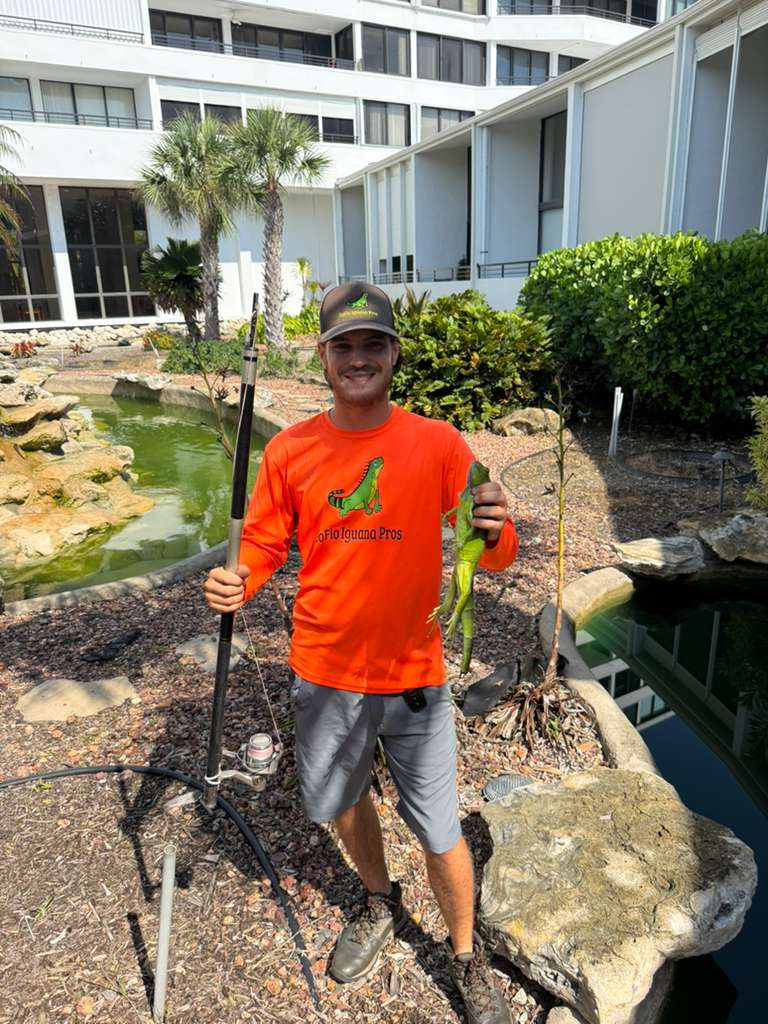
This is why removal comes first. Clear the residents off the bank, and a filled burrow stays filled because there's nothing left to re-open it. Fill while the colony's still there, and you're volunteering to shovel the same soil over and over.
The bank still invites the next one
Even if you removed the digger, an untreated bank invites the next iguana down the waterline. Iguanas travel the water's edge, and a soft, sunny seawall backfill with no barrier at the waterline reads as prime nesting ground to every animal that passes. An empty burrow, or a freshly filled soft spot, is an open invitation.
So collapsing a burrow properly means more than tipping dirt in. It means packing it so it's not a soft re-dig, hardening the waterline edge where they start, and denying the climb routes that funnel new animals onto the bank in the first place. That's the difference between a repair and a redo.
Doing it right, in order
Here's the sequence that actually makes a filled burrow stay filled.
- Remove and trap the resident iguanas on the bank first — no diggers, no re-digging.
- Collapse and pack the burrows properly, not just a shovel of loose dirt on top.
- Harden the waterline edge and the bank so a fresh dig doesn't start where the old one was.
- Guard the climb routes — pilings, rip-rap, trees — so new animals don't reach the bank.
- Re-check through spring nesting, when females return to test the same soft spots.
Why it matters beyond the eyesore
This isn't just about a tidy lawn. Those burrows are what hollow out a seawall's backfill until the cap cracks and the shoreline washes out — the single most expensive iguana repair there is, and the one insurance usually won't cover. A burrow you keep re-filling is a structural clock you keep restarting. Break the cycle properly once and you stop the erosion; keep shoveling and you're just watching it wash away slowly.
Questions we hear
How fast do iguanas re-dig a filled burrow?
Often within a day, sometimes overnight, and frequently a foot or so to the side of where you packed it. If the animal still lives on the bank and the soil still suits it, filling only makes it redo an afternoon's digging. Removal has to come first for the fill to hold.
Do I need to remove iguanas before filling burrows?
Yes — that's the step that makes the difference. Clear the residents off the bank and a properly packed burrow stays packed, because there's nothing left to re-open it. Fill while the colony is still there and you're signing up to shovel the same soil over and over.
Is filling burrows enough to protect my seawall?
Not on its own. Burrows are what hollow out the backfill until the cap cracks, so packing them matters — but only alongside removing the animals, hardening the waterline edge, and guarding the climbs. Done together it stops the erosion; done alone it's a structural clock you keep restarting.
Services in this guide