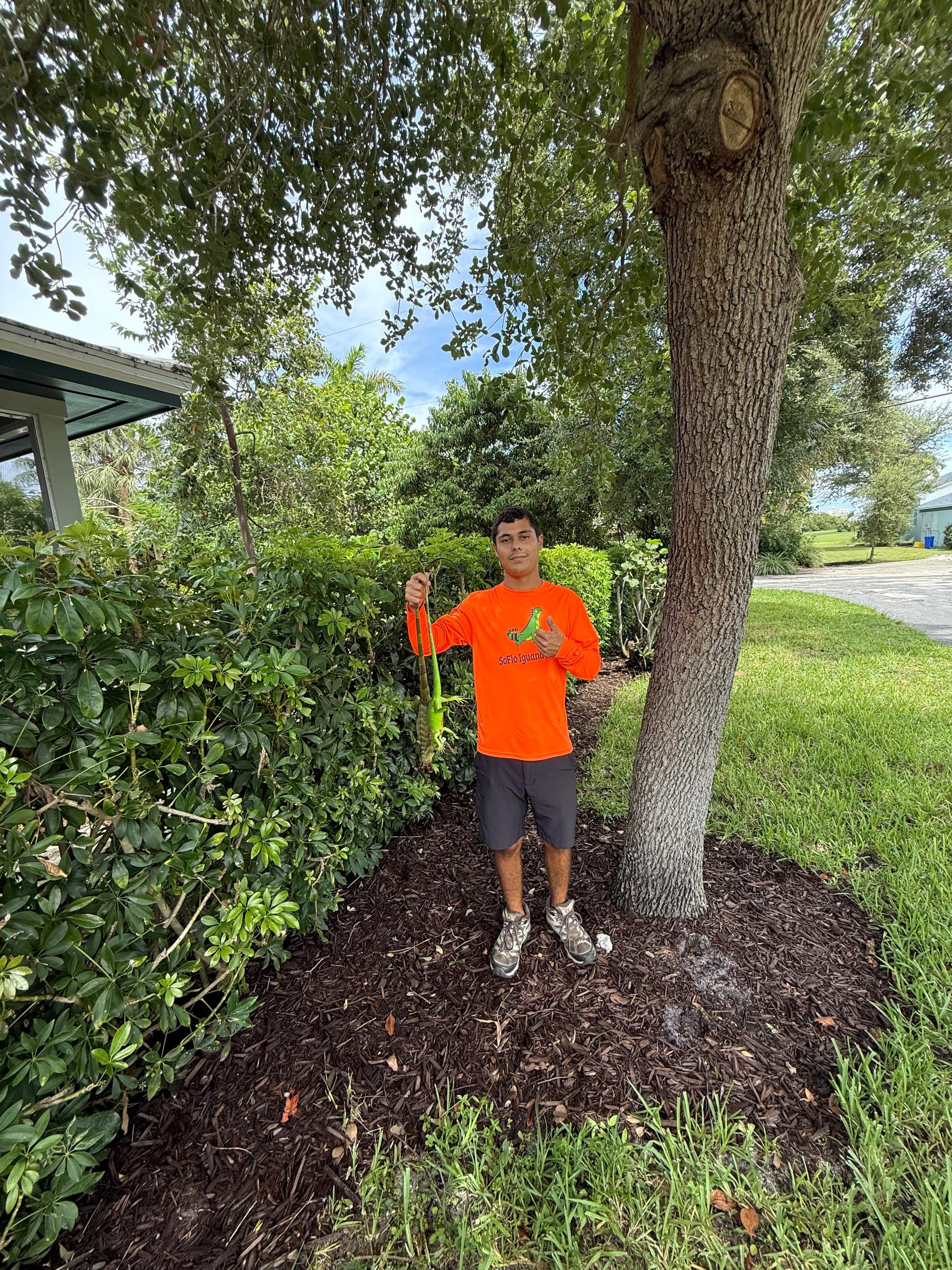
The honest answer is that no product or gadget keeps iguanas out on its own. What works is a layered approach: remove the animals living on the property now, collapse and backfill their burrows so nothing moves back in, and make the yard less attractive so new iguanas keep moving past instead of settling. Any one of those steps alone tends to disappoint — remove without backfilling and the burrows draw a replacement within days; change the plants but leave the burrows and the resident animals barely notice.
On the water it's harder, and we'd rather say so than sell you a fantasy. A finger-canal, lakefront, or Intracoastal lot with a seawall is prime iguana real estate, so 'out of the yard' usually means keeping pressure low rather than hitting zero. The canal is an endless supply line. What you can realistically buy is a yard that's quiet most of the time with the occasional newcomer caught early — not a permanent, sealed border.
What actually moves the needle
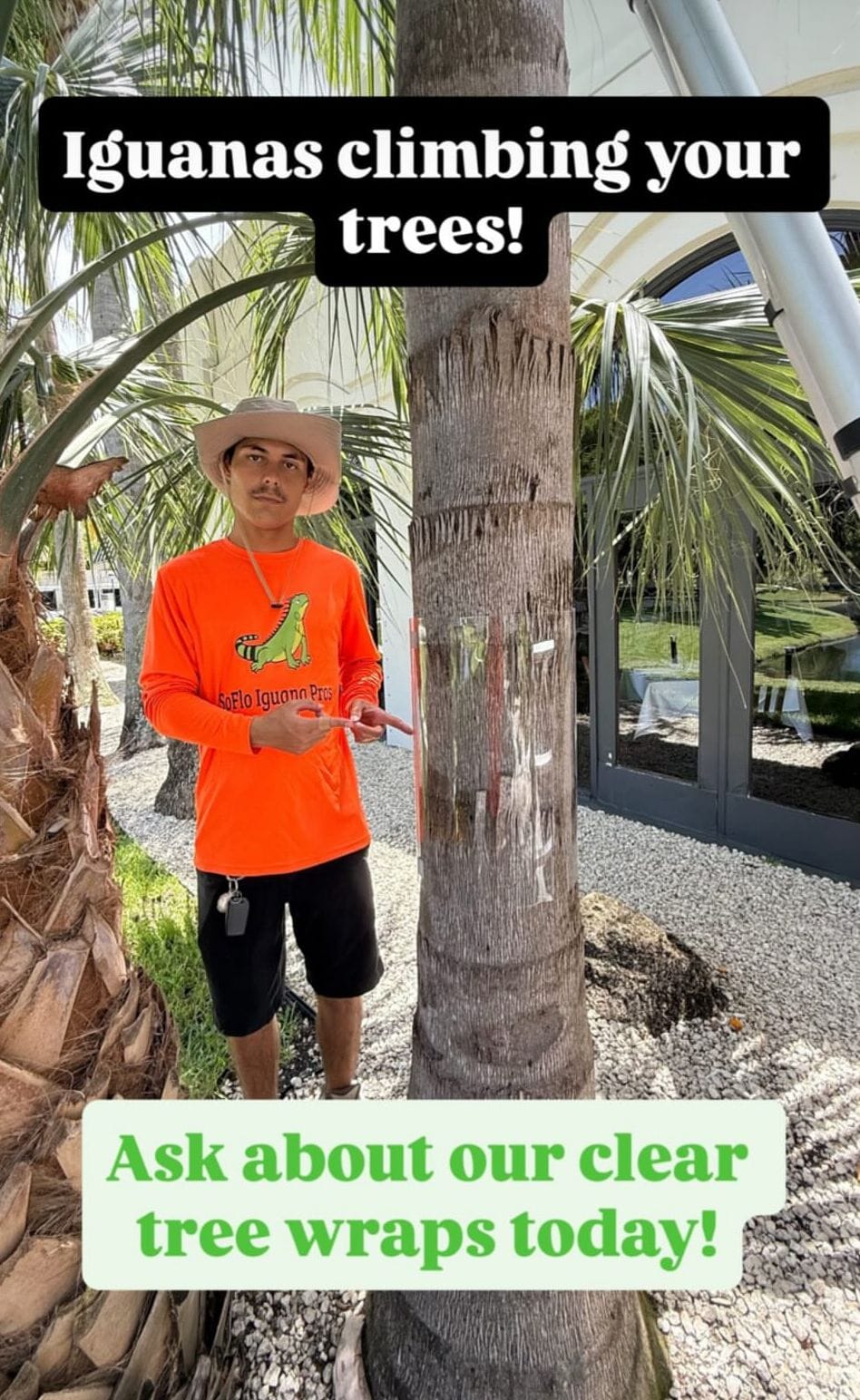
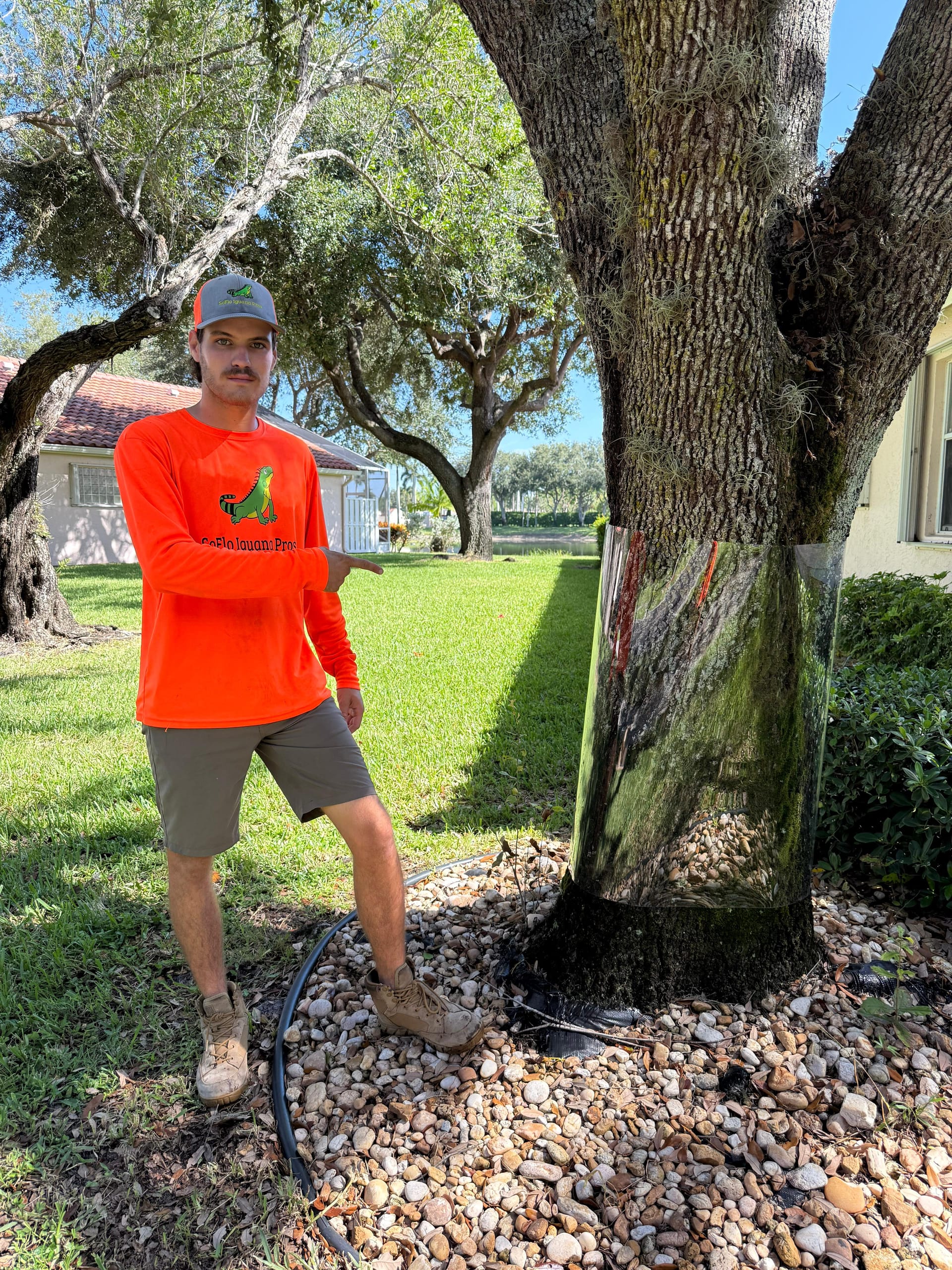
Physical barriers do the heavy lifting anywhere an animal has to physically pass — tree wraps on trunks, guards on dock pilings, screen guards on a pool cage. Everything else is about denying reasons to stay: food, cover, and a ready-made den. The order matters too. We clear the residents and close the burrows first, because barriers around an animal that's already living inside your landscaping just trap the problem in place.
- Remove resident iguanas and collapse their burrows before anything else
- Wrap trees and guard dock pilings the animals actually climb
- Thin or cage the plants they graze; clear fallen fruit daily
- Fill bank and foundation burrows before they're re-dug
- On waterfront, plan for periodic monitoring rather than a one-and-done
Why the gimmicks keep failing
Homeowners usually arrive having already tried the internet's greatest hits — mothballs, garlic spray, a plastic owl, an ultrasonic box. None of those hold up in the field, and we won't pretend otherwise. Iguanas are driven by warmth, food, and safe places to den; they aren't scared off by smell or a prop that never moves, and ultrasonic emitters have no meaningful effect on a cold-blooded reptile. Money spent on those is money not spent on the barriers and removal that actually last.
A realistic plan for a typical lot
For most Palm Beach County properties we start with a walkthrough to find where the animals are coming from and where they're denning. Inland lots with lighter pressure often stabilize after one solid clear-out, burrow backfill, and a few targeted wraps. Waterfront lots get the same plus seawall and dock work and a monitoring cadence. The point is to right-size it — an inland yard doesn't need a waterfront-scale install, and a canal lot won't hold with an inland-scale one.
Common questions
Is there a spray or granule that keeps iguanas away?
No — we've never seen a repellent product hold up in the field, and we won't sell you one. Sprays wash off with the first rain or sprinkler cycle, and granules do nothing an iguana cares about. Barriers, removal, and habitat changes are what actually keep a yard clear.
Can you guarantee no iguanas at all on a canal lot?
On heavy waterfront we're honest that the goal is low, controlled pressure, not zero. A monitored program keeps numbers down and catches newcomers early; a one-time promise of 'none ever' on open water isn't realistic and anyone making it is overselling.
What's the single most effective first step?
Removing the resident animals and immediately backfilling their burrows. That does more than any product, and it stops the property from being a move-in-ready habitat for the next iguana that wanders through.