
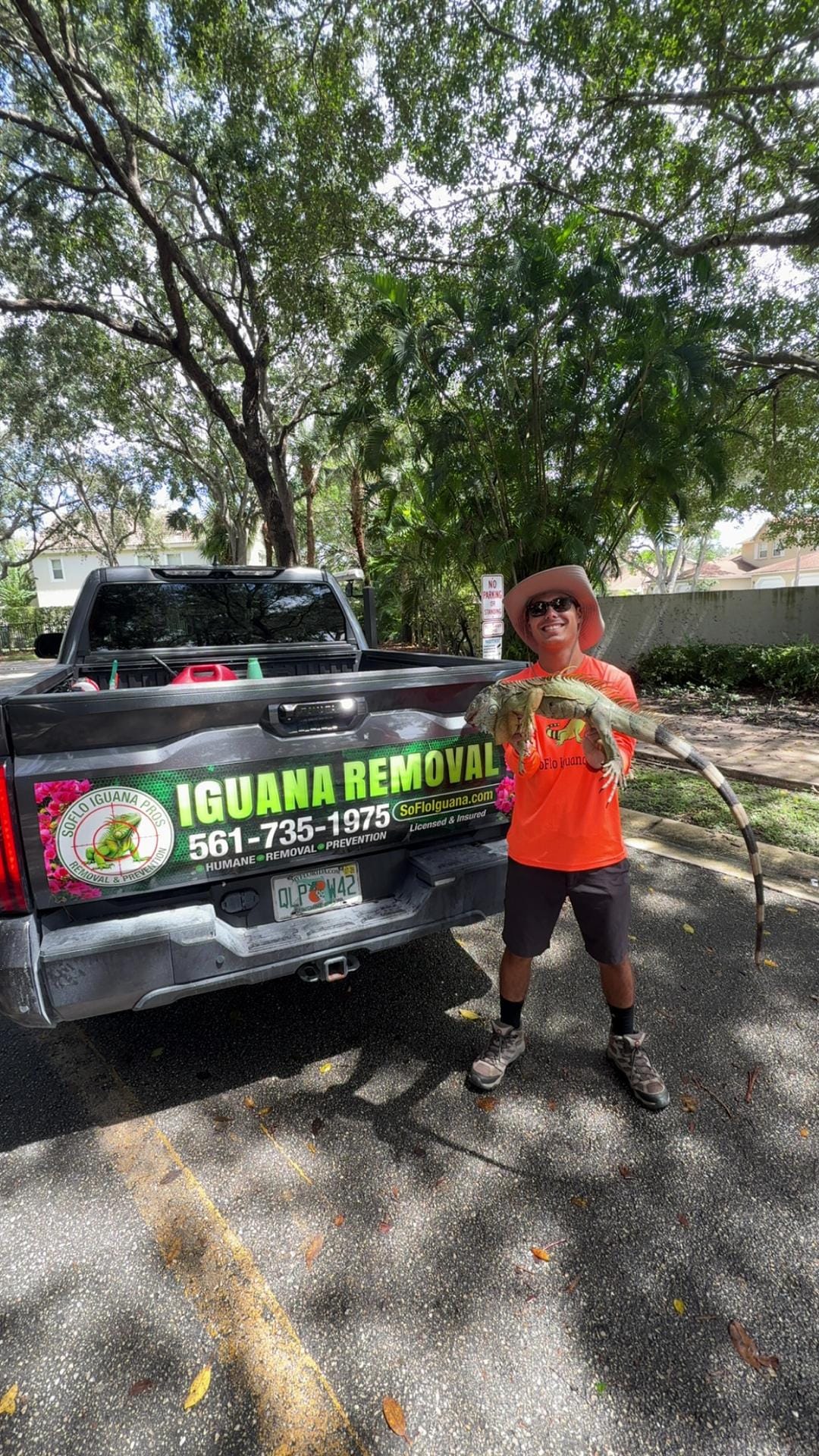
Get iguanas off the roof — and cut off how they got up there
Iguanas on the roof aren't a roof problem — they're a climb-route problem. We clear the ones basking on your tile, gutters, and pool cage, then take away the branch, downspout, or cage frame they used to get up. Same-day across Palm Beach and Broward County, from $125.
Same-day
roofline calls, 7 days
From $125
single visit, no contract
5.0
123+ Google reviews
Licensed
insured · FWC-compliant
A South Florida roof is the best basking spot around.
Iguanas don't climb a roof at random. Warm tile, a clear view above the dogs, and an easy way up all pull them to the same rooflines again and again. Understanding the four reasons is what lets us close the route for good instead of just shooing the animal off.
Barrel tile is a radiator
Clay and concrete tile holds the morning sun longer than anything in the yard. A south-facing roof is the warmest basking spot on the property, so that's where they go.
A flat roof is a private sun deck
No dogs, no people, a clear view of the canal. On mid-rises and flat-roof homes the iguanas bask up top all day and drop onto pool decks and balconies below.
Overhanging branches are the on-ramp
Almost every roof iguana climbs a tree first. A mango, oak, or royal palm that touches the eave is a ladder straight onto the tile — no wall-climbing required.
Gutters and downspouts are ladders
Rough downspouts, screen-cage frames, and trellis against the wall give them the grip to climb the structure itself where there's no tree to use.
A roof iguana is more than a mess.
Left alone, a basking spot on the roof turns into stained tile, worn membrane, and eventually a way into the attic or pool cage. It's the kind of slow damage that's cheap to prevent and expensive to repair.
Droppings on the tile
A resident iguana leaves a steady trail of droppings that streak and stain tile, pool cages, and skylights — and they can carry salmonella, so it's a cleanup you don't want to do by hand.
Claw wear on tile and flat membrane
Daily traffic and claws chip glazed tile and scuff flat-roof and modified-bitumen membranes over time, opening the door to leaks at the exact spots they favor.
Soffit and attic entry
A basking spot today becomes an entry point tomorrow. Iguanas exploit gaps at the soffit, fascia, and screen-frame junctions to get into attics, chases, and pool enclosures.
The drop onto everything below
What's on the roof ends up on the pool deck, the lanai, and the patio furniture underneath it — the roof problem is really a whole-property problem.
Clear the roof, then close the climb.
Removal on its own just opens a vacancy — a new iguana takes the same warm tile within weeks. The lasting fix pairs clearing the residents with cutting off every way back up.
- 1
Read the roofline
The first walk charts how they're getting up — which tree, downspout, or cage frame — and where they bask once they're there. The fix is only as good as that map.
- 2
Clear the residents
We remove the iguanas already using the roof and the pool cage with hand-capture and catch-pole, humanely and same-day where we can, so the daily traffic stops.
- 3
Close the climb routes
We trim or wrap the branches feeding the roof and put smooth guards on the downspouts, pilings, and cage frames they climb — taking away the grip the whole thing depends on.
- 4
Seal the gaps
Soffit, fascia, and screen-frame junctions get closed so a basking spot can't turn into an attic or pool-cage entry. This is the part cheaper operators skip.
- 5
Monitor if the pressure's high
On waterfront lots where new iguanas keep arriving, a light monitored program holds the roofline instead of you calling back every few weeks.
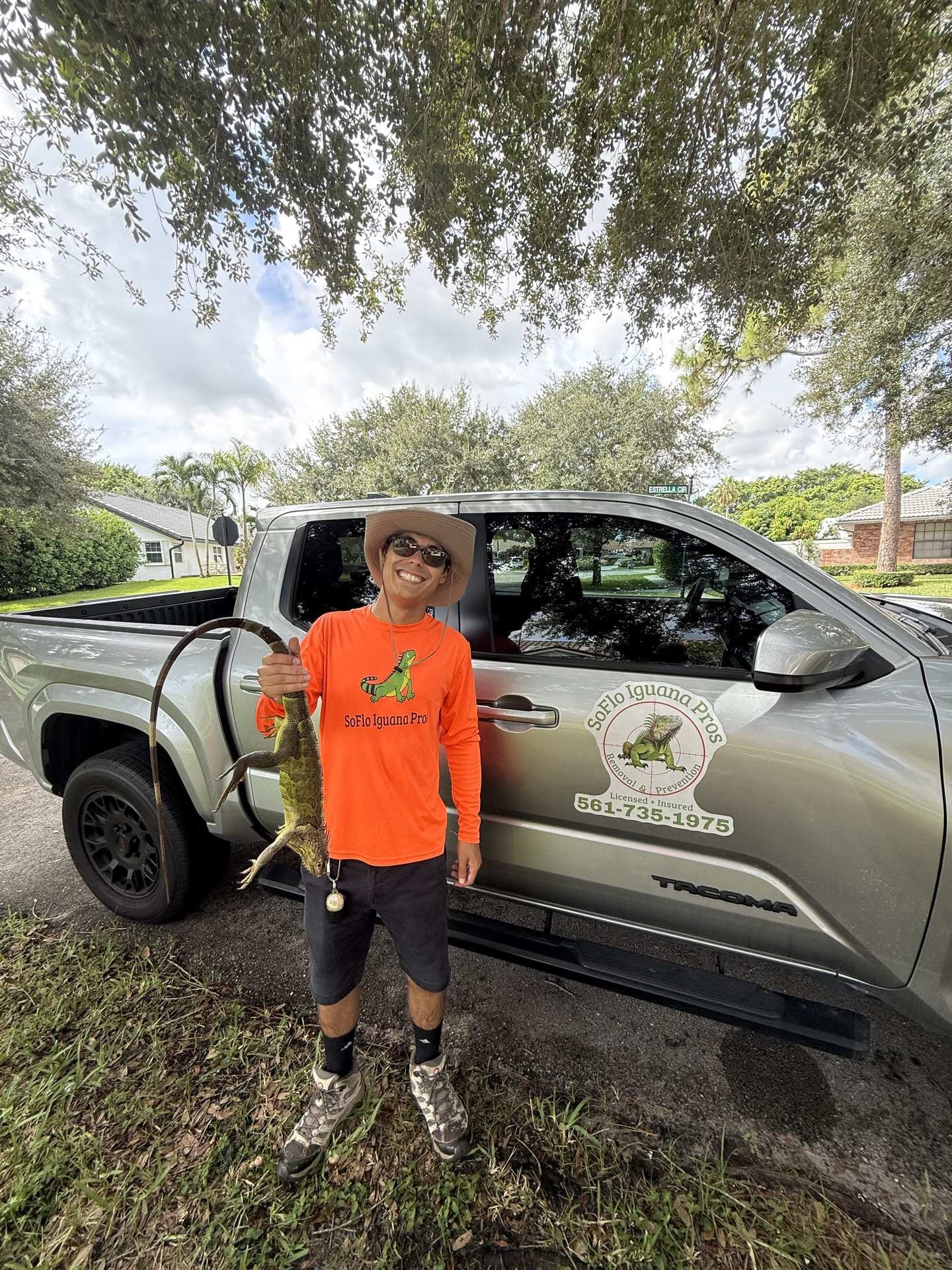
Shooing one off the tile fixes nothing.
Anyone can chase an iguana off a roof for an afternoon. The reason it comes back is that the route up is still there. We handle both halves in one visit — clear the residents humanely, then take away the branch, downspout, or gap that made the roof reachable in the first place.
- Hand-capture and catch-pole — no poisons, handled to FWC guidelines
- Branches trimmed or wrapped so the tree stops feeding the roof
- Soffit, fascia, and screen-frame gaps closed against entry
Single visits from $125.
A one-time roofline clear-out starts at $125. That covers the walk, removing the iguanas using the roof and pool cage, and the climb-route work that keeps the next one from taking their place. The property walk and the written quote are free, and you see the number before we start — no contract you can't cancel.
What a roof visit includes
- A read of the roofline to find how they're getting up and where they bask.
- Hand-capture and catch-pole removal of the resident iguanas, humanely.
- Branch trimming or wraps, and smooth guards on the downspouts and cage frames they climb.
- Soffit, fascia, and screen-frame gaps sealed so a basking spot can't become an attic problem.
What sets the price
Mostly how they're reaching the roof and how much climb-route and sealing work that takes — a single overhanging branch is a quick fix, while a screen cage against the water with multiple climb points is more involved. Heavy droppings or a pool-cage full of residents add time too. Either way you get the number in writing first.
When a program beats a one-off
On a waterfront lot where iguanas keep arriving off the seawall, repeat roof calls add up. A light monitored program paired with prevention usually holds the roofline for less than calling us back every few weeks. We'll tell you honestly which one your property needs.
Roofline calls across Palm Beach & Broward.
Barrel-tile homes on the coast, flat-roof mid-rises downtown, and screen cages backing up to the water — we work them all. Based in Lake Worth, so same-day roof calls stay same-day. Pick your city for the local read.
Off the roof, and staying off.
Roofline and pool-cage calls from around Palm Beach County — the removal, plus the tree wraps and guards that take away the climb.
Tap any photo to enlarge
Roofs cleared, gaps closed.
Roof iguana questions.
Iguanas on the roof every morning?
Call or text Nick — he'll find the climb route and tell you what it takes to close it.
Call (561) 735-1975How do iguanas get on my roof in the first place?
Almost always by climbing something that touches or leans against the house — an overhanging tree branch, a rough downspout, a screen-cage frame, or a trellis. Iguanas are strong climbers but they need grip and a route. Take away the on-ramp and the roof stops being reachable, which is why we always pair removal with cutting off the climb.
Is getting iguanas off the roof safe — will your crew damage the tile?
We work the roofline carefully and do most of the removal and prevention from ladders and the ground where we can, rather than tramping across fragile tile. The goal is to protect the roof, not add wear to it. If a job genuinely needs roof access we tell you up front and work to avoid loading or cracking tile.
What keeps them from climbing back up after you remove them?
Cutting the routes. We trim or wrap the branches feeding the roof, put smooth guards on downspouts and cage frames they use to climb, and seal the soffit and screen gaps they exploit. Removal clears today's iguanas; the climb-route work is what stops the next one — on the roof it matters even more than in the yard.
Can you also clean up the droppings and close the soffit?
We remove the animals and close the entry gaps at the soffit, fascia, and screen frames as part of the prevention work. For heavy droppings on tile or in a pool cage we'll tell you honestly what we can knock down on-site versus what's a job for a pressure-washing crew — and, because iguana droppings can carry salmonella, we'd rather you didn't handle a bad buildup yourself.
Do iguanas really damage a roof, or is it just messy?
Both. The mess is real — streaked droppings on tile and skylights — but the wear matters too: claws and daily traffic chip glazed tile and scuff flat-roof membranes, and the gaps they widen at the soffit and screen frame become leak and entry points. Catching it early, before a basking spot becomes an attic problem, is the cheap version.
How much does roof iguana removal cost?
Single visits start at $125, and the exact number depends on how they're getting up, how many are using the roof, and how much climb-route and sealing work the property needs. The property walk and the written quote are free, and the price is set before we start — no contract you can't cancel. On heavy waterfront lots a light monitored program is often the cheaper path than repeat one-off calls.