Repellents, one-off grabs, and filling a single burrow feel like progress. Here's why they don't hold — and what does.
We get called to finish a lot of DIY iguana jobs, and it's almost always the same handful of misses. There's no shame in trying — the store sells the stuff, and the videos make it look simple — but most of what's marketed is aimed at the symptom you can see, not the animal and the habitat producing it.
The core problem is that iguana pressure on a South Florida waterfront property is a supply problem. As long as the bank suits them and there's a colony on the next canal over, the yard refills. Anything that doesn't reduce supply or make the property genuinely unsuitable is just temporary.
The usual dead ends
Here's what people have almost always tried by the time they call us, and why each one fades.
- Repellents and garlic or pepper sprays wash off in the first afternoon storm, and iguanas learn to ignore them within days when nothing bad actually happens.
- Ultrasonic boxes and fake owls get tuned out fast — the animals habituate to a scarecrow that never follows through.
- Filling one burrow does nothing if the bank still suits them; they re-dig overnight or simply move a foot over.
- Grabbing the visible ones leaves the burrows, the eggs, and the climb routes that reseed the yard within weeks.
- Hoping a cold snap will handle it — the survivors breed the numbers right back by summer.
Why grabbing a few never finishes the job
The most understandable mistake is thinking removal means catching the iguanas you can see. But the ones sunning on the dock are the tip of it. Under the bank there are burrows you haven't found, clutches of eggs incubating from the spring, and climb routes up the pilings and trees that funnel new animals in from the waterline. Take the visible five and the property looks better for a week, then refills from everything you left behind.
There's also the legal and humane side people don't think about. Green iguanas are handled under specific state rules, a trap left unchecked isn't legal or humane, and dispatching an animal has to be done correctly. It's easy to create a worse problem — or a citation — trying to shortcut it.
What actually holds
The fix is unglamorous: map the runs and burrows, remove and trap the animals correctly over time, collapse the dens, and cut off the climb routes on trees, pilings, and rip-rap. It's labor and know-how, not a spray, which is exactly why it lasts. On a heavily pressured waterfront it's also ongoing rather than one-and-done, because the neighbor's bank keeps sending you candidates.
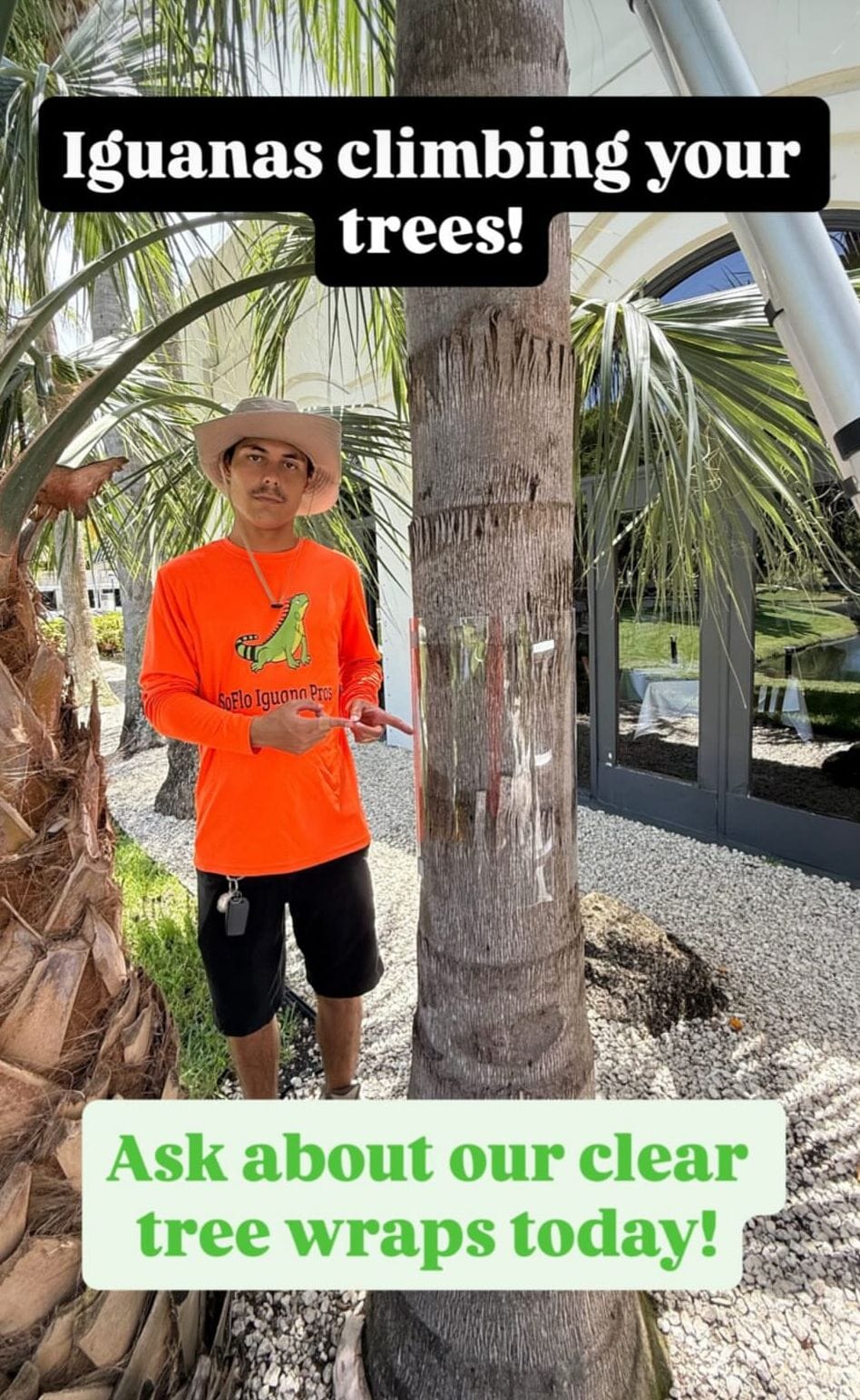
That's not a knock on doing your own prevention — thinning the plants they eat, securing food, and wrapping a tree all genuinely help. It's that prevention keeps new ones from settling; it doesn't clear the ones already denned in your bank. The two go together.
Questions we hear
Isn't a trap from the hardware store enough?
Placement and monitoring matter more than the trap itself. A cage set off the animal's route, or one left unchecked for days, catches nothing useful — and leaving a trapped animal sitting is neither humane nor legal. The trap is the easy part; reading the property is the part that makes it work.
Can I make my yard iguana-proof myself?
You can make it a lot less attractive — thin the plants they graze, secure pet food and fallen fruit, wrap a tree or piling. But heavy waterfront pressure usually needs removal plus real burrow collapse and climb-route work to actually hold, because prevention alone won't clear animals already living in your bank.
Why do the iguanas keep coming back even after I catch some?
Because you're on a waterline they travel, and the burrows, eggs, and climb routes you left behind keep producing more. Removing the visible animals without addressing the habitat is like bailing a boat without plugging the hole — it feels like progress right up until it refills.
Services in this guide