
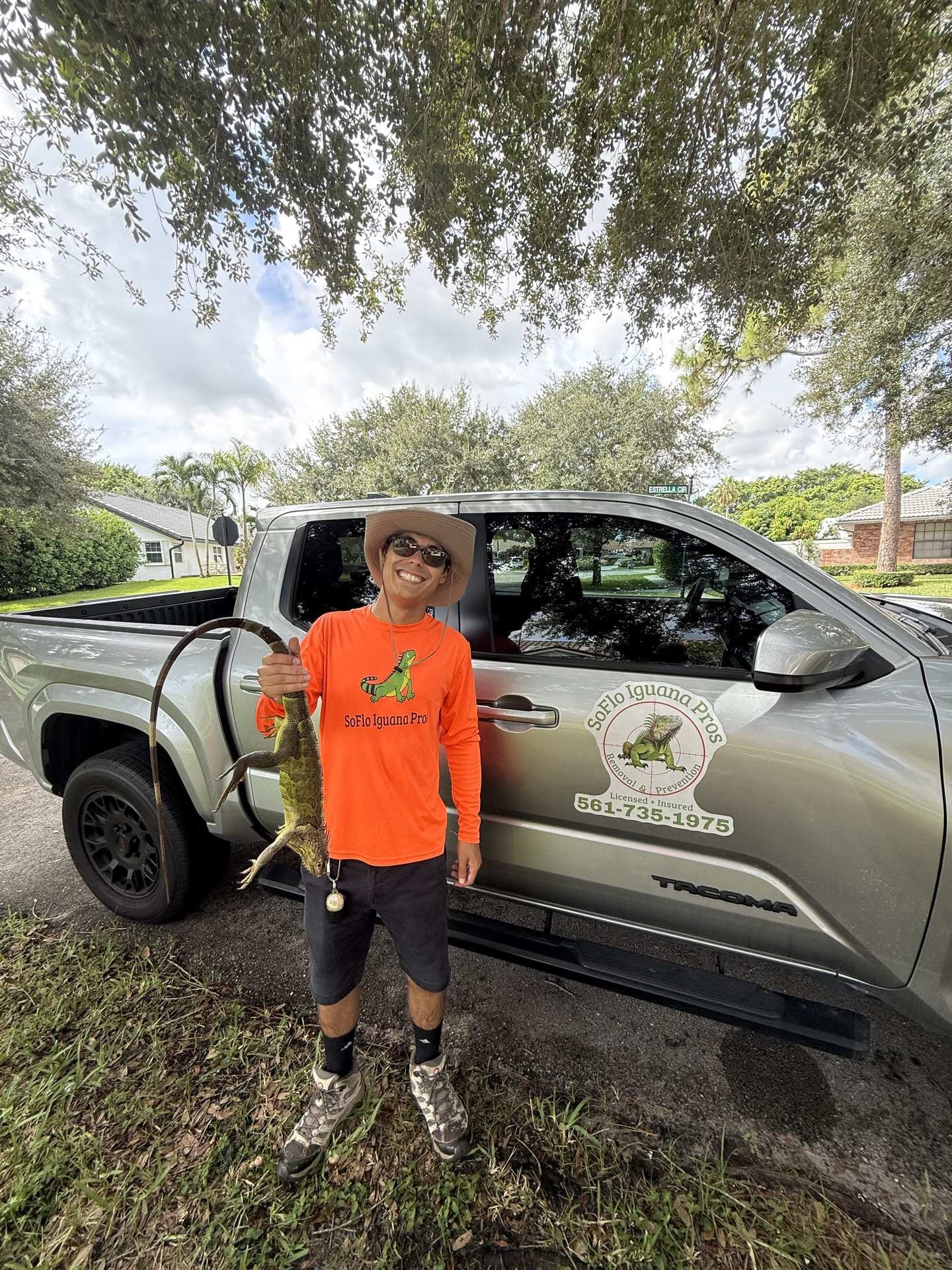
Iguana removal in Deerfield Beach, FL
Deerfield Beach's east side runs on canal and Intracoastal frontage, and that is exactly where iguanas dig in. We run scheduled Broward routes through The Cove, Deerfield Island, and the neighborhoods along the Hillsboro Canal.
Same-day
7 days a week
$125+
single visit, no contract
5.0
123+ Google reviews
Licensed
insured · FWC-compliant
Where iguanas cause trouble in Deerfield Beach
The heaviest pressure sits along the Hillsboro Canal on the north edge and the finger canals feeding into it around The Cove, where iguanas tunnel into seawalls and slide down the banks at dawn. Deerfield Island Park's mangrove edge acts as a breeding reservoir that keeps reseeding the surrounding blocks. On the Intracoastal side near Royal Palm Waterway, homeowners deal with animals basking on docks and roofs and fouling pool cages. West in Deer Creek and near Century Village the golf-course lakes and retention ponds carry their own populations.
Most pressure in Deerfield Beach tracks the water — Intracoastal Waterway, Hillsboro Canal, Royal Palm Waterway, Deerfield Island Park mangroves. If your property backs up to any of it, burrowing and basking are almost certainly part of the picture, and the part that does the structural damage.
Intracoastal Waterway seawalls
Iguanas bask on the cap at first light and dig dens straight into the bank until the wall starts to fail.
Burrows by foundations
Nesting burrows run under patios, driveways, and A/C pads — the hardscape settles and cracks above them.
Roofs, cages & lanais
They climb to bask on flat roofs and screens, then drop into pools and pool cages they can't climb out of.
Fruit trees & thick beds
Hibiscus, sea grape, and any fruit tree are both a buffet and a hideout right up against the house.
How we work in Deerfield Beach
Property mix here swings from waterfront single-family homes and townhomes on the east side to condo and HOA communities inland, so we tailor the plan to each. We start with a free property walk, then either a single visit from $125 or a monitored program from $99/mo for canal-front lots that keep drawing new iguanas off the water.
The method is the same one that earned our 5.0 across the county, and it stays inside FWC guidelines from the first walk to the follow-up:
- 1
Free property walk
We map the seawall, yard, and roofline to find the burrows, runs, and basking spots before we quote a dollar.
- 2
Humane removal
Reachable iguanas come off by hand and catch-pole — no poisons, no air-rifle theatrics near homes.
- 3
Monitored trapping
Traps go on the exact runs iguanas use, checked on a schedule and cleared promptly under FWC rules.
- 4
Prevention
Burrow collapse, tree wraps, and piling guards cut off the routes so the property stops refilling.
We cover the whole county.
Deerfield Beach is one of the cities we work end to end from our Lake Worth base. If your problem sits over a city line, pick the nearest one for its local rundown.
Every part of the job, in one place.
Removal is where most Deerfield Beach calls start, but the fix usually runs through trapping and prevention — and we handle the rest of the county's nuisance wildlife too.
What Deerfield Beach customers say.
Managing a community, HOA, or business in Deerfield Beach?
We run documented, scheduled programs for boards, property managers, and commercial sites. See our commercial programs for Deerfield Beach.
Deerfield Beach iguana removal questions.
Got iguanas in Deerfield Beach?
Call or text Nick — he'll tell you what's going on and what it takes, straight.
Call (561) 735-1975Do you cover the canals along the Hillsboro on Deerfield's north side?
Yes. The Hillsboro Canal and its finger canals through The Cove are one of our main focus areas here, since iguanas burrow into those seawalls and undermine them over time.
How fast can you get to Deerfield Beach?
We are based in Lake Worth, so Deerfield is a scheduled stop on our regular Broward routes rather than a same-day call. We book you into the next run and give you a clear window.
Iguanas keep coming back to my seawall. Why?
Canal-front lots sit on a travel corridor, so removing the current animals is only half the job. A monitored program from $99/mo keeps the seawall burrows knocked down and catches new arrivals before they settle.