Iguana burrows are the quiet reason seawall caps crack and banks wash out. Here's how the damage happens and how to stop it before it's a repair bill.
On the Intracoastal and the finger canals, the most expensive iguana damage is the kind you can't see: burrows dug into the soil behind and beneath your seawall. Left alone, they hollow the backfill out until the cap settles, cracks, and the bank starts washing into the water. By the time it's visible from the dock, it's usually a repair, not a patch.
We see this most in the older waterfront pockets of Boca Raton, Delray Beach, Lake Worth Beach, and the West Palm and Lantana canals, where the walls have been in the ground for decades and the soil behind them was never meant to be tunneled through. A single well-established colony can turn a sound wall into a slumping one over a couple of nesting seasons.
Why seawalls are iguana magnets
A seawall checks every box an iguana is looking for. The cap is a long, sun-warmed basking bench with a clear view. The soft backfill behind it is the easiest digging on the property. And the water is a one-second escape from anything that spooks them — a dog, a person, a hawk. Put those three together and you've built ideal habitat without meaning to.
That combination is why waterfront properties take the heaviest pressure, and why a single neglected seawall on an otherwise tidy street can host a colony that spills onto every yard around it. If your neighbor's bank is honeycombed and yours isn't, you're still on the flight path — iguanas travel the waterline, not the property lines.
How the damage progresses
It rarely announces itself. A female digs a nesting burrow into the backfill in spring, and that tunnel becomes a den that gets reused and extended. Over months, a network of tunnels moves soil out from behind the wall, and rain and tidal action pull more of it through the gaps. The cap loses the support underneath it, hairline cracks open, and sections begin to tip toward the water.
The tell-tale signs, in rough order, are worth knowing so you catch it early rather than late.
- Half-moon holes at the waterline or in the grass right behind the cap, often with a fan of loose soil.
- Soft or sunken spots in the lawn within a few feet of the wall that give underfoot.
- Hairline cracks in the cap, or seams opening between cap sections.
- Sod, pavers, or a walkway near the wall that has started to settle unevenly.
- Erosion channels where mulch or soil is visibly migrating toward the water after rain.
What actually protects the wall
Protecting a seawall is a two-part job: get the animals off it, then take away what makes it diggable and climbable. Skip the first part and you're just filling holes for something that's still living there; skip the second and you're clearing animals that will be replaced from the next bank over within weeks.
- Remove and trap the resident iguanas along the cap and bank first — an empty burrow is just an invitation otherwise.
- Collapse and properly backfill the existing burrows so the wall stops eroding and the tunnels can't be re-opened overnight.
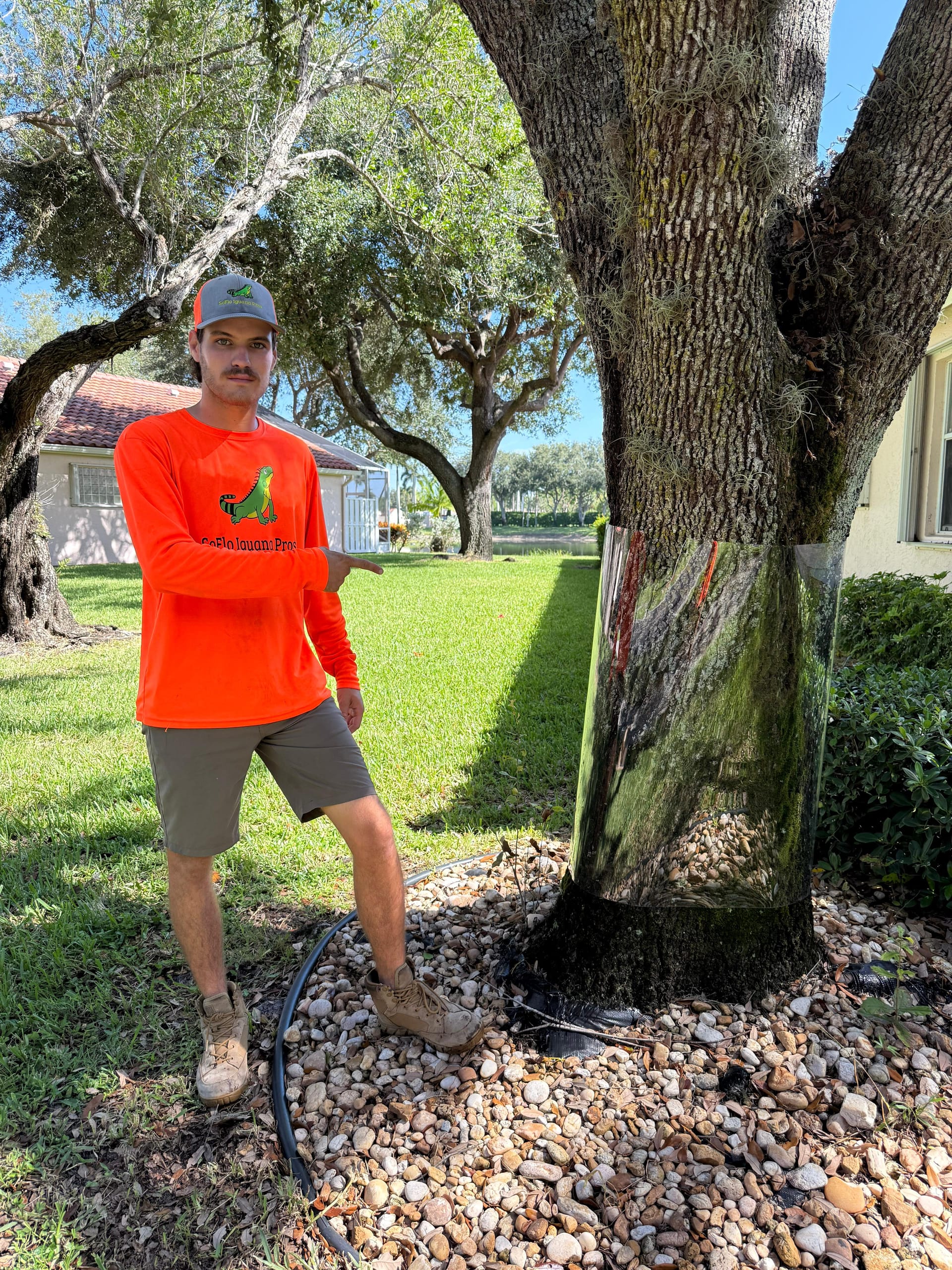
- Guard the climb routes — dock pilings, rip-rap, and ladders — so they can't simply re-colonize the edge.
- Keep it monitored through nesting season, when females dig fresh nesting burrows into the same banks.
When it's already cracking
If your cap is already showing seams or the bank is slumping, controlling the iguanas won't reverse the structural damage — that's a marine contractor's job. What removal and burrow work do is stop the cause, so the repair you eventually pay for isn't undone by the same animals a season later. We're glad to coordinate our timing with a seawall contractor so the backfill goes in clean and stays that way.
Questions we hear
Does homeowners insurance cover iguana seawall damage?
Usually not — gradual burrowing and earth movement are typically excluded, which is exactly why prevention tends to be far cheaper than the eventual repair. Read your specific policy or ask your agent, because wording varies and we can't speak for your carrier.
Can you just fill the burrows?
Filling alone rarely holds. If the iguanas are still using the bank they re-dig within days, often a foot to either side of where you packed. The burrow work has to come paired with removal and climb-route prevention, or you're paying to shovel the same soil twice.
My seawall already has cracks — is it too late?
It's not too late to stop the cause, which is the point of removal and burrow collapse. But an already-cracked cap or a slumping bank is a structural repair for a marine contractor. Getting the iguanas out first means that repair isn't quietly undermined again the following spring.
Services in this guide