The waterline is where iguanas travel and where the expensive damage starts. Here's what actually guards a dock and a seawall — and what just looks busy.
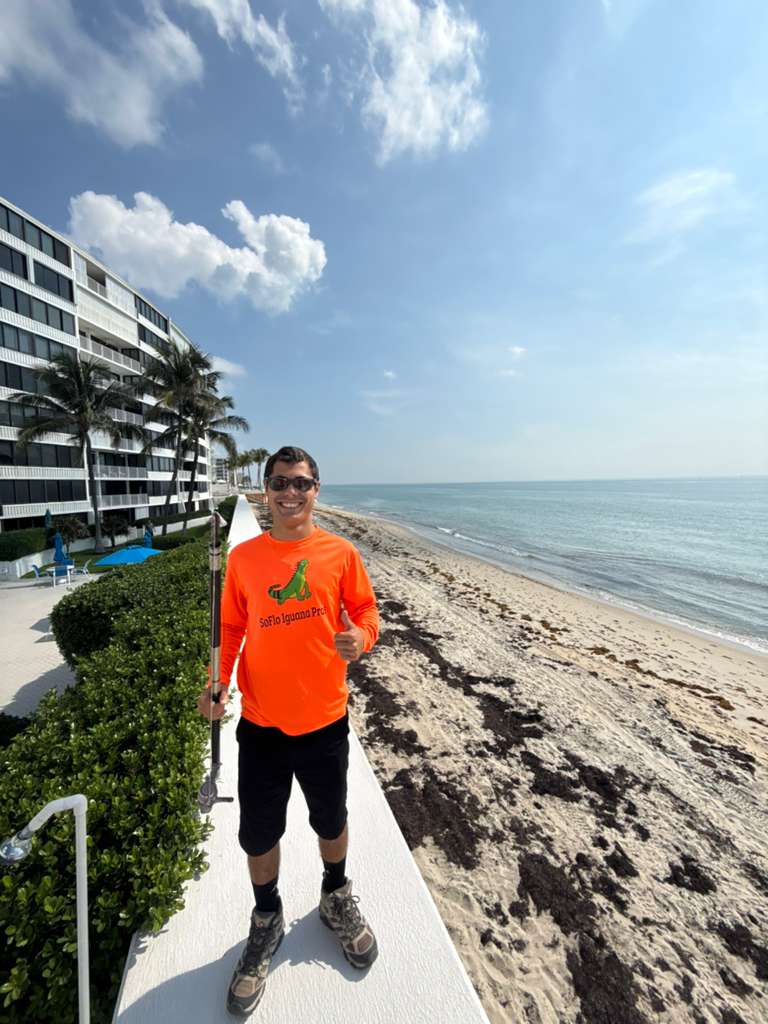
The waterline is the whole game on a Palm Beach County waterfront. It's the iguanas' highway, their basking bench, their easiest digging, and their one-second escape hatch all in one. If you're going to guard anything, guard the dock and the seawall, because that's where the animals come from and where the costliest damage begins.
Guarding the water's edge is different from wrapping a tree in the middle of the lawn. The animals are coming along the bank and up out of the water, not just dropping from the canopy, so the barriers have to address the pilings, the rip-rap, the ladders, and the cap itself. Here's what does the job and what just looks like effort.
Why the waterline pulls the heaviest pressure
A seawall cap is a long, sun-warmed basking bench with a clear view and water a body-length away. The backfill behind it is the softest digging on the property. Dock pilings and rip-rap are ready-made climbs, and a dock ladder is a literal staircase. You couldn't design better iguana habitat on purpose.
That's why waterfront yards take the pressure they do, and why a barrier plan here matters more than anywhere else on the lot. It's also why guarding the edge without first clearing the residents just pens the current colony against the food and the water — the order matters as much as the hardware.
Guards that hold on a dock
Docks give iguanas several ways up, so the guards have to cover each one. The goal is to remove every easy vertical and horizontal route onto the decking.
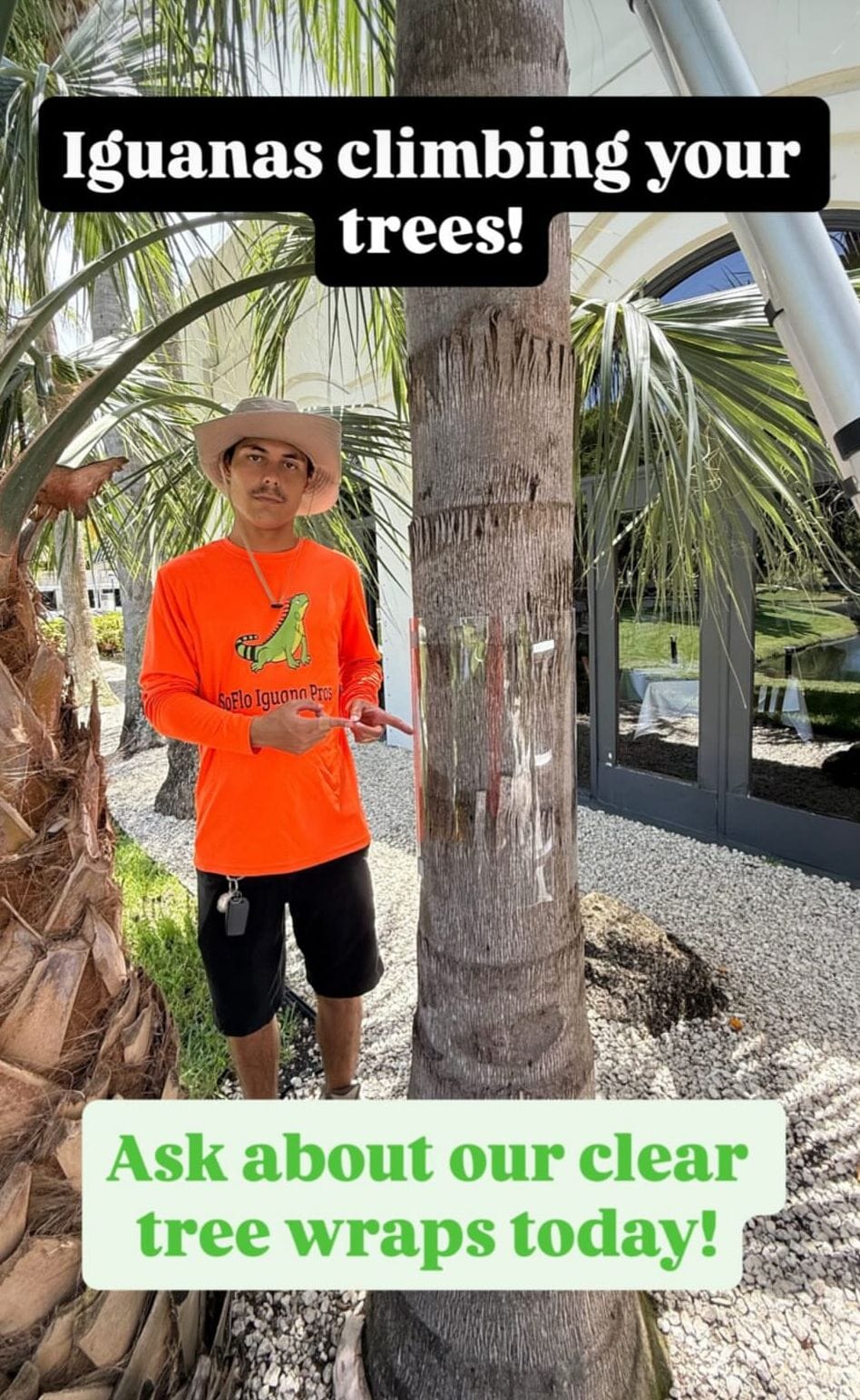
- Smooth piling wraps sized so an animal can't reach over or grip behind them.
- Cover or block dock-ladder rungs when the ladder isn't in use — it's a free staircase otherwise.
- Deny the rip-rap climb where the rock meets the dock or the cap.
- Close gaps under and behind the decking where they'd shelter out of sight.
Guarding the seawall itself
The seawall is the higher-stakes structure, because the damage there is the backfill hollowing out until the cap cracks — a marine-contractor repair, not a patch. Guarding it is a two-part job: stop the digging and take away the climb.
- Collapse and properly pack existing burrows so the wall stops eroding and can't be re-denned overnight.
- Harden the waterline edge where the bank meets the cap — the spot they re-dig first.
- Guard the climb points along the cap so cleared ground doesn't get re-colonized off the next bank over.
- Keep it monitored through spring, when females return to dig fresh nesting burrows into the same backfill.
What doesn't hold at the waterline
The waterline is where gimmicks fail fastest. Sprays wash straight off into the canal, decoys get ignored, and a single filled burrow is re-dug by morning if the bank still suits the animal. Physical barriers, real burrow collapse, and removing the residents are the only things that hold against pressure this heavy.
And if the cap is already cracking or the bank is slumping, controlling the iguanas won't reverse it — that's a seawall contractor's repair. What the guarding does is stop the cause, so the repair you eventually pay for isn't quietly undermined by the same animals a season later. We're glad to time our work around a marine contractor's so the backfill goes in clean and stays that way.
Questions we hear
Do piling wraps really keep iguanas off a dock?
Yes, when they're smooth, flush, and tall enough that a big adult can't reach over or grip behind them — same rules as tree wraps. The catch on a dock is that pilings are only one route; you also have to handle the ladder, the rip-rap, and gaps under the decking, or the animals just use those instead.
Can I guard the seawall without removing the iguanas first?
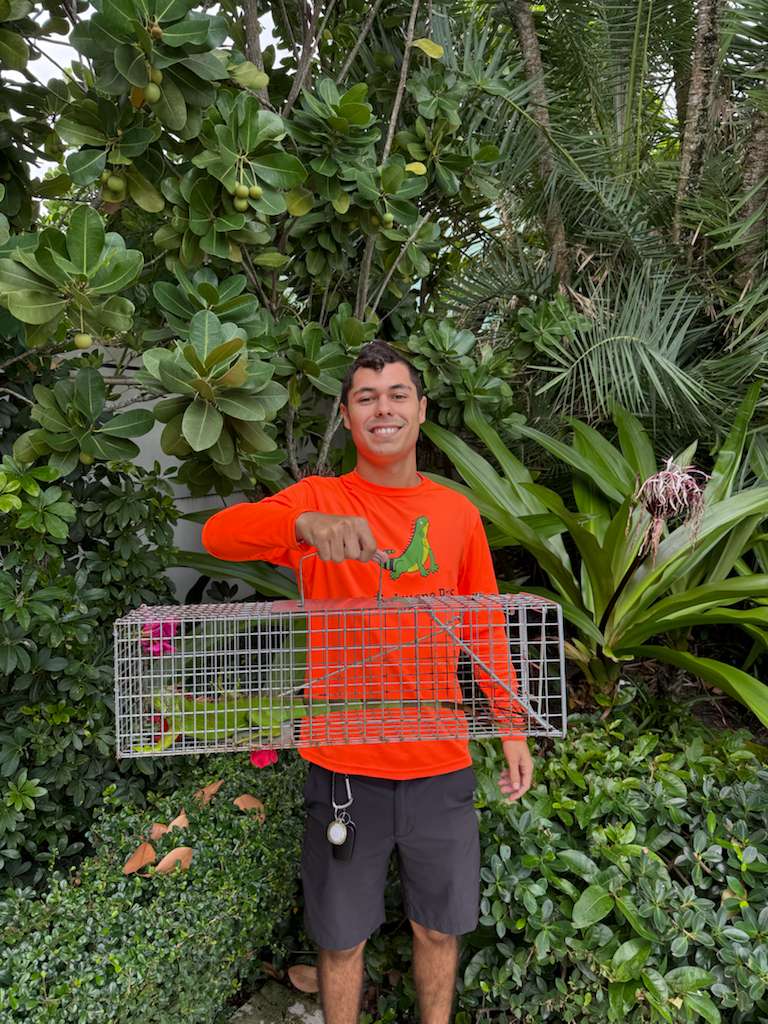
You shouldn't. Hardening a bank that's still occupied just pens the current colony against the food and the water. The order is: clear the residents, collapse the burrows, then guard the edge and the climbs. Skip the first step and you've locked the problem in rather than out.
My seawall is already cracking — will guards fix it?
No — an already-cracked cap or a slumping bank is a structural repair for a marine contractor. What burrow collapse and climb guards do is stop the cause, so that repair isn't undone the following spring. We'll coordinate timing with your seawall contractor so the new backfill stays intact.
Services in this guide