If your yard backs up to a canal, lake, or the Intracoastal, this is the short list that keeps iguanas from settling in.
Waterfront is the hardest iguana assignment there is — soft banks, sun-warmed seawalls, and an instant escape into the water. You can't change the address, but you can make the property the hard one on the block, so the colony from the next canal settles somewhere easier. Here's the checklist we walk owners through when we assess a canal, lake, or Intracoastal lot.
None of these is a magic fix on its own. Prevention works as a stack — each layer makes the property a little less worth the effort, and together they tip an iguana toward moving on. It also assumes the resident animals have already been cleared; hardening a bank that's still occupied just locks them in.
The core checklist
Work these in roughly this order — clear first, then close the routes, then take away the food and the shelter.
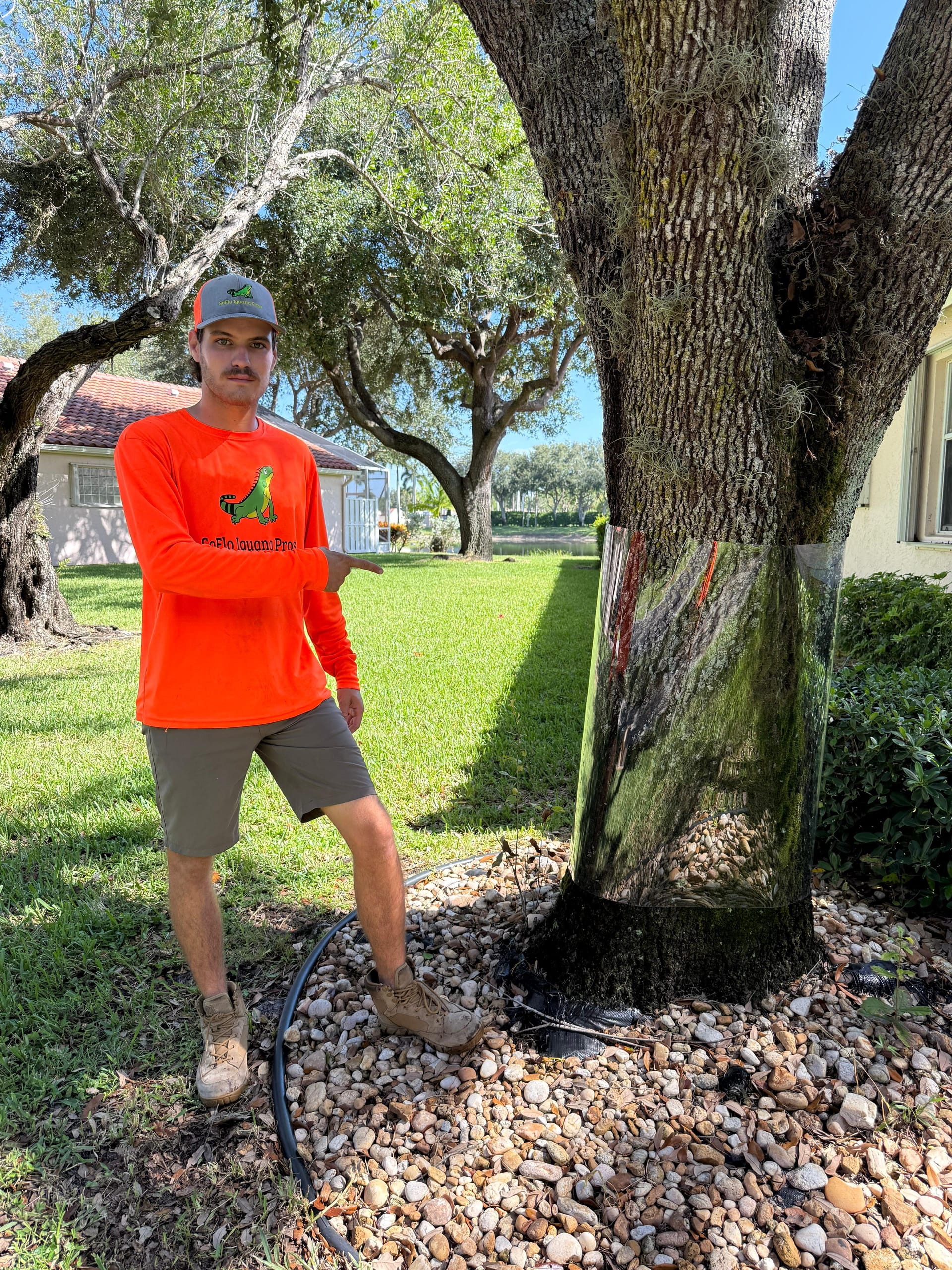
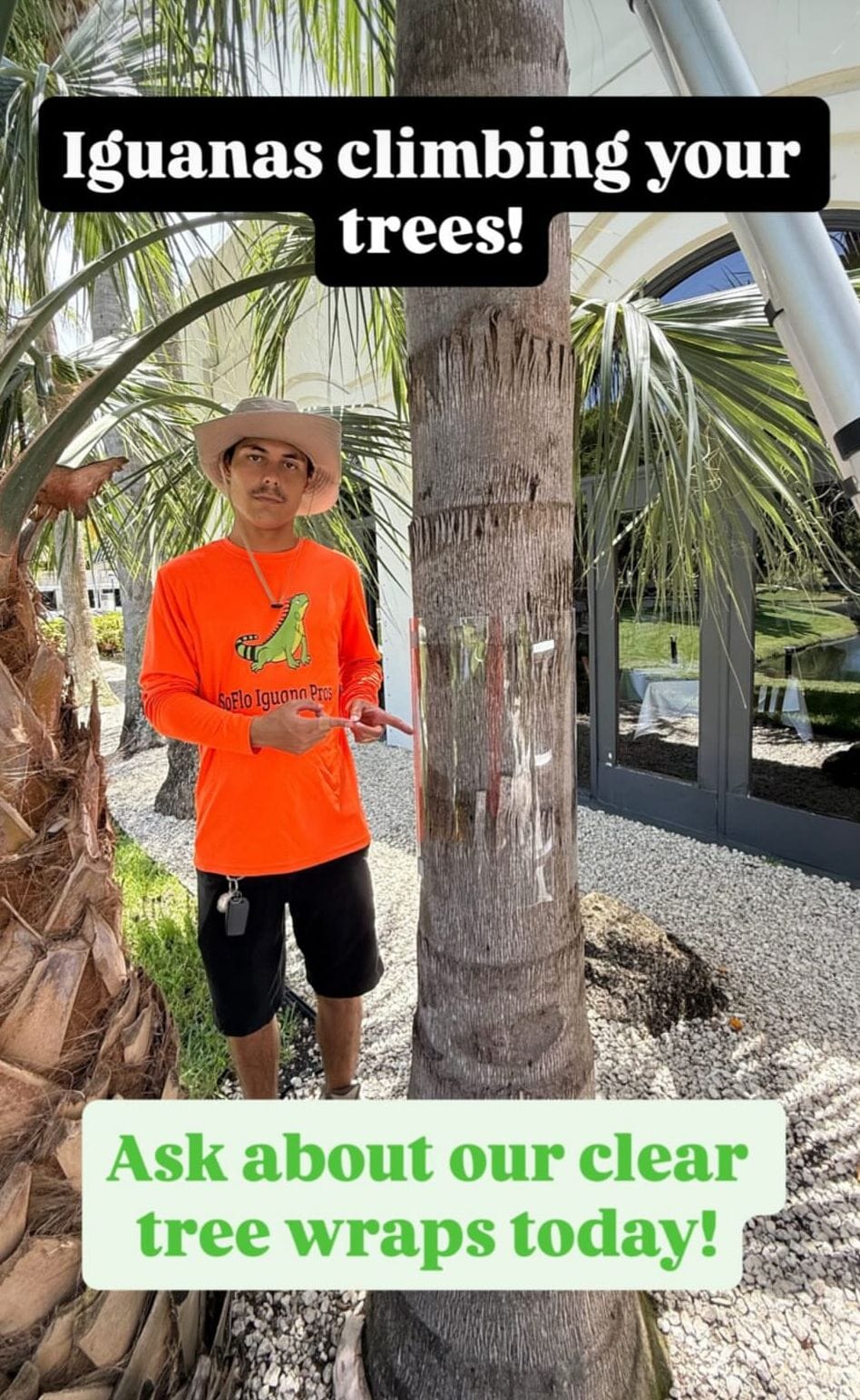
- Wrap the climbs: smooth clear guards on trees and dock pilings so they can't reach the canopy, roof, or dock.
- Collapse and pack any burrows along the bank and against the foundation — properly, so they don't re-open in a week.
- Harden the waterline edge where the bank meets the cap, the spot they re-dig first.
- Thin or cage the buffet: hibiscus, bougainvillea, and fruit trees near the house that draw them in.
- Close the gaps: soffits, weep holes, and screen frames they use to get onto the roof or into the pool cage.
- Re-check through nesting season — spring is when they test the bank again.
Why the climb routes matter most
If there's one thing on the list that punches above its weight, it's the tree and piling wraps. Iguanas are climbers first; a lot of the damage — droppings on the roof, animals in the pool cage, chewed canopy fruit — starts with an easy vertical route up a palm, an oak, or a dock piling. A smooth band at the right height simply removes the grip they need, and a big adult can't shimmy past it the way it can step over a short one.
The catch is fit. A wrap set too low, too loose, or too short is a wrap a determined adult reaches over or defeats. This is the piece people most often get wrong on their own, and it's cheap insurance to get sized right.
Keeping it up through the seasons
Waterfront prevention isn't a one-weekend project you finish and forget. Spring nesting sends females back to test the bank, summer rains soften the soil and bring the plants they graze roaring back, and a neighbor's neglected seawall keeps feeding animals down the waterline. A quick seasonal re-check — re-pack any new diggings, confirm the wraps are still snug, cut back the buffet — is what keeps the hard work from quietly undoing itself.
Questions we hear
Do tree wraps really work?
Yes, when they're sized and set right — a smooth band at the correct height removes the grip a climbing iguana needs. Too short or too loose and a big adult reaches over or defeats it, which is why fit matters more than the product itself. It's the single highest-value piece of a waterfront prevention plan.
Will prevention alone clear my current iguanas?
No — prevention keeps new ones from settling; it doesn't remove the animals already living in your bank. You pair it with removal and trapping to clear the residents first, then the hardening is what keeps the property that way. Hardening an occupied bank just traps the current colony in place.
How often should I re-check a waterfront yard?
At least seasonally, and especially through spring nesting. Females return to test the bank, summer rains bring back the plants they graze, and pressure from a neighbor's neglected seawall never really stops. A short re-check to re-pack diggings and confirm the wraps are snug keeps the earlier work from unraveling.
Services in this guide