Everything that actually keeps iguanas off a Palm Beach County property, in the order that matters — and the popular fixes that quietly waste your money.
Prevention is the part of the iguana business people misunderstand the most. They think it's one product — a spray, a wrap, a sound machine — and when the one thing doesn't hold, they decide prevention doesn't work. It does work. It just works as a system, in a particular order, and most of what's sold on the shelf isn't part of that system at all.
This is the guide we wish every Palm Beach County homeowner read before they spent a dime. It's ordered the way we'd actually walk your property: clear what's living there, close the routes in, take away the food and the shelter, then keep an eye on it through the seasons. Do those four things and the yard stops being worth an iguana's effort. Skip a step and the rest leaks.
Step one: you can't prevent your way past a resident colony
The single biggest mistake is hardening a property that iguanas already live in. Wrap the trees and pack the burrows while a colony is denned in your seawall backfill, and all you've done is fence the current animals in with the food and the water. Prevention keeps new iguanas from settling; it does not evict the ones already there.
So the first move on any pressured property — especially waterfront — is removal and trapping to clear the residents, paired with collapsing the burrows they're using. Only then does the hardening work do what it's supposed to. On a quiet inland lot with a stray visitor now and then, you can often skip straight to prevention. On a canal or a lake bank with daily basking, you can't.
Step two: cut off the climb routes
Iguanas are climbers before they're anything else. The droppings on your roof, the animal in the pool cage, the chewed fruit up in the canopy — nearly all of it starts with an easy vertical route up a palm, an oak, or a dock piling. Take away the grip and you take away most of the damage.
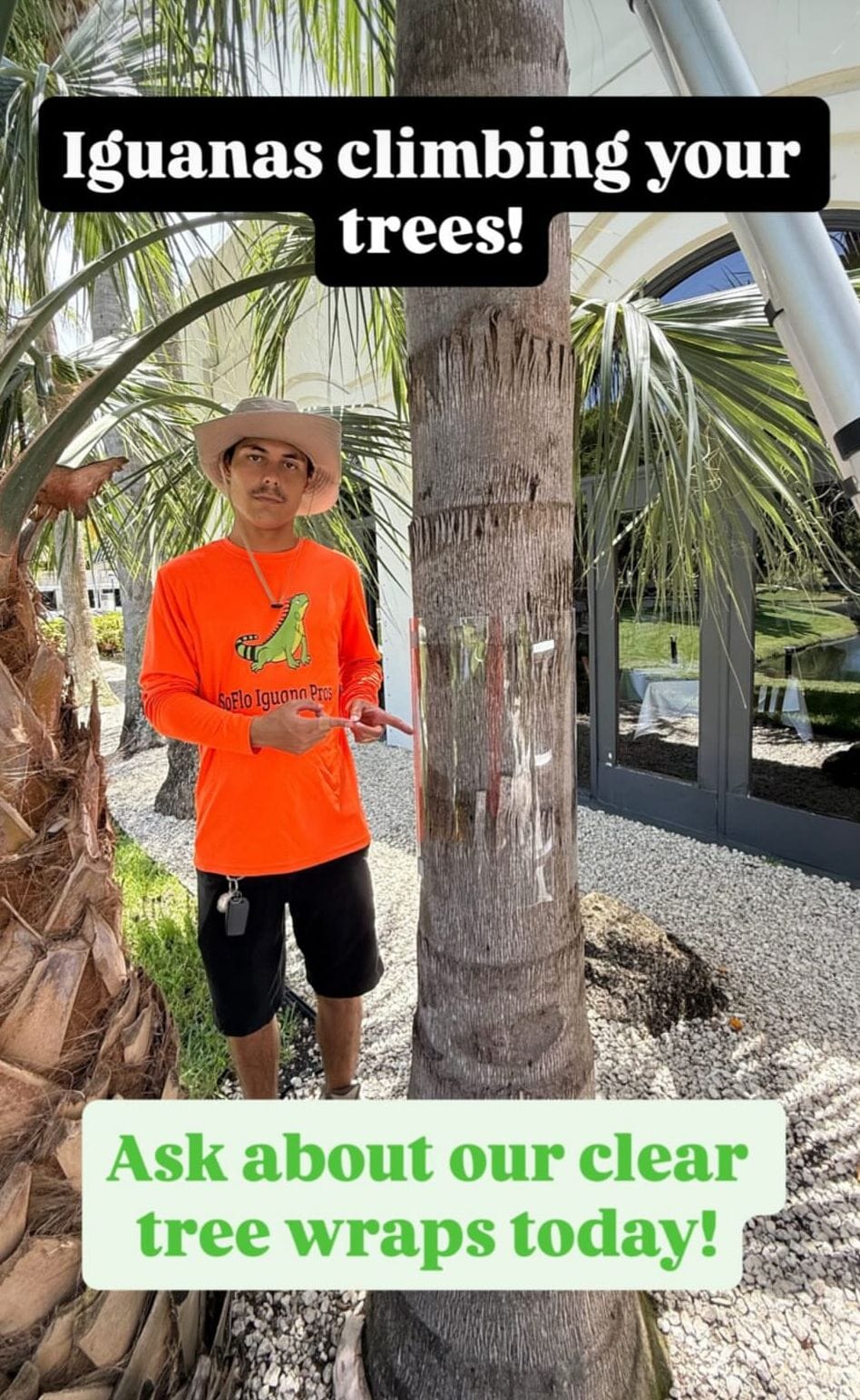
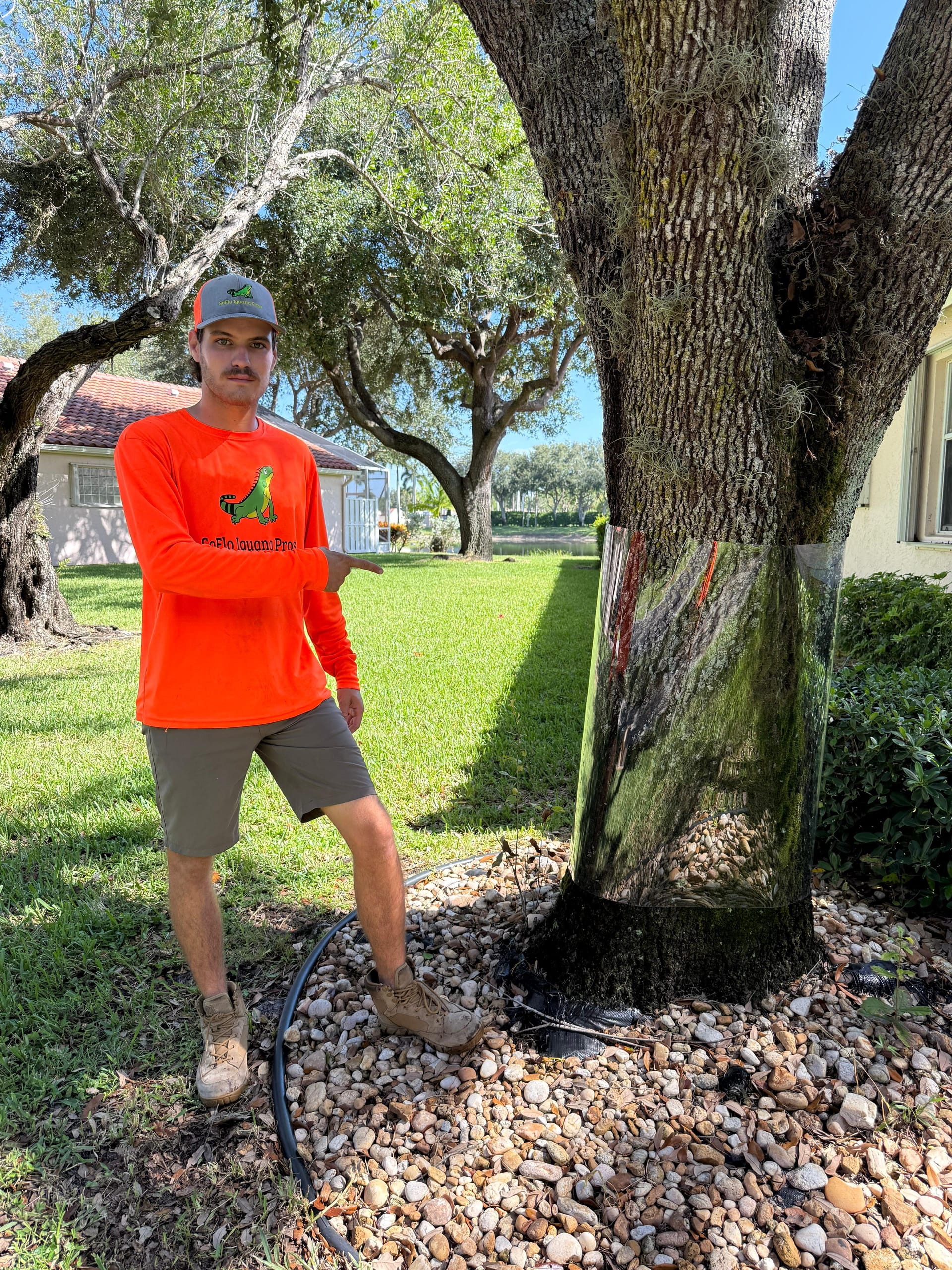
A smooth guard banded around the trunk at the right height removes the purchase a climbing iguana needs. The two things people get wrong are height and fit: set too low, a big adult reaches over it; set too loose, it shimmies behind it. A wrap has to clear the height a five-foot animal can stretch to and sit flush enough that nothing gets a claw behind it.
Step three: take away the food and the shelter
Once the routes are closed, you make the ground itself less appealing. That means thinning or caging the plants they graze hardest, cleaning up the fallen fruit that draws them in, and shutting the gaps — soffits, weep holes, torn screen — they use to get into a roof or a pool cage.
- Thin or fence the buffet: hibiscus, bougainvillea, and fruit trees that iguanas graze to stubs.
- Pick up fallen mangoes, sea grapes, and other dropped fruit that keeps a yard on the menu.
- Collapse and pack burrows along the bank and against the foundation so they can't be re-denned.
- Close soffit gaps, weep holes, and screen tears that let them onto a roof or into a lanai.
- Harden the waterline edge where the bank meets the seawall cap — the spot they re-dig first.
The honest list of what doesn't work
We'd be doing you no favors leaving this out. A lot of prevention money in Palm Beach County gets spent on things that don't move the needle, and the marketing is good enough that reasonable people keep buying them.
- Mothballs: not a legal or effective iguana repellent, and the vapor is a hazard around kids and pets.
- Garlic, pepper, and 'natural' sprays: wash off in the first afternoon storm and get ignored within days.
- Ultrasonic boxes: iguanas simply don't respond to them the way the packaging promises.
- Fake owls and predator decoys: they work for about a week, then the animals learn the owl never moves.
- Filling a single burrow and walking away: re-dug overnight if the bank still suits them.
Keeping it up — and what we charge
Prevention isn't a weekend you finish and forget. Spring nesting sends females back to test the bank, summer rains soften the soil and bring the plants roaring back, and a neighbor's neglected seawall keeps feeding animals down the waterline. A quick seasonal re-check — re-pack new diggings, confirm the wraps are still snug, cut back the buffet — is what keeps the work from unraveling.
For the money side, we keep it simple: single visits start from $125, and ongoing programs from $99 a month with no lock-in contract. You can stop whenever it stops making sense for you. We'd rather earn the next month than trap you in a year of it.
Questions we hear
What's the single most effective iguana prevention step?
Cutting off the climb routes with properly sized tree and piling guards, once the resident animals are cleared. It's the piece that stops the roof, canopy, and pool-cage damage at the source. Everything else layers on top of it, but the wraps punch above their weight for the money.
Do any store-bought repellents actually work?
In our experience, no — mothballs, garlic and pepper sprays, ultrasonic boxes, and fake owls all fade fast or never worked to begin with. Iguanas habituate quickly to anything that doesn't actually harm them. Your money goes further on physical barriers and habitat changes.
Can I do all of this myself?
A good deal of it, yes — securing food, thinning plants, and closing gaps are all fair DIY. The parts people most often get wrong are sizing tree wraps and properly collapsing burrows, and heavy waterfront pressure usually needs removal to clear the residents first. We're happy to do the whole thing or just the tricky pieces.
Services in this guide