Iguanas love a warm solar array and the shaded gap underneath it. Here is why they climb up there, what they wreck, and how I stop them at homes across Palm Beach and Broward.
I get a version of this call almost every week from May through September. A homeowner in Boca or Wellington notices green streaks down the roof tile, then spots a big iguana stretched out across their solar panels like it owns the place. By the time they call me, there are usually droppings piling up on the array and something rustling in the gap underneath.
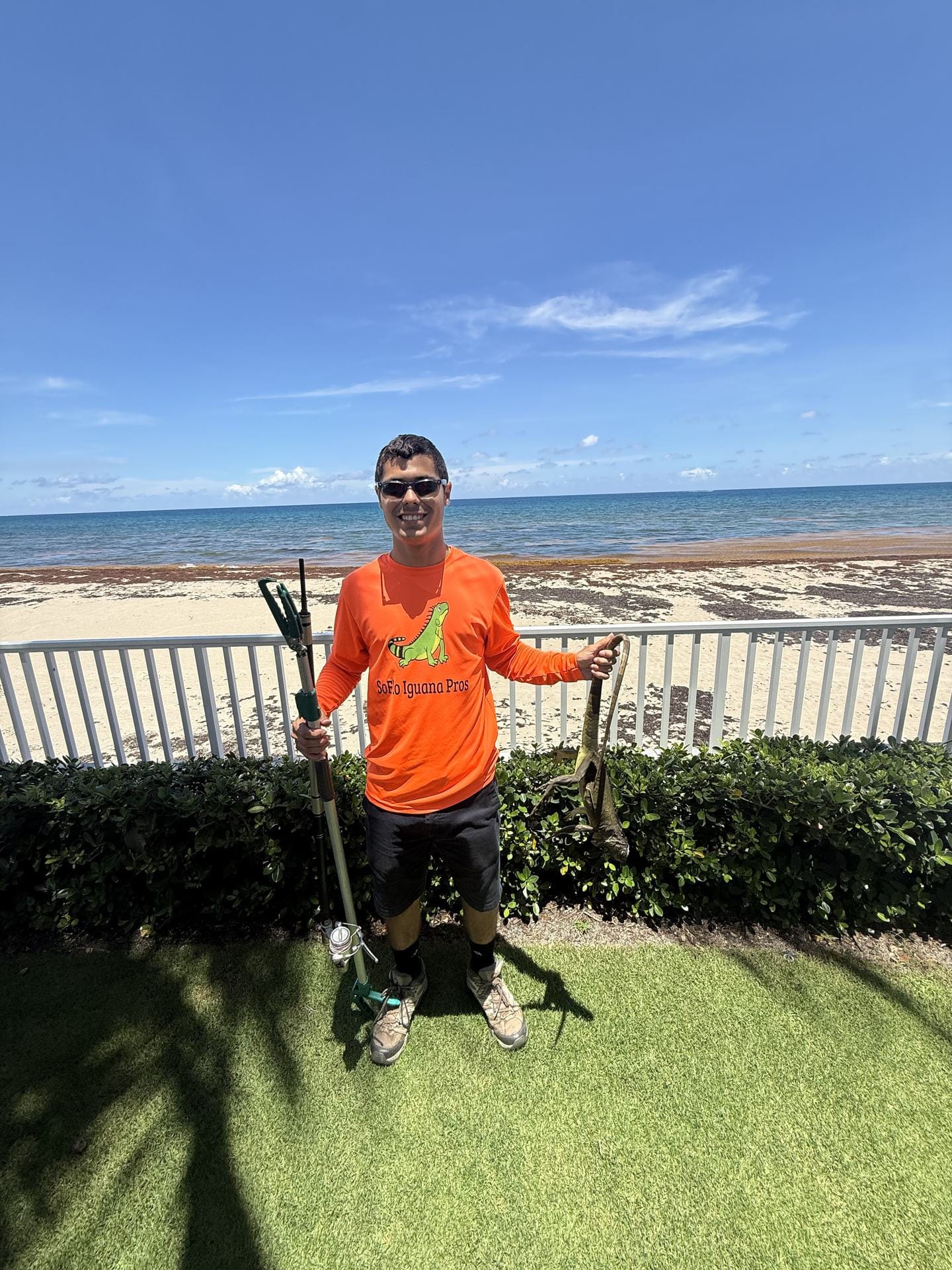
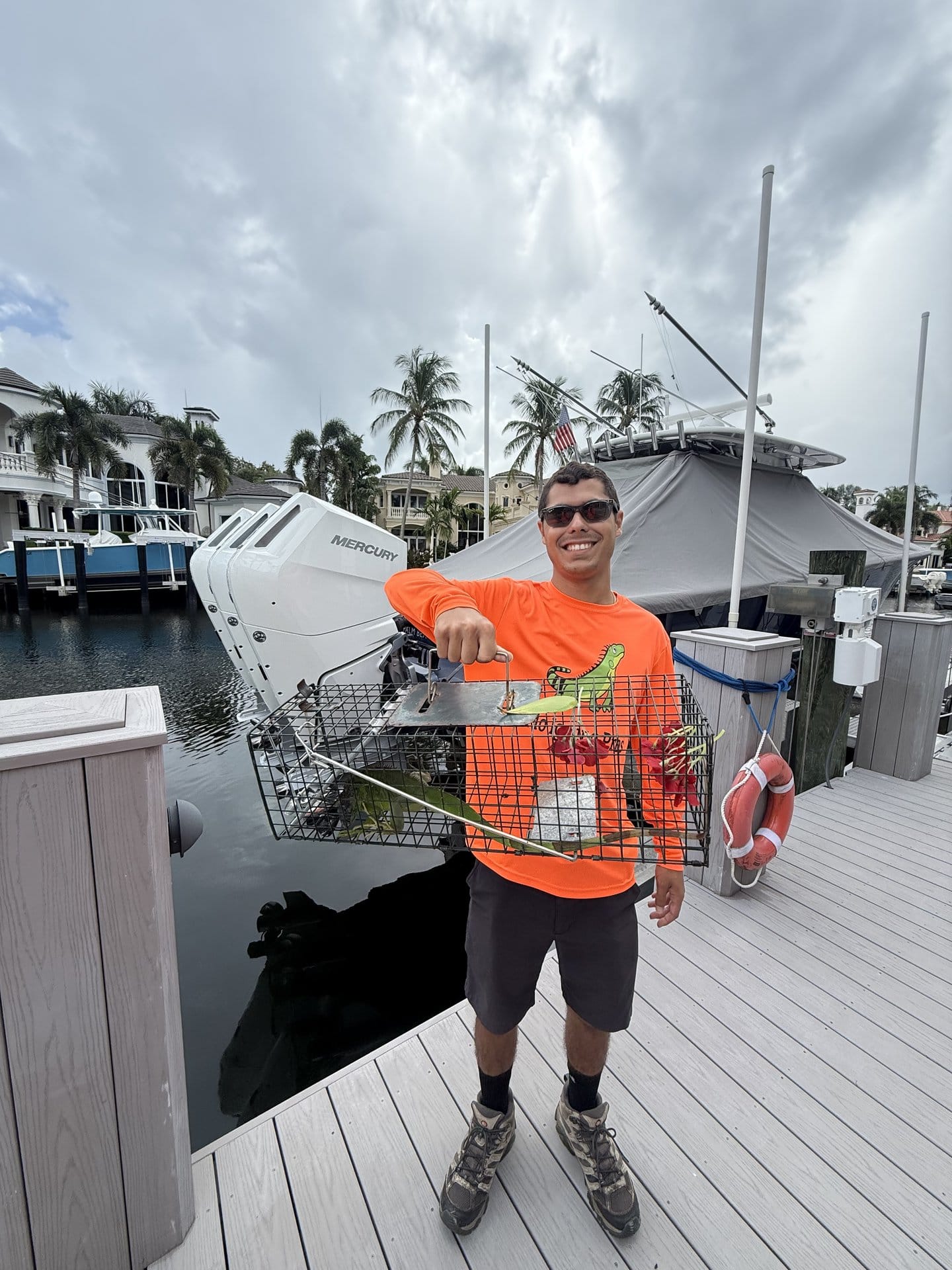
Rooftops are prime iguana real estate in South Florida, and solar panels make them even better. My name is Nick, I run SoFlo Iguana Pros out of Lake Worth, and I have pulled these lizards off more roofs than I can count. Here is what is actually going on up there and how you shut it down for good.
Why do iguanas sit on solar panels?
Iguanas are cold-blooded, so they chase heat all day. A solar panel is basically a heated slab tilted toward the sun. The dark glass and framing soak up the summer sun and hold that warmth, which is exactly what a big male wants when he is basking to get his body temperature up. On a flat roof with an AC unit or HVAC equipment, the metal cabinets do the same thing.
The panels give them something else they value even more: cover. There is usually a few inches of gap between the panel and the roof deck. That space is shaded, hard for hawks to reach, and hard for you to see into. A basking spot on top and a hidey-hole underneath is close to a perfect setup for them.
The roof only becomes a problem when they can get to it. Iguanas are climbers, not fliers, so every rooftop iguana used a route to get up there.
- Overhanging tree branches that touch or nearly touch the roofline
- Downspouts and gutter corners they shimmy up like a ladder
- Trellises, lattice, and thick vines running up an exterior wall
- Screen enclosure frames and pool cages that connect to the house
- Fences or pergolas that give them a stepping stone to the eave
Can iguanas damage solar panels and your roof?
Yes, and the damage is usually worse than people expect because it builds up out of sight. The panels themselves are tough glass, so an iguana walking across them rarely cracks one. The trouble comes from everything that happens around them.
Droppings are the first issue. Iguana waste is acidic and it does not rinse off cleanly. Piles of it sit on the glass and cut into how much power the array makes, and the runoff stains tile and can corrode metal flashing and mounting hardware over time. On a flat roof, that same waste washes toward the drains.
Then there is the wiring. The gap under a panel is full of conduit and cabling, and iguanas will chew and scratch at it while they move through. Damaged wiring on a live solar system is not a minor repair. I have also found nests dug in under low-mounted panels and behind rooftop equipment, because that shaded gap is a quiet, warm place to lay eggs.
- Acidic droppings that stain roofs and corrode flashing and mounts
- Reduced panel output when the glass is covered in waste
- Chewed or scratched wiring and conduit in the gap under the array
- Nesting and burrowing under low panels and behind AC or HVAC units
- Blocked roof drains and scuppers on flat roofs from waste and debris
How I keep iguanas off the roof for good
The fix is not one product. It is cutting off the way up, then closing the spots they want once they are up there. I work the problem in that order because sealing a panel while the climb routes are wide open just moves the lizard next door and back again.
First I clear whoever is living up there right now. Trapping or hand-removing the resident iguanas comes before anything else, because if you skirt a panel with an animal still under it, you have trapped it inside your array. On my visits I check the gap under every panel and behind the rooftop equipment before we close anything.
Next I cut the climb routes. Trees are the big one. I flag branches that reach within about six feet of the roof and recommend trimming them back, since a determined iguana will bridge a surprising gap. Downspouts get slick guards or angled collars so they cannot grip and climb. Trellises and heavy vines against the wall come down or get screened. This tree-to-roof and wall-to-roof work is where most of the lasting results come from, and it is worth reading my separate guide on stopping iguanas from using trees as roof bridges.
Last, I close the panels and equipment. The standard fix is a critter guard: a rigid mesh skirt clipped around the perimeter of the array so nothing can get into the gap underneath. Around AC and HVAC units I use mesh and hardware cloth to seal the openings they crawl into. One honest note here. I do not bolt anything into your panels or their racking, because that can void a solar warranty. For guards that mount directly to the array, I tell people to have their solar installer do that part or sign off on it, and I handle everything around it.
What this looks like on a real South Florida roof
Most of the roofs I treat are barrel tile or flat, and each has its own quirks. On tile roofs the panels sit up on rails, so the gap is generous and open on all sides, which is why the mesh skirt matters so much. On flat roofs the AC and HVAC cabinets are the main draw, along with the warm membrane itself, and the priority there is sealing equipment and keeping drains clear.
Timing matters too. Iguana activity climbs with the heat, so June through September is when I see the most rooftop calls across Delray Beach, Boynton Beach, Coral Springs, and Pompano Beach. If you are seeing droppings now, it is better to handle it before nesting season adds eggs and hatchlings to the problem.
I start every job with a free walk of the property so I can trace the actual routes an iguana is using at your house instead of guessing. Removal service starts at $125, and I offer ongoing monthly maintenance from $99 a month for properties that back up to canals or golf courses where the pressure never really stops. If you want your roof looked at, call or text me at (561) 735-1975.
Questions we hear
Why do iguanas sit on solar panels?
Iguanas are cold-blooded and bask to warm up. Solar panels are dark, tilted toward the sun, and hold heat, so they make an ideal basking spot. The shaded gap underneath the array also gives them cover from hawks, which makes the whole setup very attractive.
Can iguanas damage solar panels?
They rarely crack the glass, but they cause plenty of other damage. Their acidic droppings stain and corrode roofing and mounts and cut panel output, and they chew and scratch the wiring and conduit in the gap under the array. They also nest under low-mounted panels.
How do I keep iguanas off my roof?
Cut the climb routes first: trim branches back from the roofline, put guards on downspouts, and remove trellises or heavy vines against the wall. Then remove any iguanas already up there and close the gaps under panels and around equipment with mesh.
Will a critter guard on my solar panels void my warranty?
It can if the guard is bolted into the panels or racking. I install mesh skirts around the array without drilling into your equipment, and for guards that mount directly to the panels I recommend having your solar installer do that part or sign off on it.
Do I need to remove the iguanas before sealing the panels?
Yes. If you skirt an array with an iguana still underneath, you trap the animal inside your solar system. I always trap or hand-remove the residents and check the gap under every panel and behind rooftop equipment before closing anything up.
Which areas do you cover for rooftop iguana problems?
I cover Palm Beach and Broward County, including Boca Raton, Delray Beach, Boynton Beach, Wellington, Coral Springs, and Pompano Beach. I start with a free property walk, removal starts at $125, and monthly maintenance is available from $99. Call or text (561) 735-1975.
Services in this guide