Short version: a fence by itself almost never stops an iguana. Here's where fencing genuinely helps around a Palm Beach or Broward home, where it fails, and what to add so it actually holds.
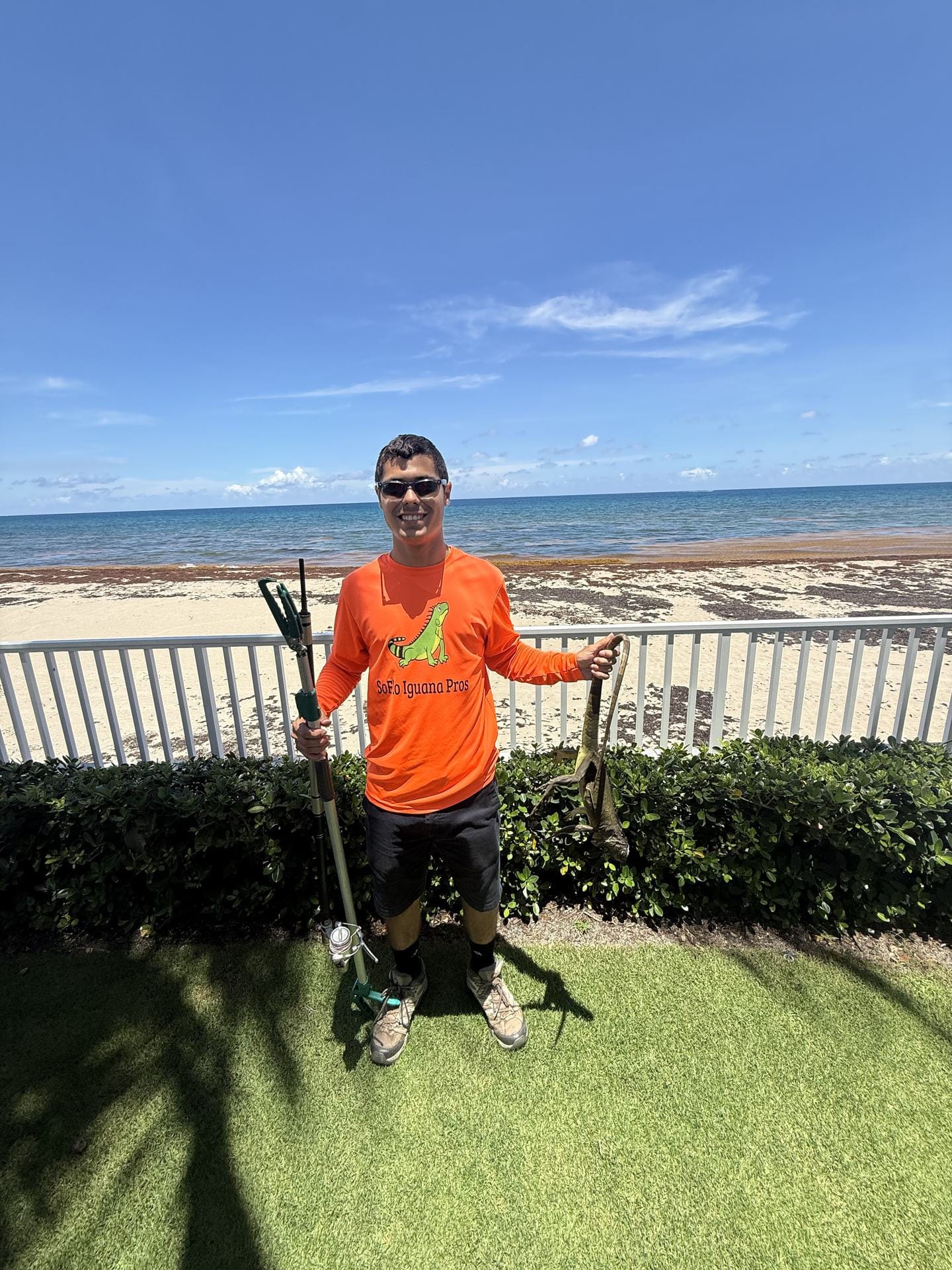
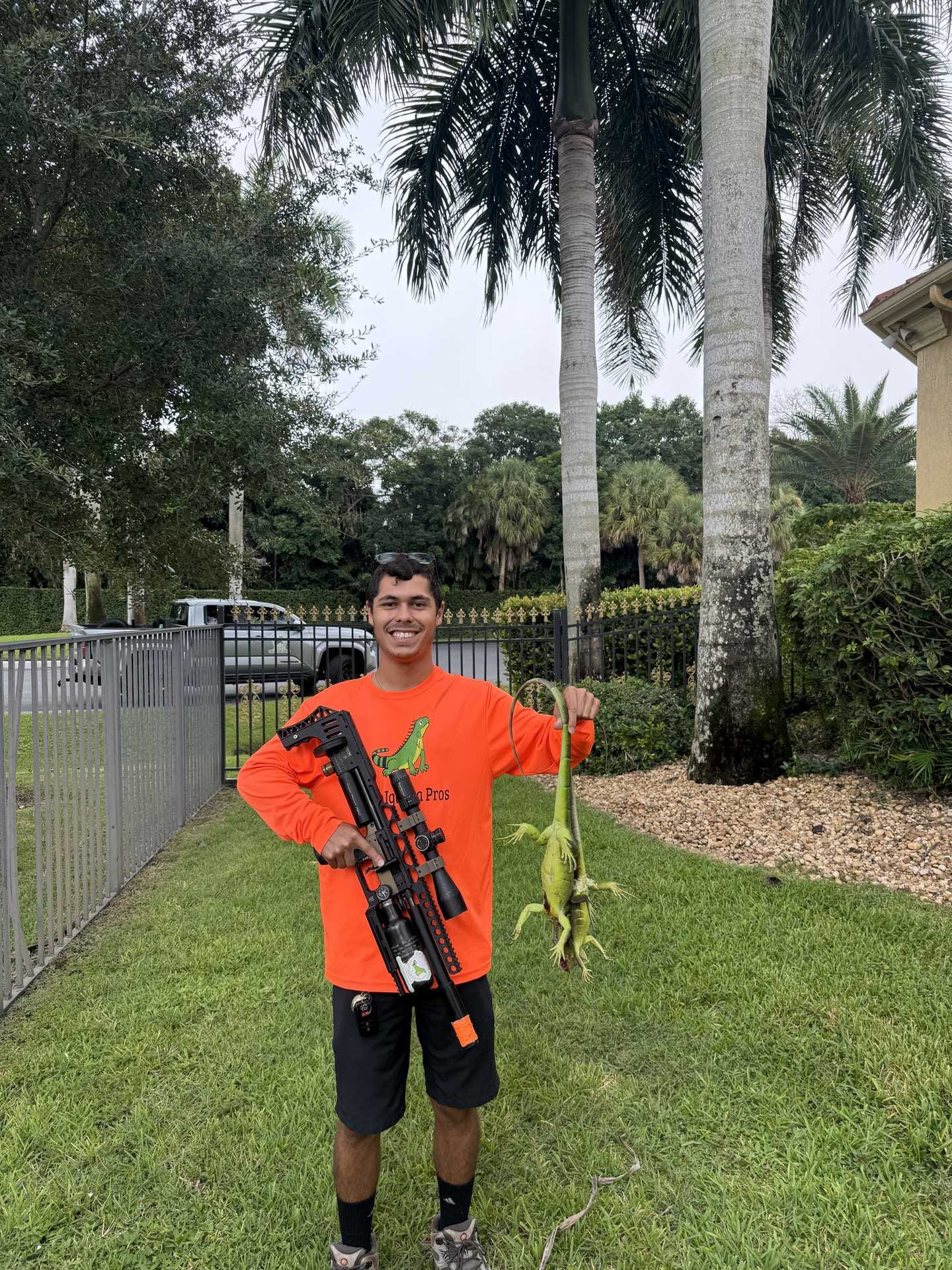
I get this question a couple times a week. Somebody's tired of iguanas cutting through the yard, and they've read that an 'iguana-proof fence' is the fix. I'm Nick, I run SoFlo Iguana Pros out of Lake Worth, and I'll give you the honest answer before you spend money on it: a fence, on its own, rarely keeps iguanas out. Sometimes it barely slows them down.
That's not what most fence companies will tell you, and it's not what the product pages selling 'iguana barrier mesh' want you to hear. But I've walked a lot of yards in Palm Beach and Broward where somebody paid good money for a fence and still had iguanas basking on the patio the next morning. So let me explain how these animals actually get past a fence, where fencing does earn its keep, and what you'd pair it with to make the whole thing work.
Why a fence alone doesn't stop an iguana
An iguana is built to defeat a fence three different ways, and a plain fence usually only addresses one of them, if that. Here's what they actually do when they hit your fence line:
- They climb it. Wood fences, chain-link, PVC with any texture, a fence with a horizontal rail near the top — all of it gives claws something to grab. A big adult can be up and over a six-foot fence in seconds.
- They dig under it. Iguanas are strong diggers. If the fence just sits on the dirt with no buried edge, they'll scrape out a channel underneath, especially in the soft sandy soil we've got down here.
- They swim around it. This is the one people forget. On a canal or lake lot, a fence stops at the seawall or the bank. The iguana just enters from the water and walks up onto your property behind the fence entirely.
So when someone tells me their brand-new fence 'didn't work,' nine times out of ten it's one of those three. A tall wood privacy fence looks like a wall to us. To an iguana it's a ladder. Chain-link is even worse — it's basically a climbing net. And any fence on a waterfront lot has an open flank the animals figure out fast.
I'm not saying fences are useless. I'm saying a fence by itself is the wrong mental model. Think of it as one layer that only helps if it's the right kind, in the right spot, closed off top and bottom.
Where fencing actually helps
Fencing does have a real job, and it's smaller and more specific than 'keep iguanas off my property.' Where I've seen it genuinely pay off is exclusion of a small, defined area rather than a whole yard.
A vegetable or flower garden you're tired of losing to grazing. A pool deck or screened pet run. A raised bed. In those spots, a smooth barrier that's tall enough, with the top curled outward and the bottom buried, can keep the area clear. The reason it works there and not at the property line is that a small enclosure lets you control all three routes at once — the climb, the dig, and there's no waterline cutting through it.
- Use a smooth surface with nothing to grip: sheet metal flashing, smooth PVC panel, or fine mesh they can't get a claw into.
- Add an outward overhang or curved top so a climber that reaches the top tips backward instead of over.
- Bury an apron — bend the bottom of the mesh outward underground about a foot so a digging iguana hits wire before it hits dirt.
- Keep it high enough. A determined adult can reach well over three feet, so short garden fencing is a speed bump, not a wall.
What actually keeps iguanas out
The yards where I see real, lasting relief aren't the ones with the tallest fence. They're the ones where we've closed the routes the iguanas actually use and taken away the reasons to stay. A fence can be part of that, but it's rarely the star.
On a typical waterfront lot in Palm Beach or Broward, the fix is a layered one. We clear the animals already living there first, because you can't 'fence out' a colony that's already denned in your seawall backfill. Then we close the waterline route with seawall and dock guards, cut off the climb up pilings and trees with smooth banded wraps, pack and harden the burrows along the bank, and thin the plants they graze hardest. That combination is what changes a yard. A fence layered on top of that can help hold a specific zone. A fence instead of that just moves the animals a few feet.
- Close the water route first on canal and lake lots — that open flank undoes almost any fence.
- Smooth guards on pilings, posts, and tree trunks to kill the climb.
- Buried aprons against digging wherever you do fence.
- Habitat work — burrow packing, trimming the buffet plants — so the yard stops being worth the trip.
So should you build one?
If you want to protect one defined area — a garden, a pet run, a pool deck — a properly built barrier with an overhang and a buried apron is worth doing, and it'll hold. If you're picturing a fence around the whole property that ends the iguana problem for good, I'd rather save you the disappointment and the bill. That's not what a fence does here.
The realistic play on most South Florida properties is the layered approach: clear, close the water, kill the climb, harden the ground, and use targeted fencing only where it fits. I'd rather tell you that up front than sell you a wall the iguanas walk around.
If you want a straight read on your own yard, I do a free walk-through — I'll tell you honestly whether fencing helps you or whether your money's better spent elsewhere. Single visits start at $125, ongoing plans from $99 a month with no contract. You can reach me at (561) 735-1975.
Questions we hear
Will a fence keep iguanas out of my yard?
Usually not on its own. Iguanas climb most fences, dig under ones with no buried edge, and on waterfront lots they simply enter from the canal or lake and walk around the fence entirely. A fence can protect a small enclosed area if it's built right, but a plain fence around a whole property rarely stops them.
Can iguanas dig under a fence?
Yes. They're strong diggers, and our sandy South Florida soil makes it easy. If a fence just sits on the dirt they'll scrape out a channel underneath in short order. The fix is a buried apron — bending the bottom of the mesh outward about a foot underground so a digging iguana hits wire instead of soft dirt.
Can iguanas climb a fence?
Easily. Wood privacy fences, chain-link, and any fence with a top rail all give their claws something to grab. A large adult can be over a six-foot fence in seconds. Only a smooth surface with an outward-curving or overhanging top reliably beats a climber, which is why plain fencing so often fails.
What actually keeps iguanas out?
A layered approach, not a single barrier. On most Palm Beach and Broward properties that means clearing the resident animals, closing the waterline route with seawall and dock guards, putting smooth wraps on pilings and tree trunks to stop the climb, packing burrows, and thinning the plants they graze. Fencing can hold a specific zone on top of that, but it's rarely the whole answer.
Does iguana-proof mesh or barrier fencing work?
It works for small, defined areas — a garden bed, a pet run, a pool deck — when it's tall enough, has an outward overhang at the top, and is buried at the bottom. In those spots you can control the climb and the dig at once. Around an open property line, especially near water, the same mesh gets bypassed.
I'm on a canal — will fencing stop the iguanas coming up from the water?
No, and this is the biggest reason waterfront fences fail. A fence stops at your seawall, so the iguanas just enter from the water and come up behind it. On canal and lake lots you have to close the waterline route first with seawall and dock guards before any fencing is worth building.
Services in this guide