Yes, iguanas climb, and they're good at it. Here's exactly what they can grip, what stops them cold, and how to use that to keep them off your fence, screen, and seawall.
I get this question on almost every property walk. Somebody points at a six-foot fence or a screened lanai and asks, half hoping I'll say no, whether an iguana can really get over it or through it. The honest answer is that iguanas are excellent climbers, and most of the surfaces around a South Florida home give them plenty to grab. But that's not the end of the story. Once you understand how they climb, you can figure out where they can't, and that's where the prevention actually happens.
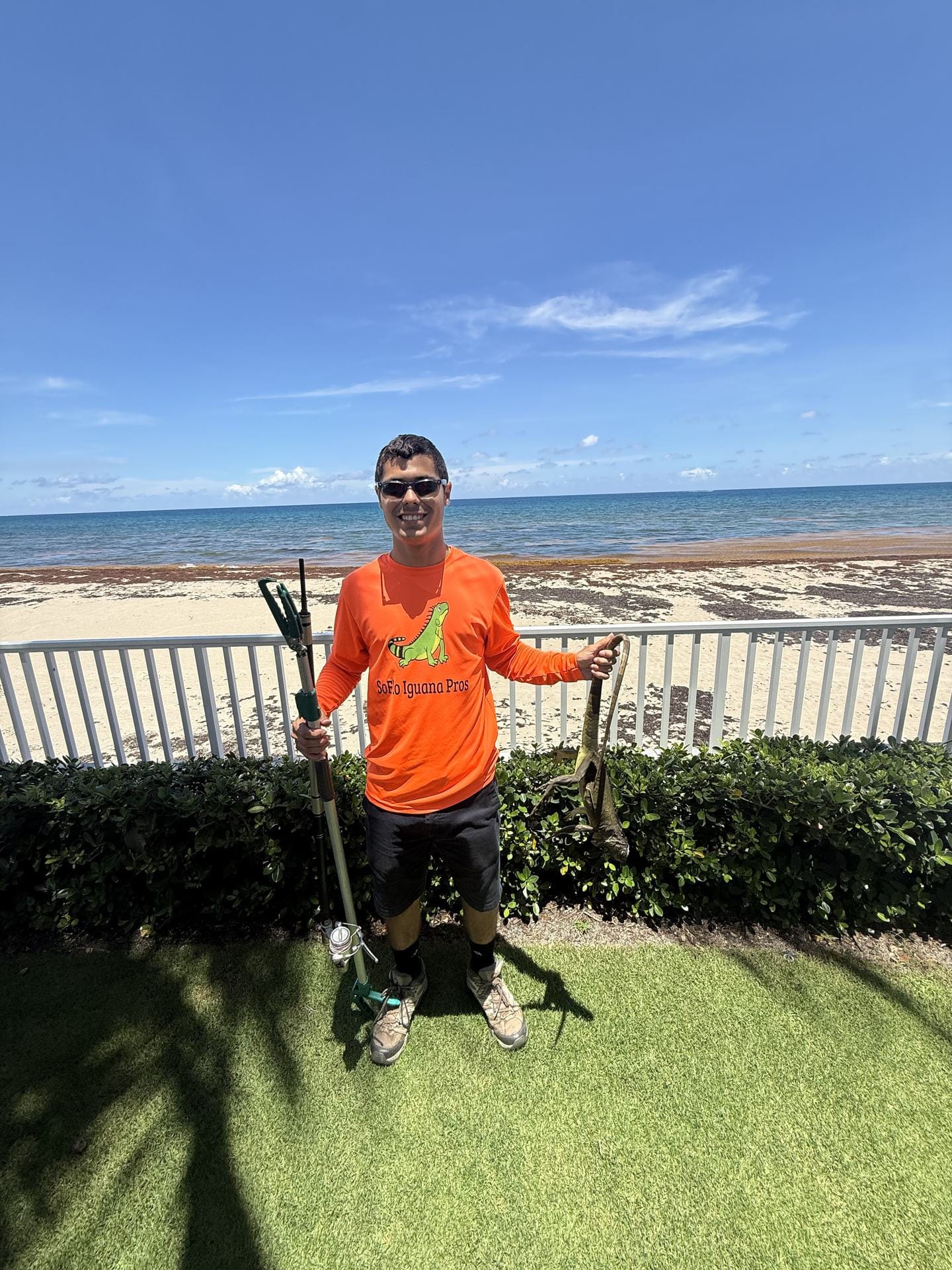
I'm Nick, and I run SoFlo Iguana Pros out of Lake Worth. I spend my days on seawalls and pool cages from Boca up through Palm Beach and across Broward, watching these lizards do their thing. Let me walk you through what they climb, what stops them, and how to turn that into a plan for your property.
What can iguanas actually climb?
Green iguanas evolved to live in trees. Climbing is their default setting, not a party trick. Their toes end in long, curved claws that hook into anything with even a little texture, and they're light enough that a surface only needs tiny footholds to hold them. Give them a rough edge and they go up.
Here's what I see them scale without any trouble on local properties:
- Rough stucco and textured concrete block walls — the grit gives their claws everything they need
- Wood fences, including standard six-foot privacy fence, using the pickets and rails as a ladder
- Chain-link, which is basically a climbing net to them
- Window and pool-cage screen, where claws slip right into the mesh
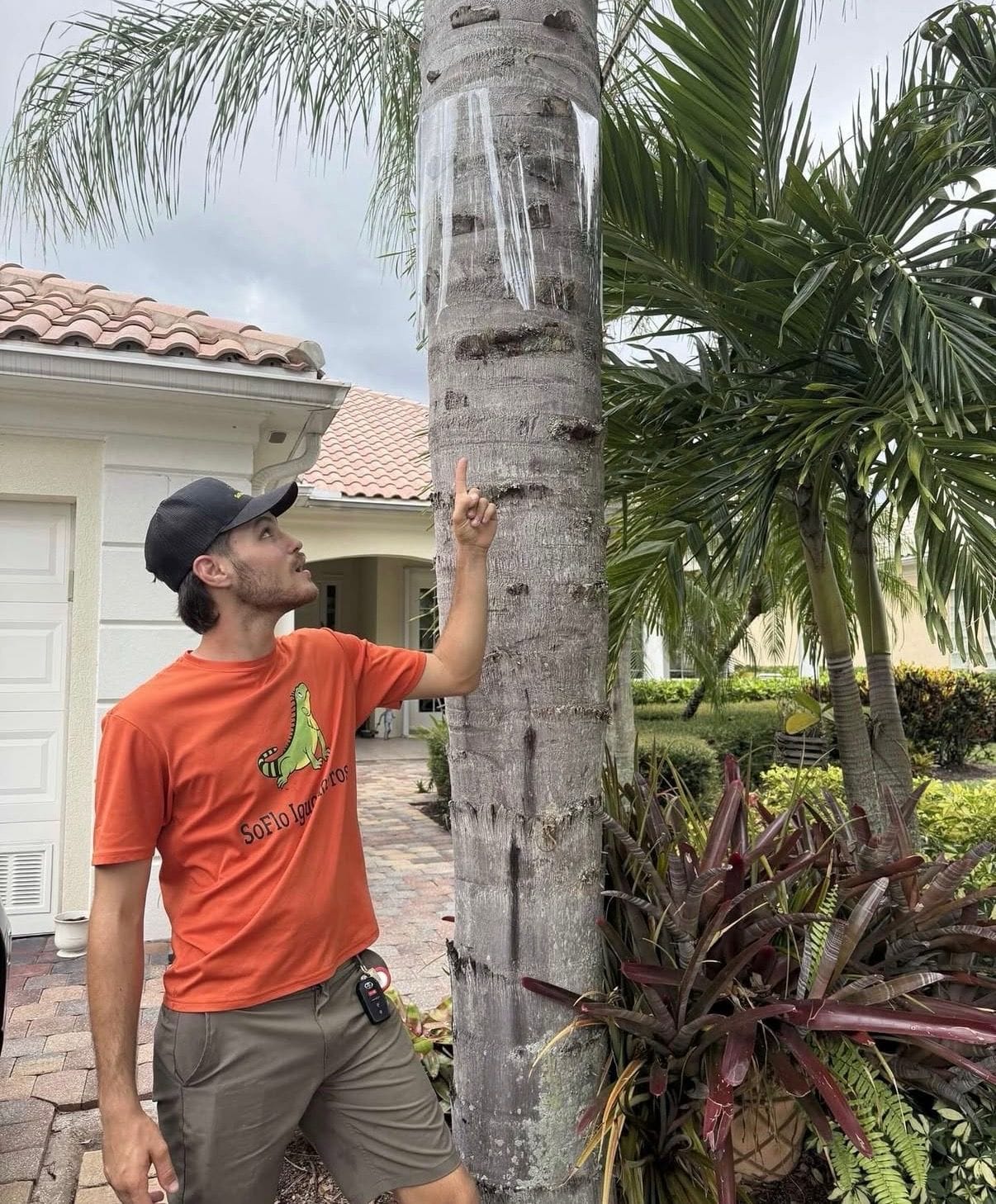
- Trees, palm trunks, and thick vines — their natural highway
- Dock pilings and wooden seawall caps, especially older weathered ones
What stops an iguana cold
Now the useful part. Iguanas are built for rough, vertical texture. Take that texture away and the climb falls apart. A claw that has nothing to hook simply slides. That single fact is the backbone of almost every guard I install.
The surfaces that give them the most trouble:
- Smooth, slick sheet metal or polished PVC with no seams or fasteners to grab
- Glass and smooth acrylic — nothing for a claw to catch
- Overhangs and lips that force them to climb upside down, which they can't sustain
- Wide-diameter smooth pipe or capping that's too round and slick to wrap around
- New, clean vinyl fencing with flush panels and no toe-holds (weathered or textured vinyl is a different story)
How the climb defeats itself
Because their whole method depends on hooking a claw into texture, you beat an iguana not by building higher but by building smoother at the right spot. I'd rather add an eight-inch smooth band in the right place than raise a fence a full foot.
The three levers I use over and over:
First, smooth guards. A wrap of smooth aluminum or PVC around a piling, post, or seawall cap gives the claws nothing. Iguanas hit the slick section, slide back, and give up. On docks and seawalls this is the single most effective move I make.
Second, overhangs and kickplates. A lip that sticks out from the top of a wall or the base of a fence forces the animal to climb inverted for a stretch. They can hang for a second but they can't keep going, so the overhang acts like a ceiling. A smooth kickplate along the bottom of a fence stops them from even starting.
Third, cut the bridges. This is the one people forget. A perfectly guarded fence does nothing if a ficus branch or a bougainvillea drapes over the top. Iguanas use overhanging limbs, trellises, screen frames, and downspouts as shortcuts. On every property walk I look up first and trace every route onto the structure before I look at the wall itself.
Screens, pool cages, and waterfront spots
Screen deserves its own note because it's the surface homeowners underestimate most. To an iguana, screen mesh is a ladder with a rung every eighth of an inch. They climb the outside of a pool cage easily, and a small tear or a gap where the screen meets the frame turns into a doorway. Once inside a lanai they'll bask on the pool deck and leave droppings all over it. I patch gaps, tighten the base track, and treat the frame supports so the cage stops being a jungle gym.
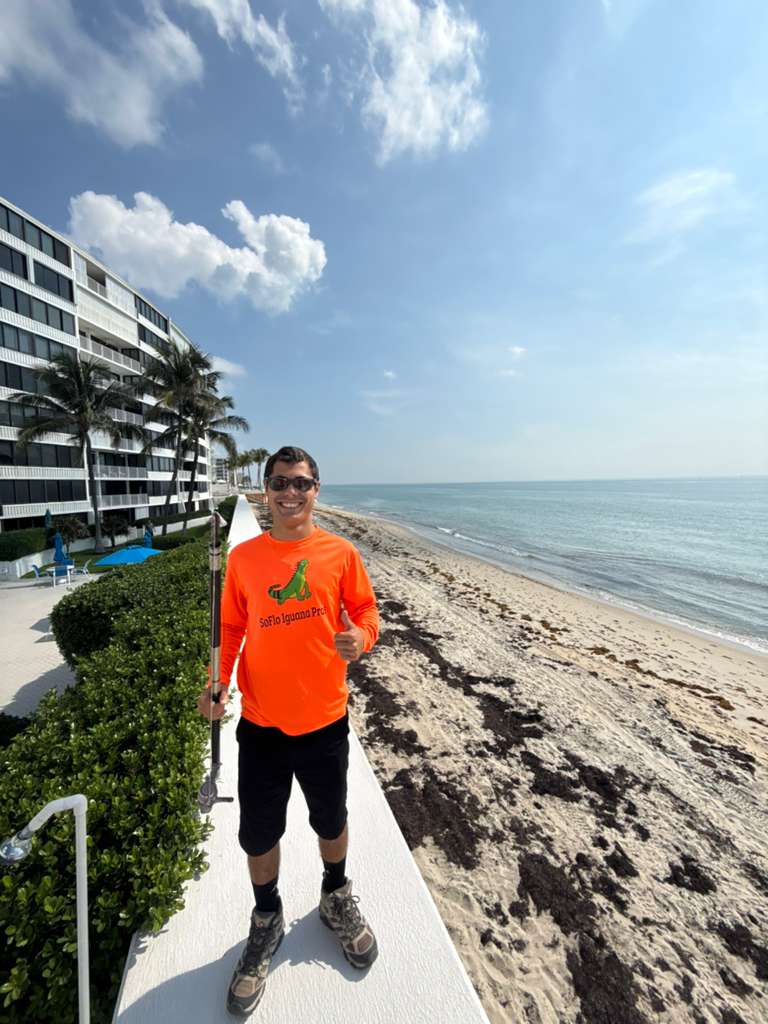
Waterfront properties are the hardest cases because the canal is a highway. Iguanas swim well, haul out on your seawall, climb the cap, and move straight into the yard and up onto the dock. This is why I lean on smooth seawall and piling guards along the canals in places like Lake Worth, Boynton Beach, and the Fort Lauderdale waterways. Stop the haul-out at the water's edge and you stop most of the problem before it ever reaches the pool cage or the fence.
None of this is a magic switch. I don't sell guarantees, because a determined animal and a changing yard mean this is about stacking the odds heavily in your favor. Done right, guards plus trimming plus a couple of trapping visits will make your property a place iguanas skip.
What I do on a property walk
When I come out, the walk is free, and it's genuinely a walk. I follow the routes an iguana would take, not the ones that look obvious to a person. Fence lines, seawall caps, pilings, screen frames, overhanging branches, downspouts, trellises, and anything smooth I can turn into a barrier.
From there I'll tell you straight what's worth guarding and what isn't. Some homes need one seawall wrap and a trim. Others need the full treatment across the fence and cage. Single visits start at $125, monthly service starts at $99 a month for properties that need steady pressure, and the walk itself costs nothing. If you're seeing them on your wall or your dock, call or text me at (561) 735-1975 and we'll figure out the weak points together.
Questions we hear
Can iguanas climb smooth walls?
Mostly no. Iguanas rely on hooking their claws into texture, so a truly smooth, slick surface with no seams or fasteners gives them nothing to grip and they slide off. The catch is that most stucco and block walls in South Florida are rough enough to climb. Adding a smooth guard band is what turns a climbable wall into one they can't scale.
Can iguanas climb through a screen?
They climb the outside of screen easily because the mesh acts like a ladder for their claws, and they get through wherever there's a tear or a gap at the frame. They don't usually punch clean through intact screen, but a small hole or a loose base track is all it takes to end up inside your pool cage. Patching gaps and tightening the frame is the fix.
How high can an iguana climb?
Higher than any fence you'd build. In the wild they live in tree canopies dozens of feet up, so a six or eight-foot wall is nothing to them if the surface has texture. That's why height alone doesn't work as a barrier. Smooth guards and overhangs stop the climb regardless of how tall the wall is.
Can iguanas climb a wood or chain-link fence?
Yes, easily. Wood fence pickets and rails give them footholds like a ladder, and chain-link is essentially a climbing net. To keep them off either one you need a smooth kickplate at the base, a smooth cap or overhang at the top, and no branches bridging over it.
Can iguanas climb up a seawall from the canal?
That's one of the most common ways they get into waterfront yards. They swim the canal, haul out on the seawall, and climb the cap into the yard and onto the dock. A smooth wrap along the seawall cap and around dock pilings stops the haul-out at the water's edge, which is the best place to stop them.
Will making surfaces smooth guarantee no iguanas?
No, and I won't tell you otherwise. Smooth guards, trimming bridges, and a few trapping visits stack the odds heavily in your favor and make your property one iguanas pass over. But a determined animal and a changing yard mean prevention is about steady pressure, not a one-time guarantee.
Services in this guide