Iguanas in the screen enclosure foul the water, tear the mesh, and won't leave on their own. Here's how they get in and how to keep them out.
A pool cage is supposed to keep things out, so it catches people off guard when an iguana is basking on the screen frame or, worse, dropped inside and fouling the water. Once one's in, it doesn't politely leave — it panics, tears at the mesh trying to escape, and leaves droppings in and around the pool that are a salmonella concern, not just an eyesore.
The good news is that pool-cage protection is one of the more solvable prevention jobs, because the ways in are limited and known. Iguanas don't chew through screen from nothing; they climb to it, drop onto it, or slip through a gap that's already there. Close the routes and the tears, and the cage does its job again.
How they get in
Understanding the entry routes is most of the battle. On the Palm Beach County screen enclosures we work, it's almost always one of a short list.
- Dropping from an overhanging tree limb onto the top of the cage, then finding a seam.
- Climbing an adjacent trunk, wall, or trellis up to the frame and onto the screen.
- Slipping through an existing tear, a gap at the base track, or a door left ajar.
- Coming up from a burrow dug right at the cage footer or the deck edge.
Closing the routes
Since iguanas reach a cage by climbing or dropping, the fix is to remove the high approaches and seal the low gaps. Do both and there's simply no way onto the screen.
- Trim overhanging limbs back so nothing bridges onto the top of the cage.
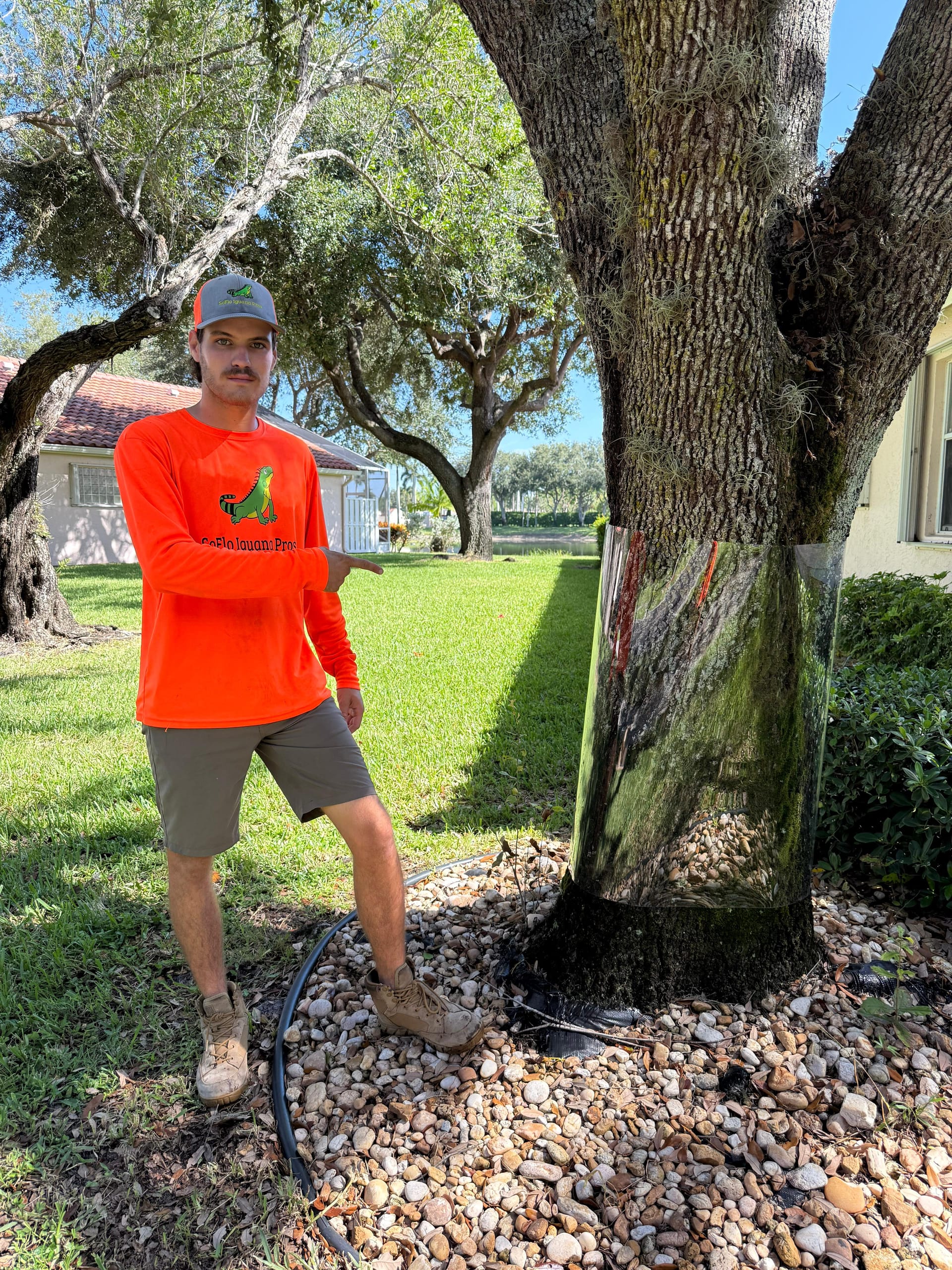
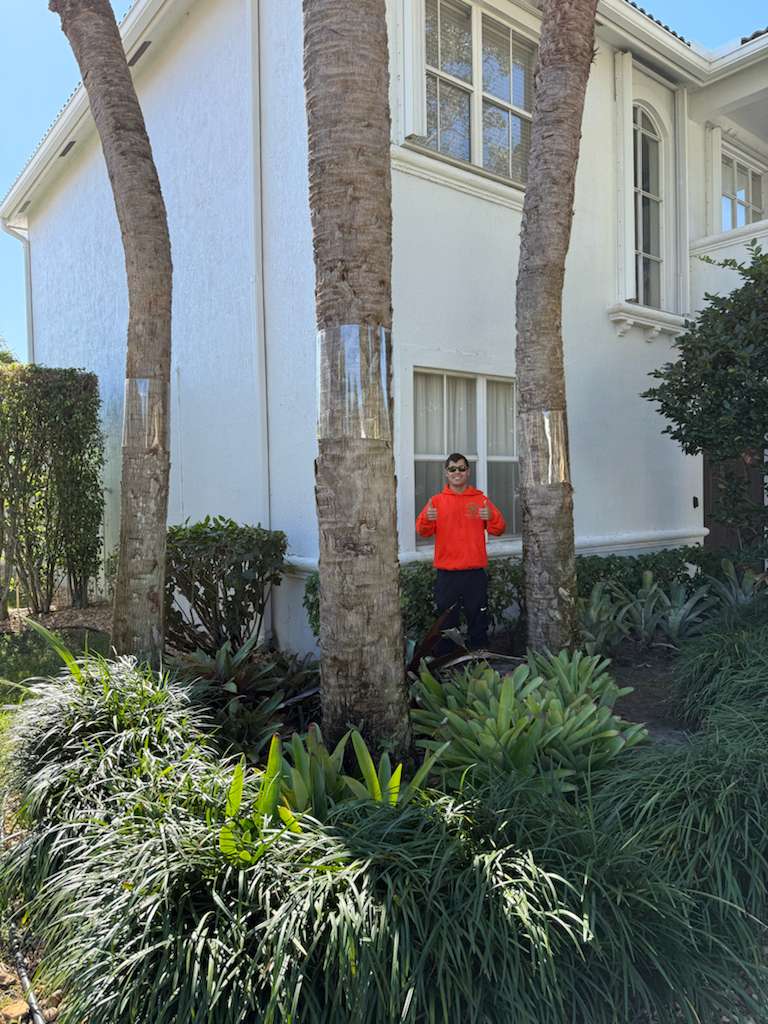
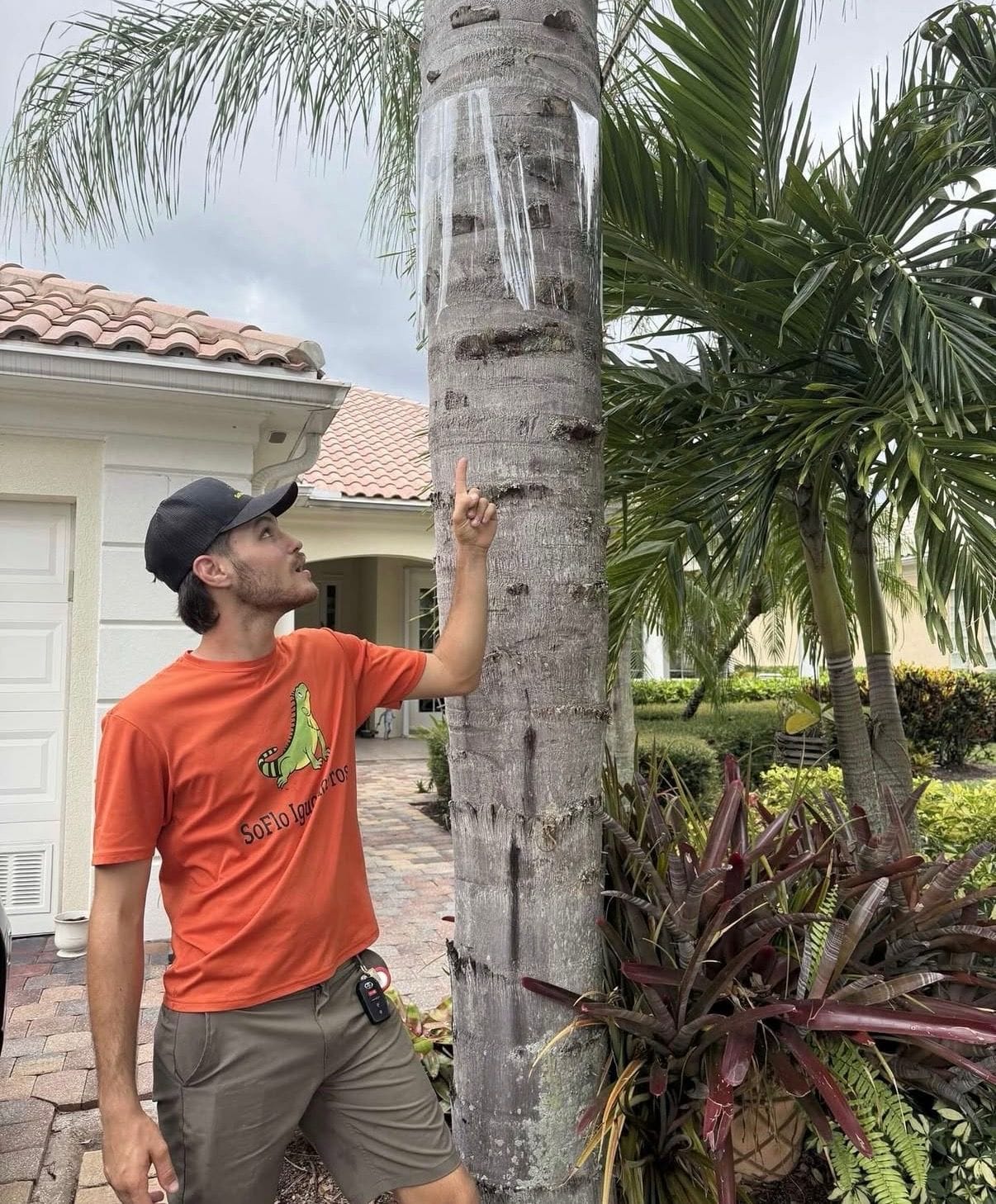
- Wrap or guard trunks and trellises next to the cage that offer a climb up to the frame.
- Repair every tear promptly — a small hole is an open door and only gets bigger.
- Seal gaps at the base track and keep the screen door latched, not just closed.
- Collapse and harden any burrow dug at the footer or deck edge.
Getting one out that's already inside
If an iguana's already trapped in the enclosure, resist the urge to corner it — a panicked adult tail-whips and bites, and chasing it just means more torn screen and a fouled pool. Open the widest exit you can, back off, and give it a clear, quiet path out toward the opening; often it'll leave on its own once it isn't being pressed.
If it won't go, or it's a big animal, that's a call for us rather than a wrestling match. A cornered five-foot iguana in a confined screen space is how people get hurt and how screens get destroyed. We'd rather come get it than treat the aftermath of a DIY removal gone sideways.
Keeping it out for good
Once the cage is sealed and the approaches are gone, the maintenance is light: keep the limbs trimmed back as they grow, patch any new tear the day you spot it, and make sure the wraps on nearby climbs stay snug. On a pressured waterfront, pair it with the broader plan — because an iguana denned in your bank is an iguana that'll keep testing the cage.
Screen repair itself is a screen contractor's job when there's real damage; what we do is take away the reason iguanas keep getting up there in the first place. Fix the cause and the repairs stop being an every-few-months expense.
Questions we hear
How is an iguana getting into my screened pool cage?
Almost always by climbing or dropping in — off an overhanging limb onto the top, up an adjacent trunk or trellis to the frame, or through an existing tear or gap at the base. They don't chew in from nothing. Find the route and close it and the cage keeps them out again.
How do I get an iguana out of my pool enclosure?
Open the widest door, back well off, and give it a clear, quiet path toward the opening — a pressured iguana usually leaves on its own. Don't corner it; a panicked adult bites, tail-whips, and shreds screen. If it's large or won't go, call us rather than risk an injury or more damage.
Will sealing the cage fix it permanently?
It holds as long as the approaches stay closed — so keep limbs trimmed back, patch tears the day they appear, and keep nearby climbs wrapped. On a pressured waterfront, pair it with clearing the residents from your bank, since an iguana living nearby will keep testing the cage.
Services in this guide