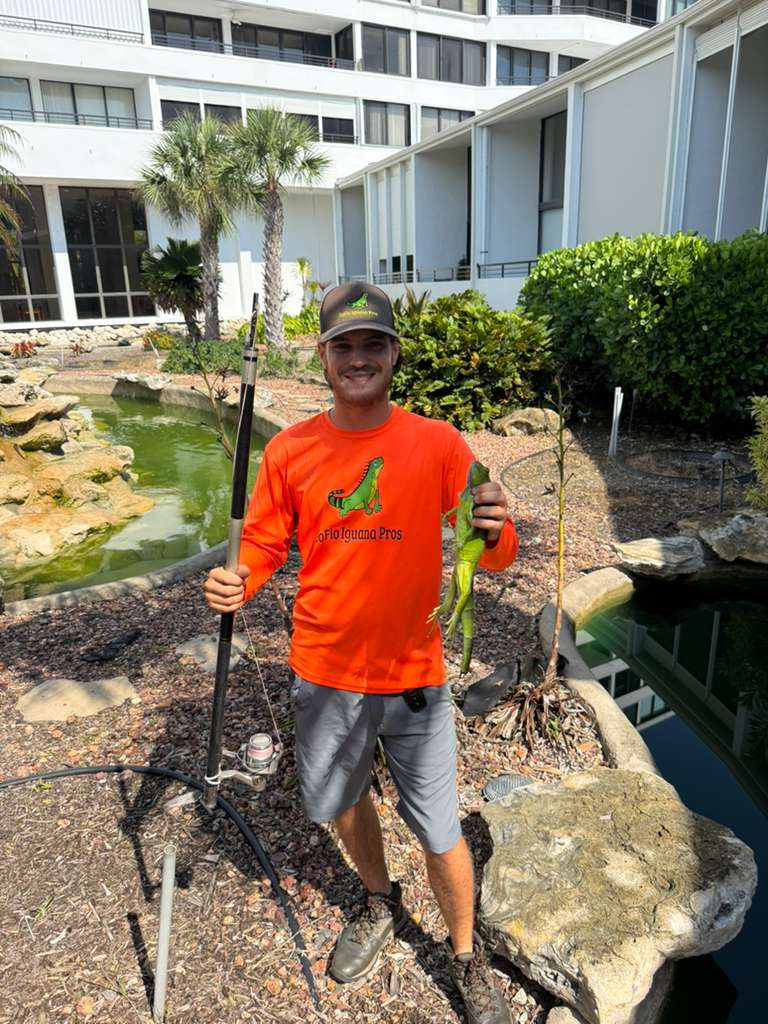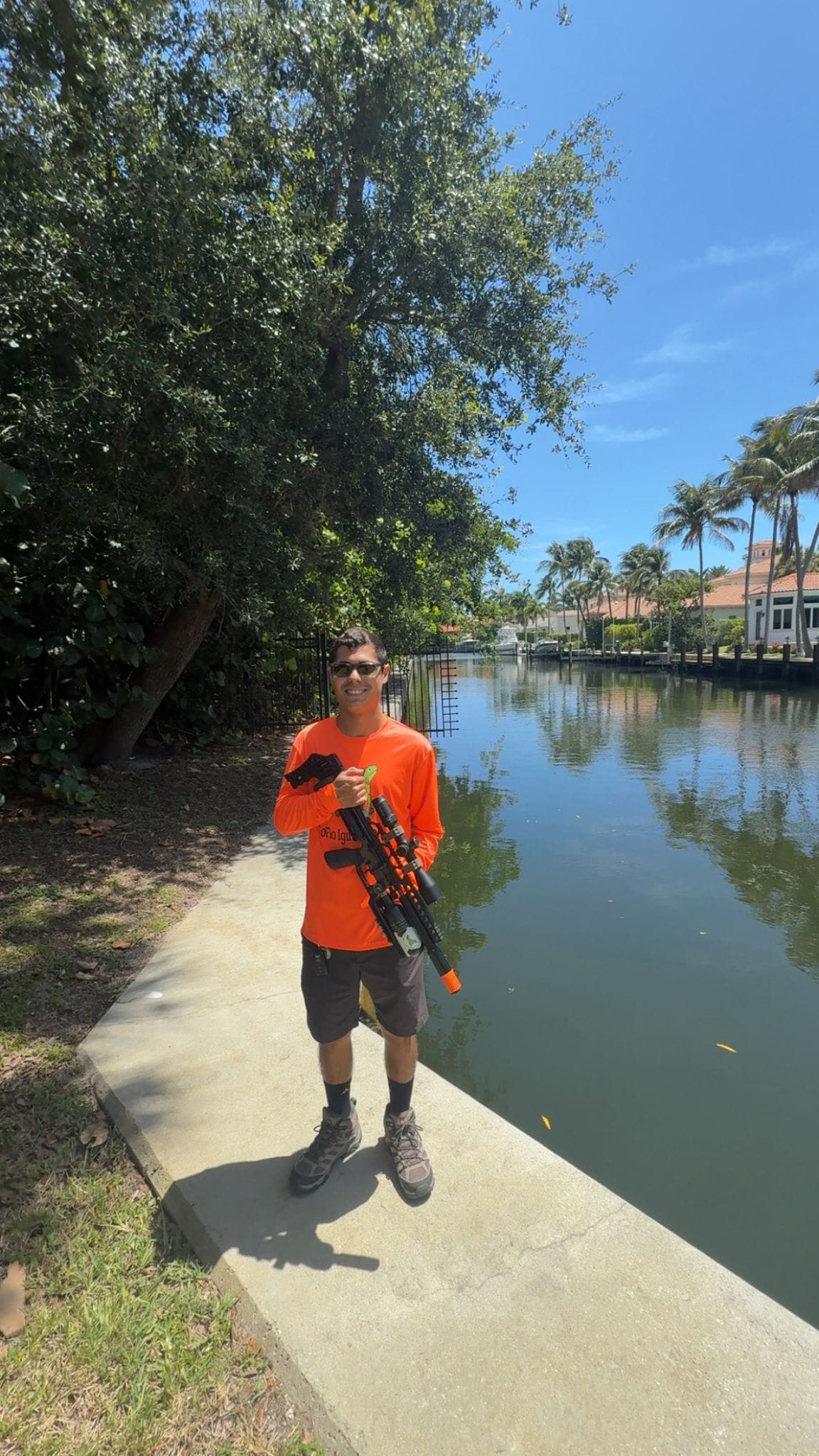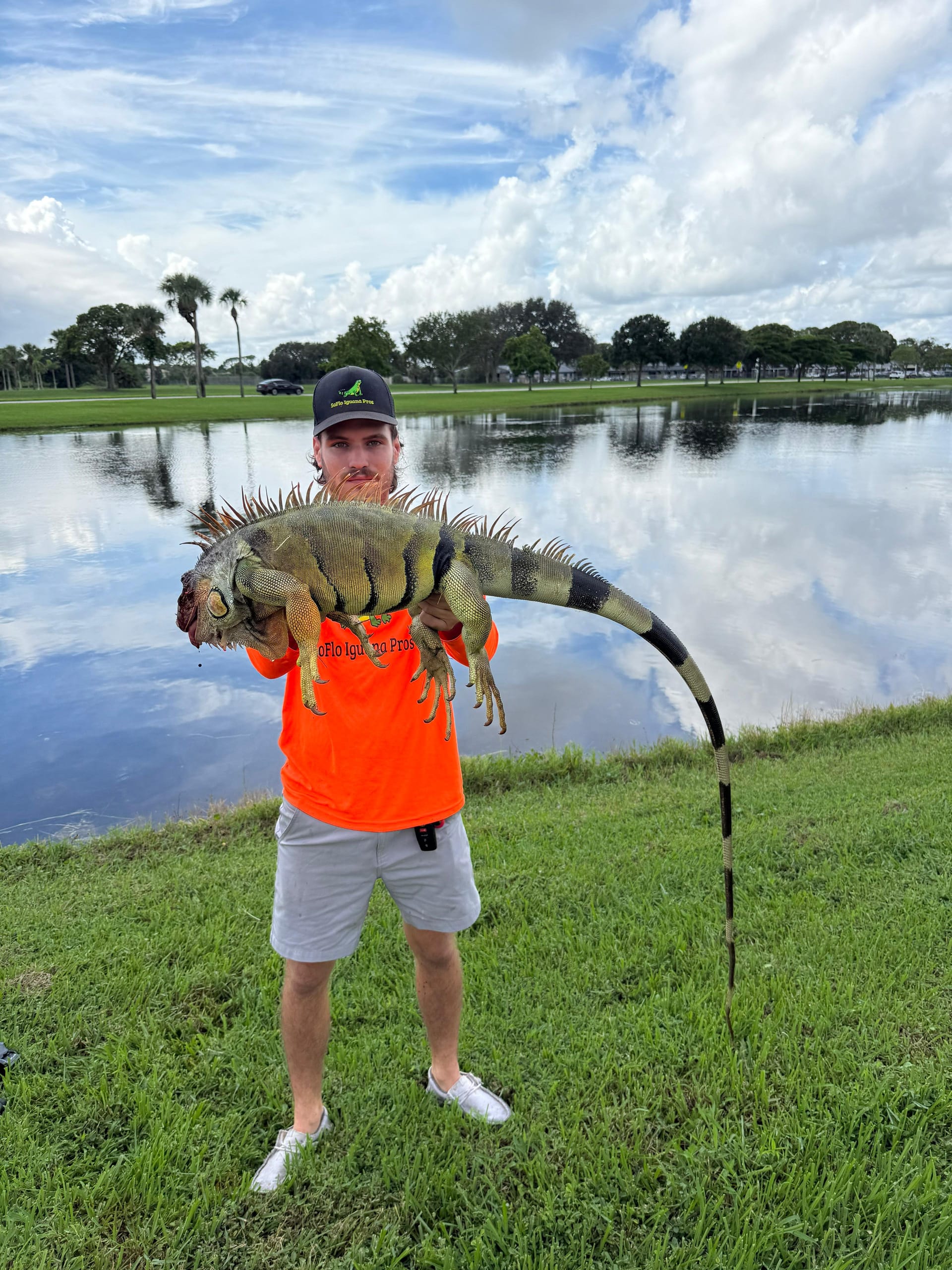

A Palm Beach County golf course is about as good as it gets for iguanas: water hazards and retention lakes with soft banks for burrowing, sand bunkers they'll dig and nest in, and acres of tender, well-watered turf and ornamentals to graze. The result is high pressure across a large area, with burrows collapsing bunker faces and lake banks and droppings fouling greens and cart paths.
Why a course is such a magnet
Nearly every feature that makes a course play well also makes it perfect for iguanas:
- Water hazards and lakes give them burrowing banks and escape water
- Sand bunkers give them soft, easy digging and nesting
- Lush, irrigated turf and ornamentals are a nonstop food supply
- Large acreage means high pressure spread across the whole property
What a course-scale program takes
That scale is why a course needs a real program, not a service call. The work is a monitored trap line across the water hazards and lake banks, ongoing burrow collapse to protect bunkers and shorelines, and a cadence timed to the breeding season so numbers don't spike over the summer.
There's a playability and appearance angle too — members notice iguanas on the greens and damage to the course — so the goal is holding the population down consistently rather than reacting after it's visible. On a course, a visible iguana problem is also a membership problem, which is part of why staying ahead of it pays.
Common questions
Why are golf courses such a magnet for iguanas?
Water hazards and lakes give them burrowing banks, bunkers give them soft digging, and lush turf gives them food. It's ideal habitat across a large area, so pressure is high and constant.
What damage do iguanas do on a course?
They collapse bunker faces and lake banks with burrows, graze turf and ornamentals, and foul greens and cart paths with droppings. It's a grounds problem and a playability problem at the same time.
Can a course be cleared for good?
Not permanently — the water hazards, lakes, and connected habitat keep resupplying the property. The realistic goal is a consistently low number held down by a monitored, season-timed program, which is what protects both the grounds and the member experience.