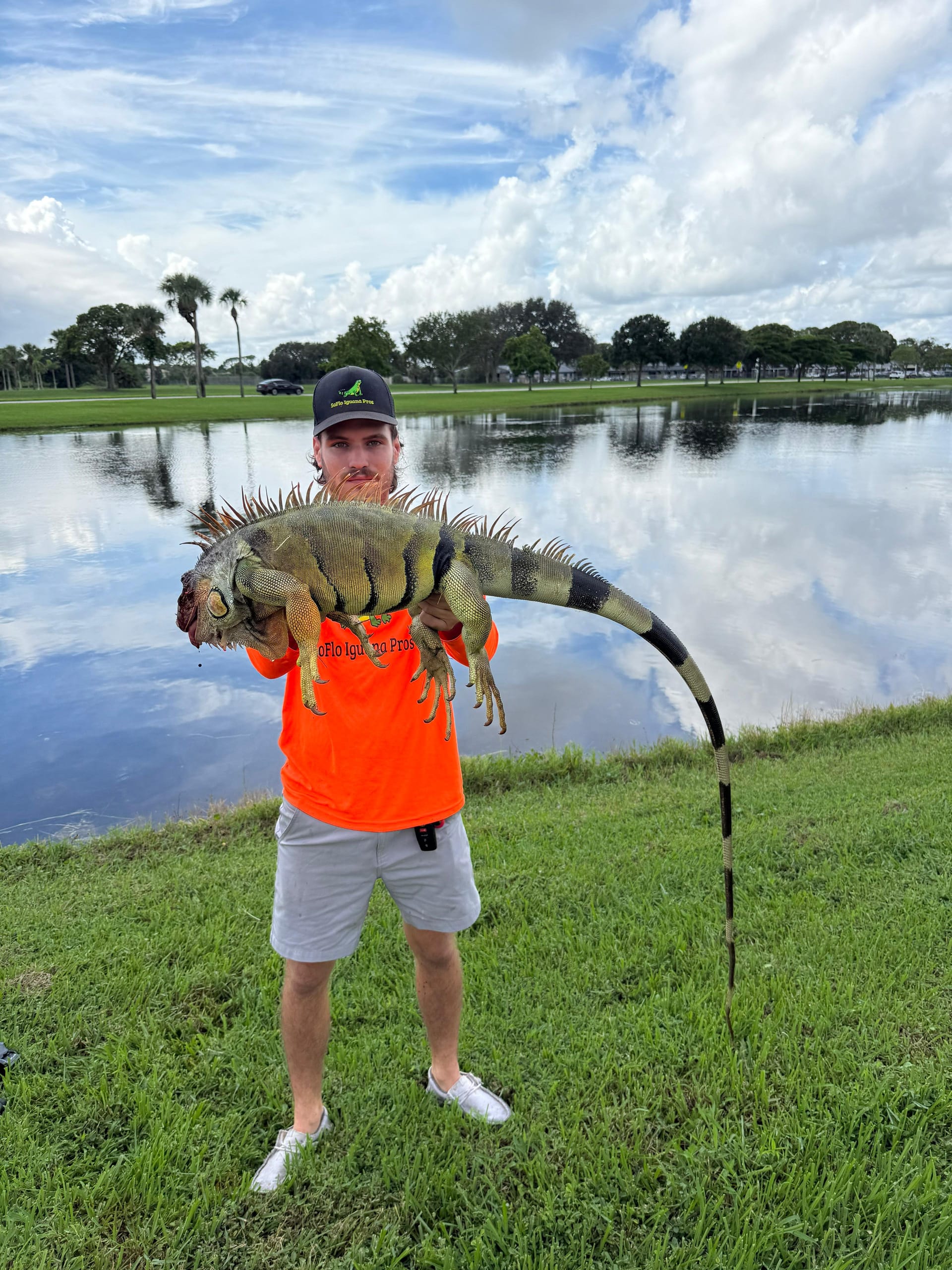
One iguana sunning on the dock is nature. Here's how to tell when they've actually settled in — and it's time to call.
A single iguana passing through is normal in South Florida — they travel the waterline and the canopy, and one sunning on your dock some mornings doesn't mean much. A colony setting up on your property is a different thing entirely. The trick is telling the visitor apart from the resident, because the resident is the one quietly digging into your bank.
The distinction matters because it changes what it costs to fix. A passer-by needs nothing. A settled colony, left another season, becomes burrows, eggs, and hatchlings — a far bigger job. If you're seeing several of the signs below together, you're past the visitor stage.
The seven signs
Any one of these can be a fluke. Two or three of them together is a pattern, and a pattern means residents.
- Iguanas basking on the seawall cap, dock, or pool deck at first light, most mornings — same spots, same time.
- Half-moon burrow openings at the waterline or against the foundation, often with a fan of loose soil.
- Hibiscus, bougainvillea, orchids, or fresh sod chewed down to stubs.
- Dark, seed-flecked droppings collecting on the deck, dock, or lanai.
- Thumps or scratching on a flat roof — or one that's dropped into the pool cage.
- Fresh diggings or small green hatchlings in spring, a sign a female nested nearby.
- Iguanas splashing into the water along your bank whenever you disturb the yard.
Why a settled colony gets expensive fast
The reason we push people to read these signs early is the same reason a settled colony is worth acting on: it doesn't hold steady, it grows. The burrows behind the sign-list are the ones undermining a seawall or a pool deck, and the spring diggings are next year's population. A yard that has 'a few' in June can have a bank full by the following summer if a female or two nested undisturbed.
How fast to act
If you can, act before spring nesting — clearing a settled property early keeps a handful of adults from becoming dozens of hatchlings by summer. If it's already summer and you're seeing hatchlings, it's still worth doing; it's just a bigger job than getting ahead of it would have been. Either way, the pattern is the signal: when the basking, the burrows, and the landscape damage show up together, it's time to call rather than wait and watch.
Questions we hear
How many iguanas is 'a problem'?
It's less about the raw count than the pattern. Burrows, daily basking in the same spots, and landscape damage showing up together mean a resident population, not a passer-by — and that's the version worth acting on. A single iguana that comes and goes usually isn't the same concern.
How fast should I act?
Before spring nesting if you can. Clearing a settled property early keeps a handful of adults from becoming dozens of hatchlings by summer, which is a much larger and more expensive job. If you've already hit summer with hatchlings around, it's still worth doing — just plan on more visits.
I only see them across the canal — is that my problem?
It can become yours quickly. Iguanas travel the waterline, so a colony on a neighbor's neglected bank is a steady supply of animals testing your seawall and yard. If you're already seeing fresh diggings or morning basking on your side, they've started to spill over and it's worth getting ahead of.
Services in this guide