Not predators, but not harmless
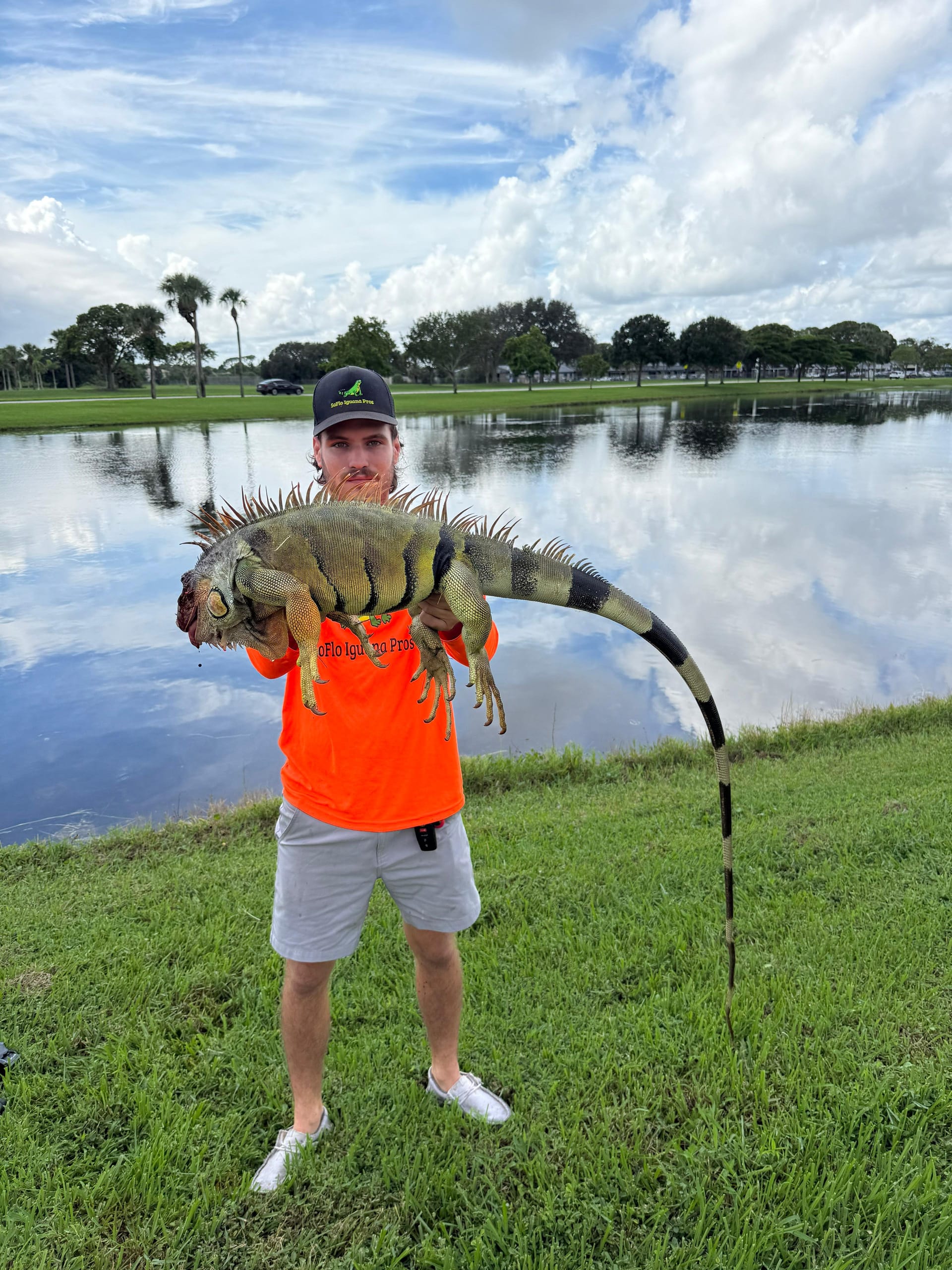
Iguanas are herbivores and don't prey on dogs or cats, so they're not a predator threat the way a coyote or a bird of prey might be. The real risk is a confrontation. A curious dog that corners a large iguana can get a nasty bite, deep scratches from the claws, or a hard tail whip. Large males in breeding season are especially defensive, and a cornered iguana fights back harder than people expect.
The two hazards to watch
There are really two separate risks with pets, and both are worth keeping in mind.
- Physical injury: bites, claw scratches, and tail whips when a pet corners or grabs one.
- Sanitation: pets that sniff, lick, or eat around droppings can be exposed to salmonella.
- A pet that eats a dead iguana, or gets into whatever the iguana got into, can also have problems.
- Burrows and disturbed nesting areas are worth keeping pets away from too.
Keeping pets out of it
The safest approach is to keep pets away from iguanas and their burrows and to get the animals removed so the encounters stop. We're not veterinarians — if your pet is bitten, injured, or seems ill after an iguana encounter, see a vet promptly. Treat this as general information, not veterinary advice.
Common questions
Will an iguana attack my dog first?
Generally no — iguanas flee if they can. Injuries usually happen when a pet corners, chases, or grabs one and it defends itself with bites, claws, and its tail. Large males in breeding season are the most defensive.
My dog bit an iguana — what now?
Check the mouth and body for wounds, and consider salmonella exposure from contact. If there's any injury or your pet seems unwell, see a vet. We can't give veterinary advice — this is general information only.
Can my pet get sick just from the yard being full of droppings?
Droppings can carry salmonella, so a pet that licks fouled surfaces or eats droppings can be exposed. Clean and disinfect affected areas, keep pets off them until dry, and reduce the population at the source. See a vet if your pet shows symptoms.