Iguana pressure in Palm Beach County follows the calendar. Here's what to do season by season so the work never quietly unravels on you.
Iguana pressure isn't steady through the year — it runs on the South Florida calendar. Spring is nesting, summer is growth and grazing, fall is the lull, winter is the cold-snap wildcard. If your prevention ignores that rhythm, it drifts out of date: wraps loosen, burrows re-open, and the buffet grows back while you're not looking.
This is the seasonal pass we walk Palm Beach County clients through. None of it is heavy work if you stay on it — the whole point of a calendar is that a short check each season beats a big scramble once a year. Here's what matters when.
Spring (roughly March–May): the leverage season
Spring is the most important stretch of the whole year, because it's when females dig nesting burrows and lay their clutches. What you do now decides whether summer is quiet or overrun, so this is the season to be most on it.
- Book the property walk early, before fresh diggings become laid clutches.
- Clear resident adults — especially females holding territory on the bank.
- Locate and collapse active nesting burrows before the eggs hatch.
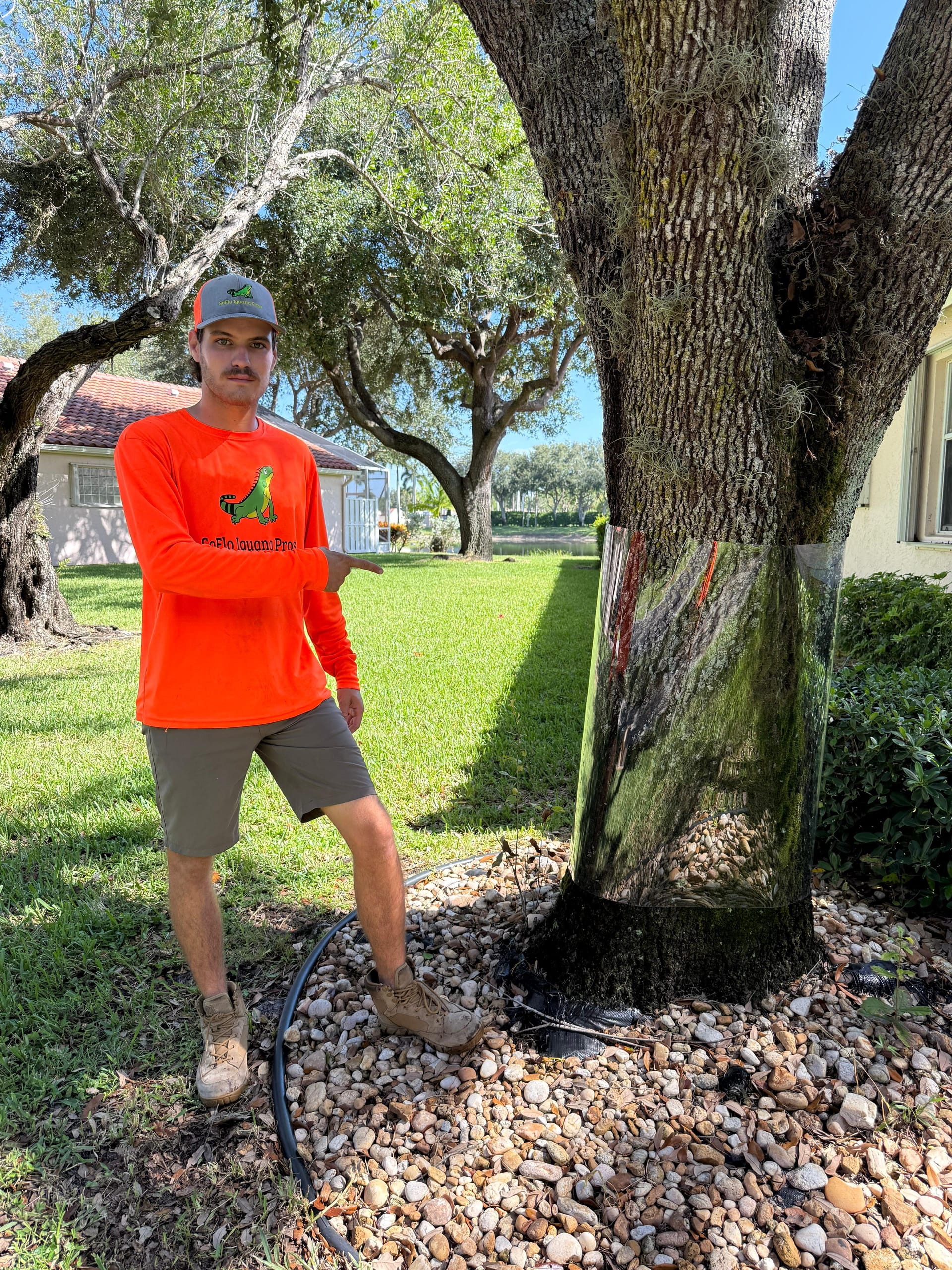
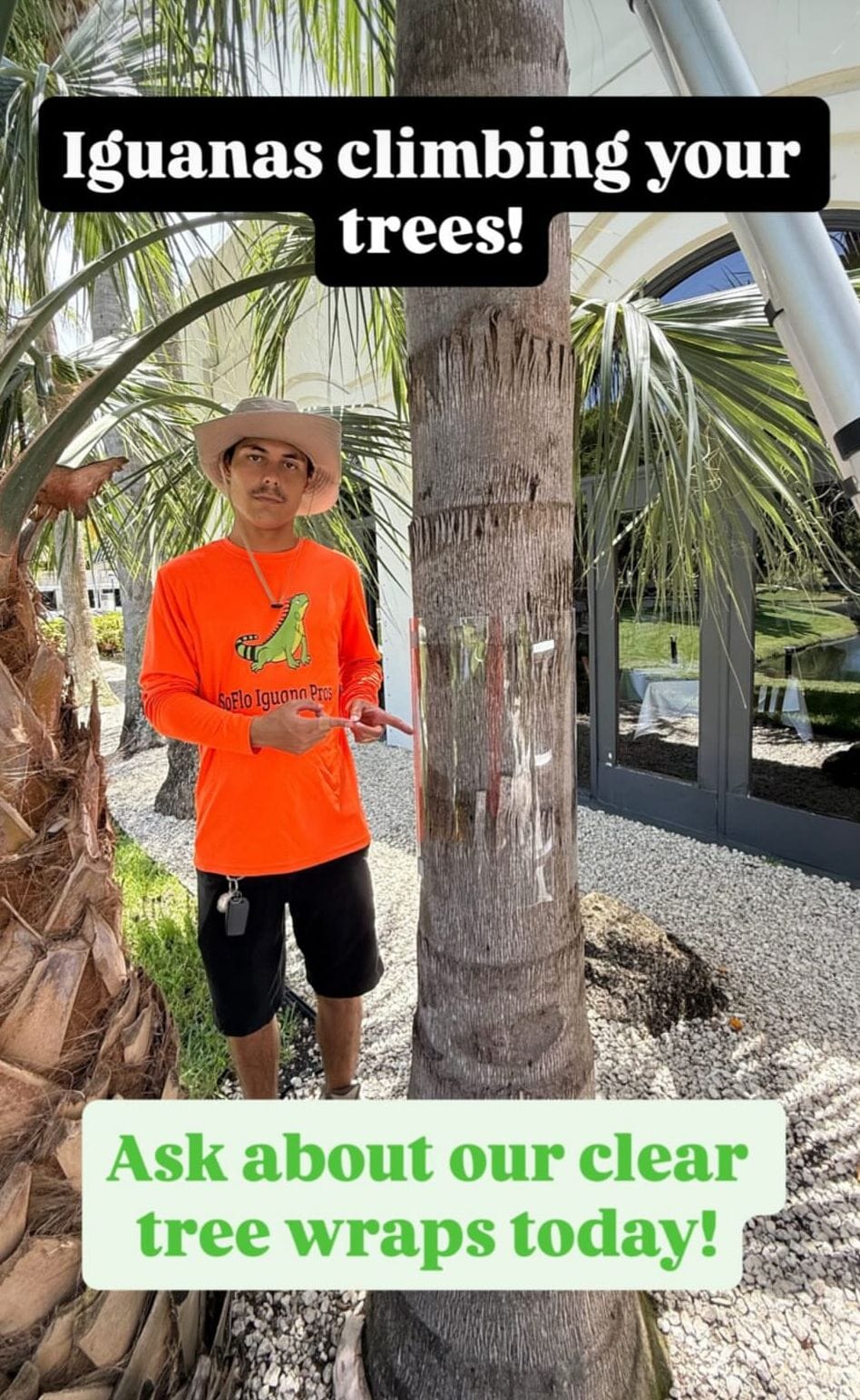
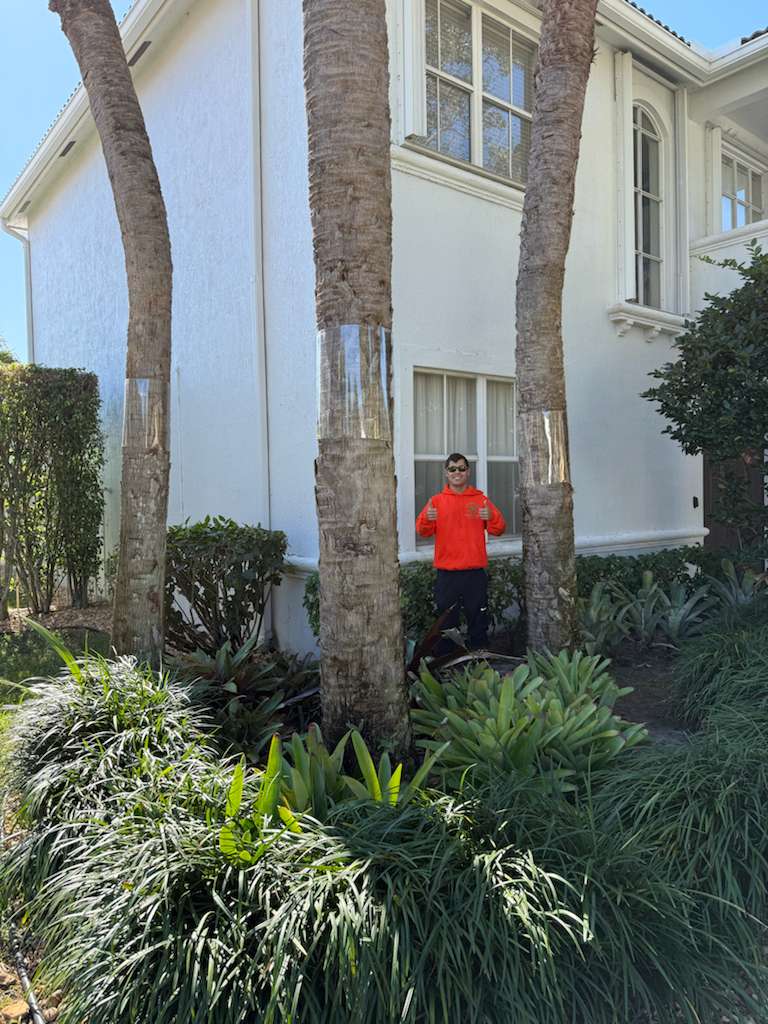
- Confirm tree and piling wraps are still snug after winter.
Summer (roughly June–September): growth and grazing
Summer is when the numbers and the appetite peak. Hatchlings appear, rains soften the soil and bring the plants roaring back, and the buffet you thinned in spring wants to regrow. This is upkeep season — keeping the earlier work from being undone by sheer growth.
- Re-thin the waterline beds and cut limbs back off the roof and pool cage as they grow.
- Keep fallen fruit picked up while the trees are dropping.
- Watch for hatchlings and fresh diggings and deal with them while they're small.
- Re-pack any burrows that have re-opened in the softened soil.
Fall (roughly October–November): catch-up and check
Fall is the natural lull — nesting's done, the worst heat is easing, and pressure settles a bit. It's the ideal time to take stock and fix whatever slid over the busy summer, so you head into winter and the next spring in good shape rather than behind.
- Walk the whole waterline and re-check every wrap, guard, and sealed gap.
- Re-collapse and harden any burrows that opened up over summer.
- Catch up on the plant swaps and trimming that got away from you in the heat.
- Confirm the pool cage and soffit gaps are still sealed.
Winter (roughly December–February): the cold-snap wildcard
Winter is quiet until a cold front isn't. A hard cold snap can drop iguanas out of the trees cold-stunned, and while that thins numbers for a while, it's weather, not management — the survivors breed right back by spring. The mistake is treating a quiet January as 'solved' and skipping the walk.
- After a cold snap, clean up any carcasses and droppings with gloves (salmonella risk).
- Use the low-pressure window to map burrows the cold exposed and plan the spring clear-out.
- Don't mistake a quiet winter for a fixed problem — book the spring assessment now.
- Keep an eye on the bank so April's diggings don't catch you flat-footed.
Questions we hear
When is the most important time to act on iguanas?
Spring, without much competition. That's when females dig nesting burrows and lay clutches, so clearing a property before the eggs hatch keeps a handful of adults from becoming dozens of hatchlings by summer. Get ahead of the hatch and the rest of the year is upkeep; miss it and summer becomes a chase.
Does a cold snap fix my iguana problem?
No. A hard freeze can cold-stun iguanas and thin the numbers for a season, but it's weather, not management — the survivors breed the population right back by spring. Treat a quiet winter as a window to get ahead of nesting, not as a solution, and don't skip the spring assessment.
How often should I actually check things?
A short pass each season is the sweet spot — spring to clear and confirm wraps, summer to keep growth and hatchlings in check, fall to catch up, winter to watch after cold snaps. A few minutes each season beats a big once-a-year scramble, and it's what keeps the earlier work from quietly unraveling.
Services in this guide