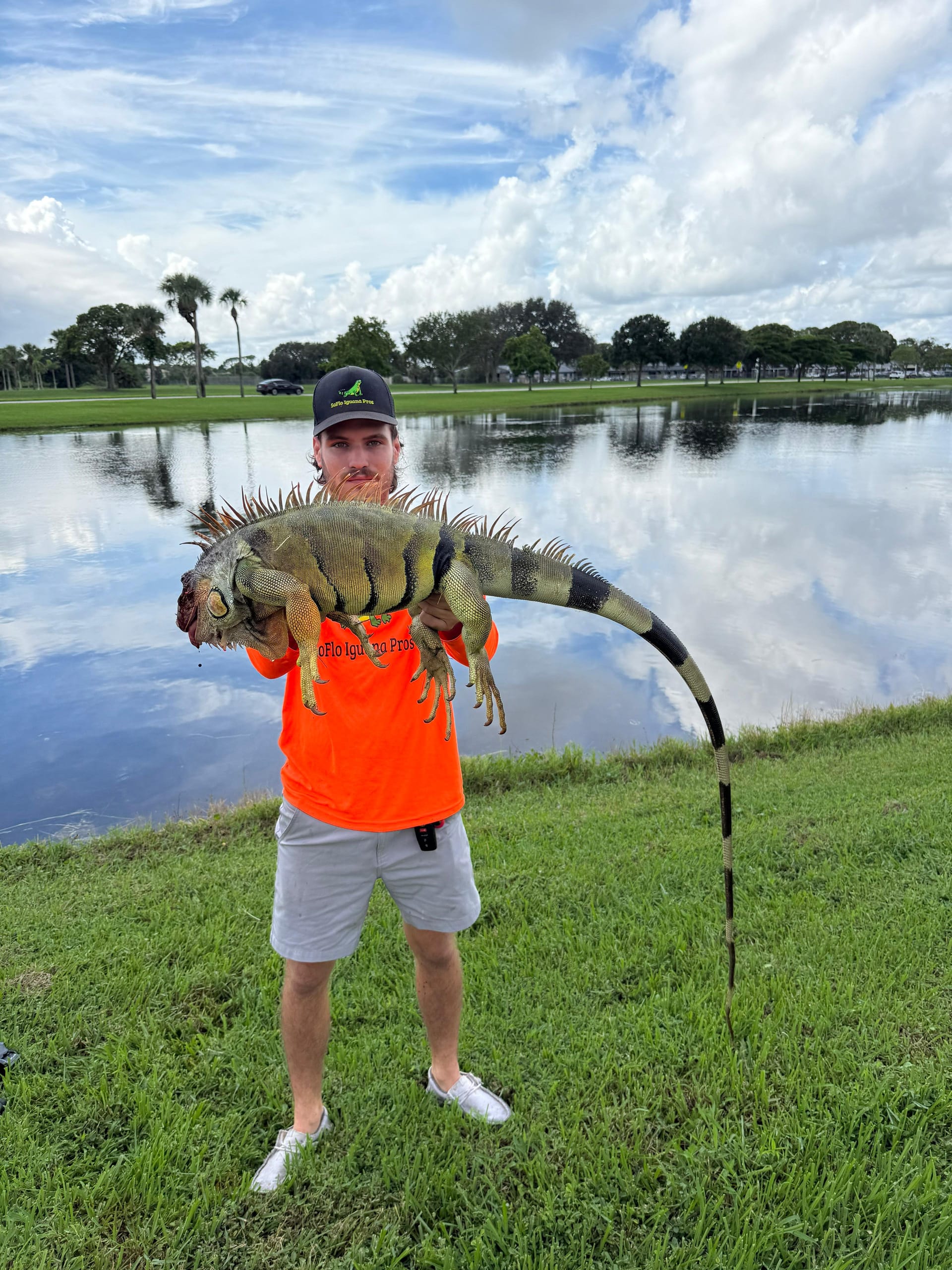

Four things line up in South Florida to make it iguana heaven: a climate that never really gets cold for long, endless waterfront to den along, ornamental landscaping to eat, and essentially no natural predators. Add a species that lays dozens of eggs a year, and the numbers build fast. Remove any one of those factors and the population would struggle — but here all four hold at once, most of the time.
Palm Beach County is close to a textbook case. Miles of finger canals, the C-51, the Intracoastal, Lake Worth Lagoon, and countless HOA and golf-course retention lakes give iguanas soft banks to burrow in and instant water to escape into, all wrapped in the kind of flowering landscaping they most like to eat.
Each factor, and why it matters
It helps to see the drivers laid out, because prevention works by chipping away at them one property at a time — you can't change the climate, but you can change the food, cover, and denning on your own bank.
- Climate: warm enough year-round to stay active and breed, with only occasional cold snaps
- Water: canals, lakes, and the Intracoastal supply denning banks and an escape route
- Food: ornamental flowers, fruit, and tender growth are abundant on kept properties
- No predators: nothing here reliably preys on adults, so numbers aren't naturally checked
- Fast breeding: clutches of dozens of eggs let populations compound each season
Why it's a standing condition, not an event
Because those factors are permanent features of the area, iguana pressure here is a standing condition on waterfront and community properties rather than a rare event you deal with once. A cold snap dents the numbers occasionally, but the underlying setup refills them. That's the mindset SoFlo works from: manage the pressure continuously, don't wait for a crisis.
The practical upshot is that staying ahead of the breeding cycle beats reacting after a colony forms. Nick's approach on heavy addresses is to interrupt the cycle before spring nesting and keep the property unattractive year-round, rather than trying to claw back numbers once a bank is fully colonized.
Common questions
Are iguana numbers getting worse?
On unmanaged waterfront and community properties, generally yes — with fast breeding and no predators, numbers climb until something interrupts the cycle. Cold snaps set them back only temporarily, so without active management the trend on a good bank is upward.
Which properties get hit hardest?
Anything on the water — Intracoastal seawalls, finger canals, the C-51, Lake Worth Lagoon frontage, and HOA and golf-course retention lakes. The banks give iguanas everything they need to den, breed, and escape, so waterfront addresses carry by far the most pressure.
Will my property ever be permanently iguana-free?
Realistically, waterfront and community-lake properties stay under some pressure because the surrounding habitat keeps producing iguanas. The achievable goal is generally to knock the resident population down and keep it low with ongoing management, not to expect a one-and-done that lasts forever.