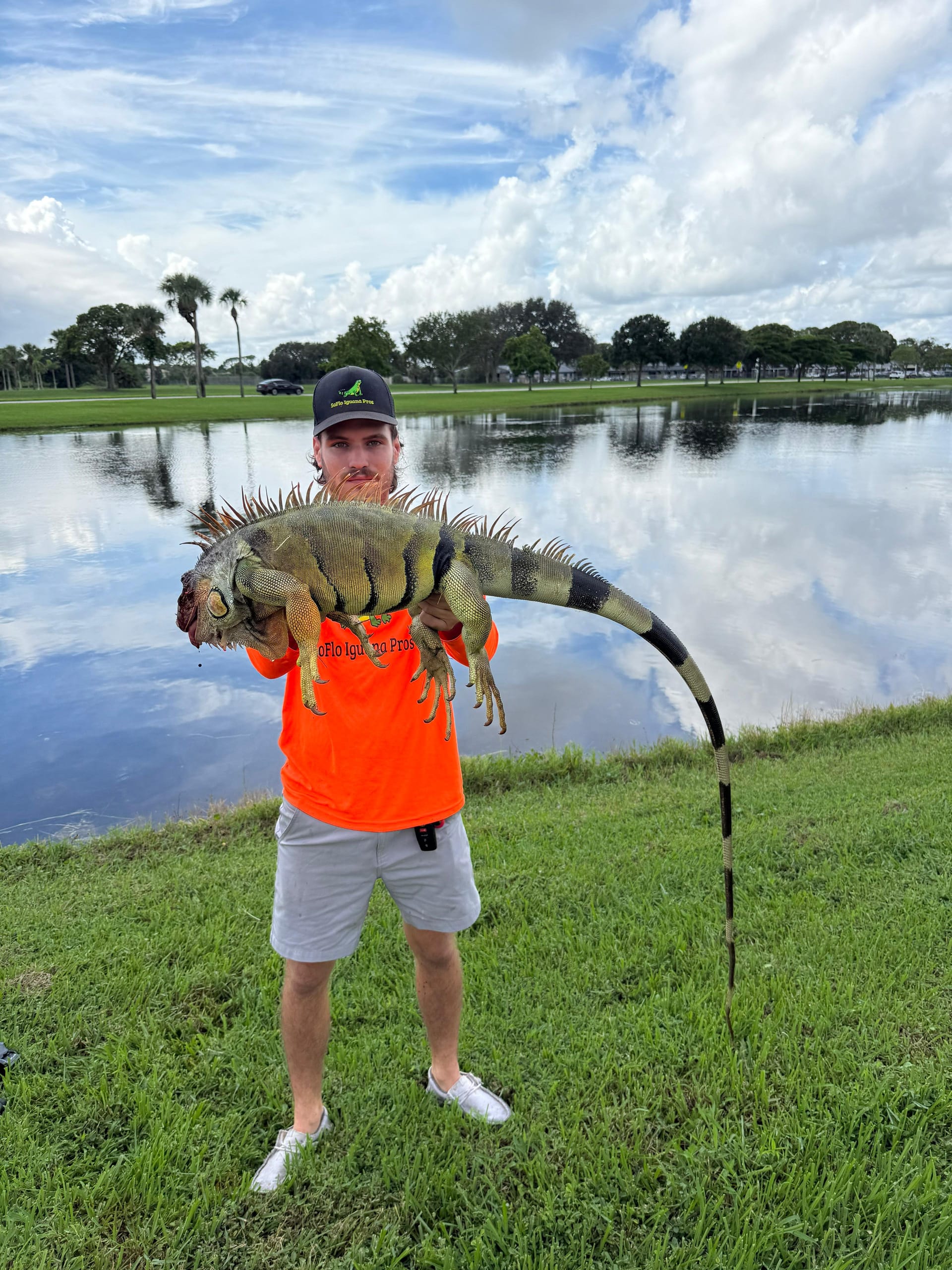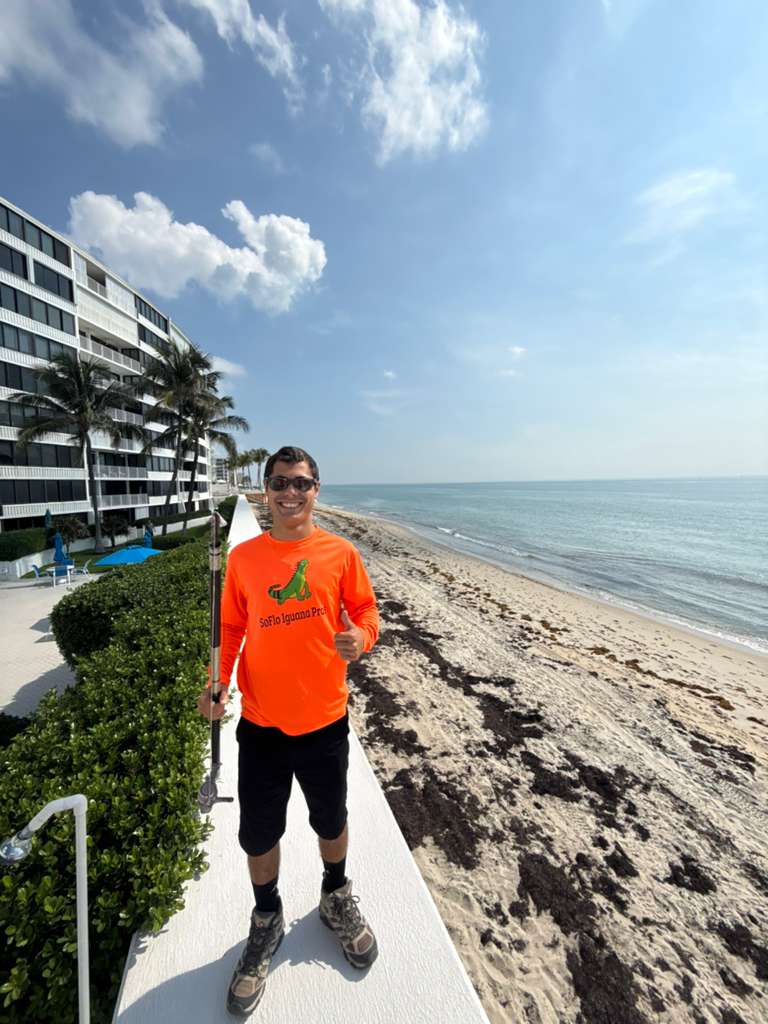
On a Palm Beach County property, iguana activity tracks two things: the water and the sun. They bask by day on seawall caps, docks, rip-rap, flat roofs, pool decks, and the tops of retaining walls, soaking up heat where they can see trouble coming. When the sun moves or a threat appears, they retreat to cover — usually a burrow or the water.
They den in burrows dug into canal and lake banks or tucked against foundations, driveways, pool-equipment slabs, and A/C pads. A property that looks iguana-free at 8 a.m. on a cool morning can be lined with basking adults by noon, because the animals were down in burrows or in the water until it warmed up.
The daytime and hideout map
Effective removal and prevention start with mapping where the animals actually spend their time, not just counting how many you saw. The basking spots tell you the routes; the burrows and water tell you where they go when pressed.
- Basking: seawall caps, docks, rip-rap, pool decks, flat roofs, balconies, retaining walls
- Denning: burrows in canal/lake banks, seawall backfill, and against foundations and slabs
- Travel: fences, trellises, screen frames, overhanging branches, and the seawall itself
- Escape: straight into the canal, lake, or lagoon when disturbed
Why climbers and swimmers are hard to pin down
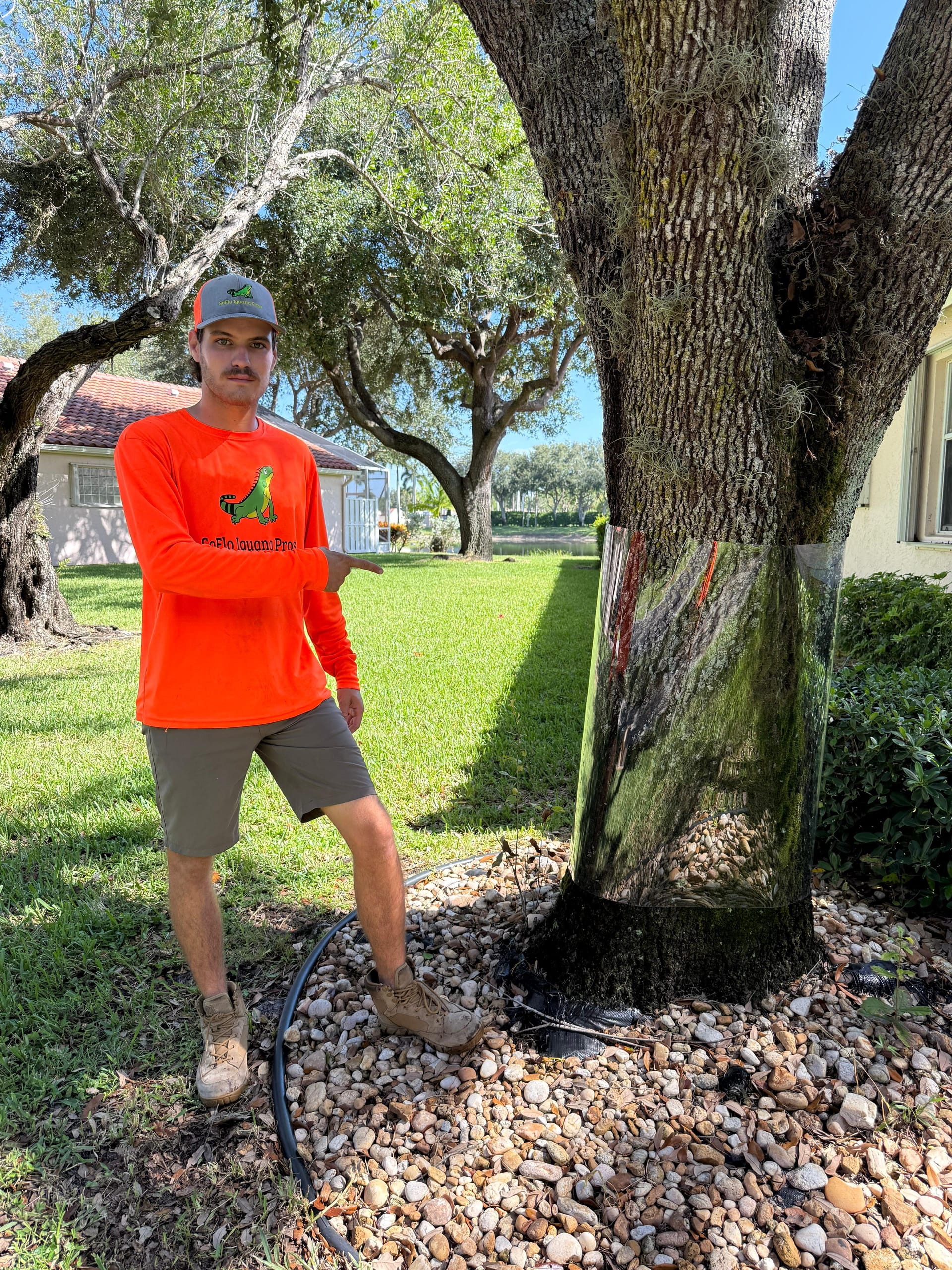
Iguanas are strong climbers and swimmers, so a fruit tree by the house or a dock on the canal doubles as both a highway and a hideout. They'll climb a screen frame to bask on a flat roof, travel a fence line between yards, and drop into the water the instant a person walks out. That mobility is exactly why a single walk-through undercounts them.
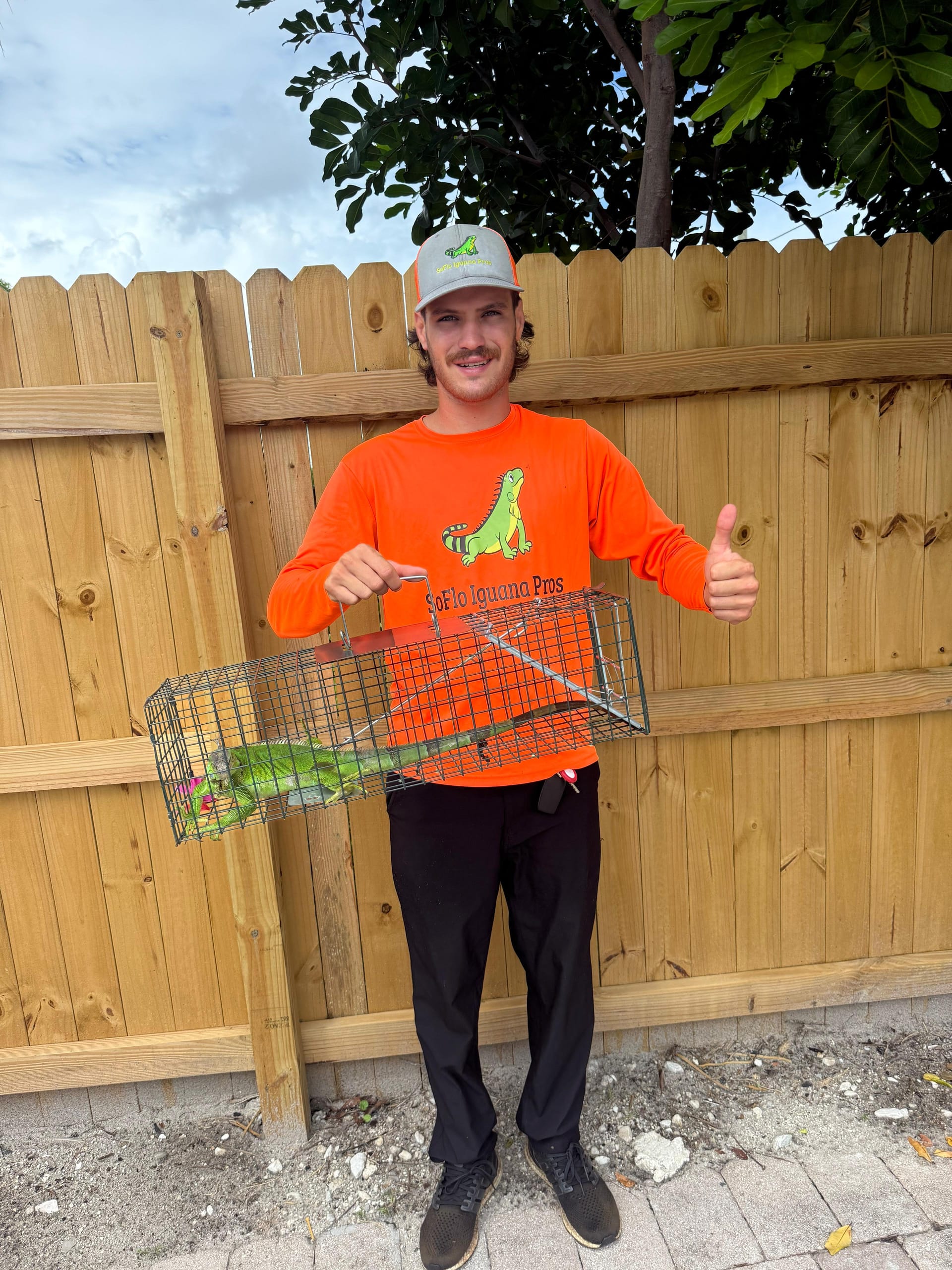
Mapping these spots — the sunny ledges, the dug-in burrows, the branches that reach the roof — is what makes SoFlo's removal and prevention work stick. Nick reads the property as a system of sun, water, food, and cover, then targets the specific features that keep pulling iguanas back to that address.
Common questions
Why are iguanas always near the water?
Canal, lake, and lagoon banks give them soft ground to burrow in and an instant escape — they dive and hide underwater when threatened. Waterfront and community-lake properties in Palm Beach County see the heaviest pressure for exactly that reason.
Can iguanas get on my roof?
Yes. They climb trees, trellises, fences, and screen frames to bask on flat roofs and balconies, then sometimes drop into pool cages they can't climb back out of. Overhanging branches near the house are a common access route worth trimming back.
I don't see burrows — does that mean they're not denning here?
Not necessarily. Burrow entrances hide well in bank vegetation, seawall backfill, and against slabs and foundations, and iguanas often den on a neighbor's bank and commute to your landscaping. A close look along the waterline usually turns up the entrances.