The county's iguana superhighway
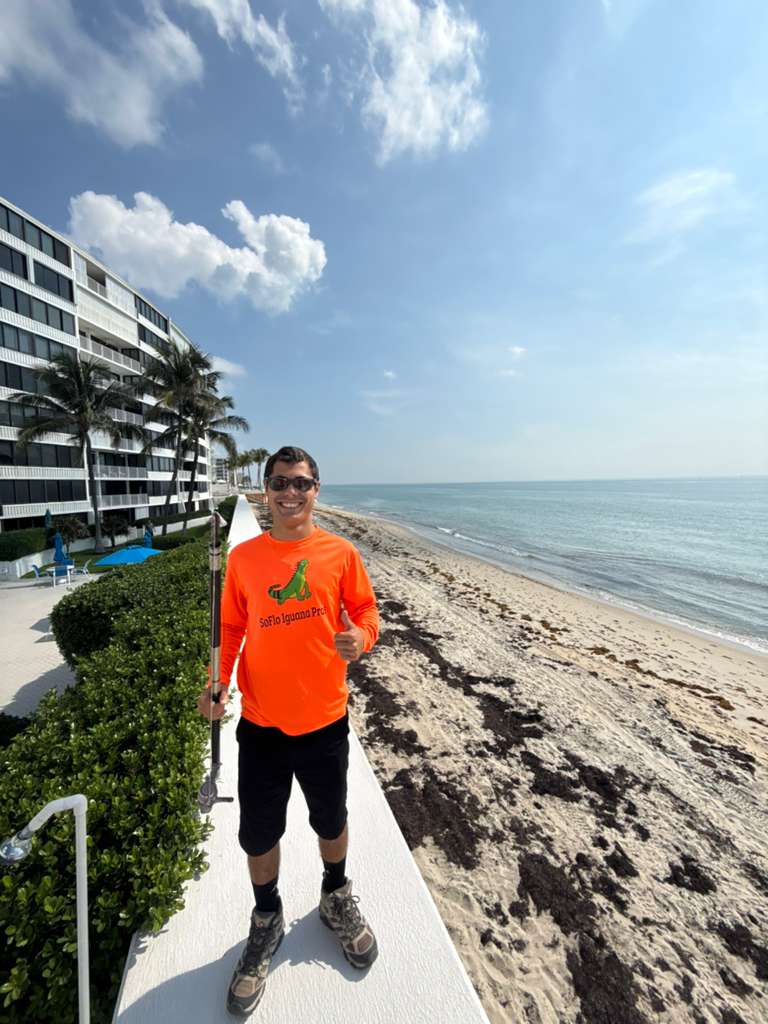
The Intracoastal Waterway — the Lake Worth Lagoon through most of Palm Beach County — is the single biggest driver of iguana pressure we deal with. It gives them everything at once: seawall backfill and bank soil to den in, warm concrete caps and docks to bask on, ornamental landscaping right at the water's edge, and open water to dive into the moment they're disturbed.
From the Flagler Drive waterfront in West Palm Beach down to the Boca and Delray estates, the seawall is a continuous highway they travel every day. That connectivity is why waterfront pressure never really lets up — the population is essentially shared up and down the shoreline.
Why one visit rarely clears a heavy lot
That escape-into-the-water behavior is exactly why a single visit rarely clears a heavy Intracoastal lot — some of the animals are simply submerged when we're there. Green iguanas are strong swimmers and can stay under a good while, then climb right back onto the wall once we've gone.
- Iguanas dive and hold underwater when approached
- The seawall acts as a shared travel route between lots
- Burrows undermine seawall backfill, slopes, and dock footings
- Landscaping at the waterline is a constant food source
What actually holds the line
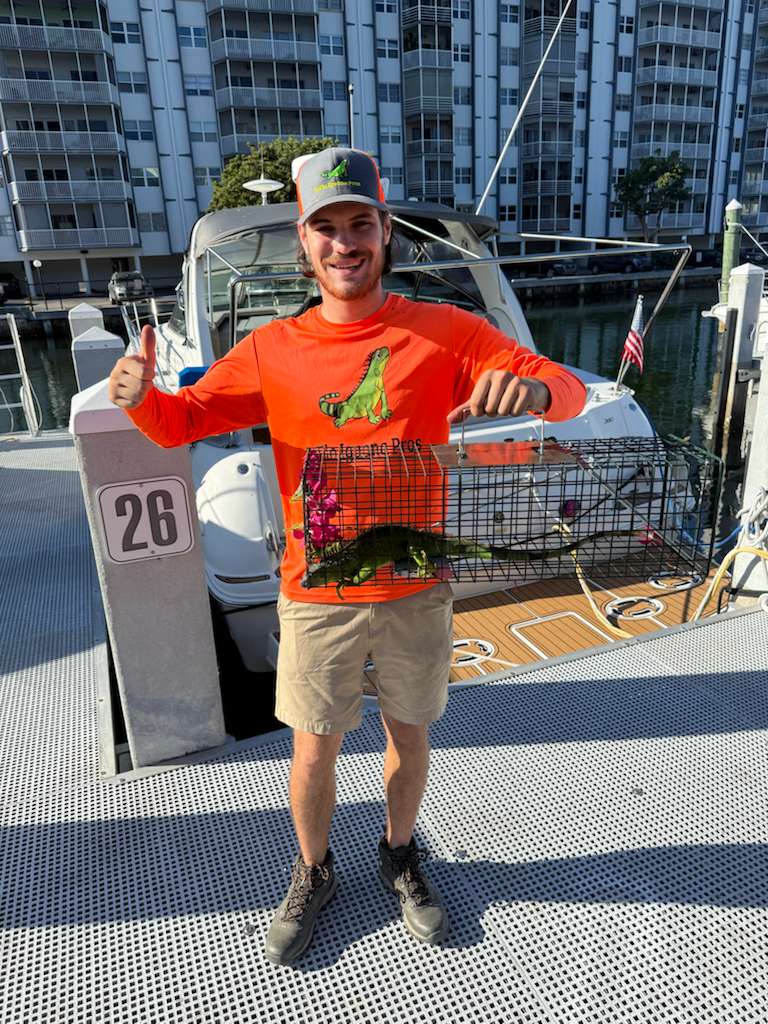
On these properties a monitored trap line along the waterline outperforms a one-off clear-out, because it works the routes over time and catches the ones that were in the water on the first pass. We pair that with burrow collapse and dock-piling guards so the seawall stops functioning as a road. On the busiest stretches — the Flagler Drive downtown blocks especially — that patient, repeated approach is the only thing that keeps numbers down.
Common questions
Why didn't the first visit get all the iguanas on my seawall?
On the Intracoastal some iguanas dive and hide underwater during a visit. That's why heavy waterfront properties do better on a monitored program than a single clear-out.
Can you stop them using my dock and seawall?
We collapse the bank burrows and fit dock-piling guards so the seawall stops working as a highway, then monitor the runs to keep pressure down.
Do iguana burrows really damage a seawall?
Yes. Burrowing into the backfill behind the wall and the surrounding slope undermines the structure and dock footings over time, so burrow collapse is a core part of the work.