Marinas give iguanas everything they want — pilings to climb, seawalls to dig, and boats to foul. Here's how a marina program protects the docks and the vessels.
A marina is about the most iguana-friendly commercial property there is. Pilings and dock structure give them the vertical climbs they love, the seawalls and banks give them digging, and the boats give them warm, sheltered basking spots — and something to foul. For a marina operator in Palm Beach County, iguanas are a dock-maintenance problem, a vessel-cleanliness problem, and a slip-holder-complaint problem all at once.
Marina programs sit alongside our waterfront and hospitality work because the habitat overlaps, but the dock structure and the boats add wrinkles a standard shoreline program doesn't cover.
The boats are the complaint driver
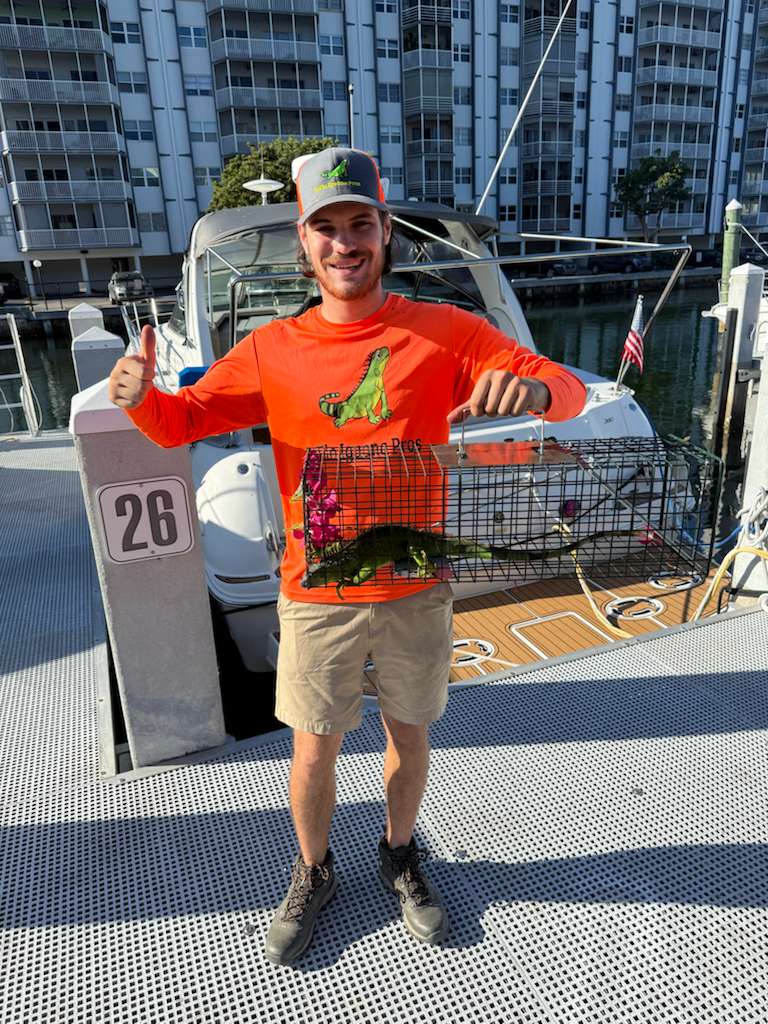
Slip holders pay for a clean vessel, and an iguana basking on a swim platform or leaving droppings across a cockpit is a fast way to a angry phone call. Iguanas get onto boats the same way they get anywhere — an easy climb from the dock or a piling — so the fix is the same principle as the rest of our work: remove the residents and cut off the routes onto the docks and the vessels. Fouled boats are the symptom slip holders notice, but the docks are where you solve it.
Pilings and dock structure: the climb routes
Marinas are climb-route problems by design. Every piling is a ladder, and the dock framing gives them runs above the waterline that keep them dry and out of reach. Guarding the climbs — smooth banding on pilings where it's practical, and cutting off the easy vertical routes — is central to a marina program in a way it isn't even on a residential seawall. It's the piece that keeps them off the finger docks and, by extension, off the boats.
- Guard piling and dock climb routes where practical.
- Remove and trap the residents working the docks and seawall.
- Collapse burrows in the adjacent banks and seawall backfill.
- Keep it monitored through nesting season, when the banks refill.
The seawall is still doing the damage
Under the dock-and-boat surface issue is the same structural one every waterfront property has: burrows in the seawall and bank hollowing out the backfill until the cap cracks and the shoreline slumps. A marina's seawall is a capital asset like any other, and the iguana damage to it is slow and expensive the same way. Working the banks isn't just about the boats — it's protecting the structure the whole marina sits on.
Running a marina program
Like all our commercial work, a marina program runs on a scheduled cadence with one accountable contact, documented activity you can show ownership and slip holders, and a certificate of insurance for the facility before the first visit. Pricing is custom to the marina — the number of slips, the length of seawall, the dock layout all matter — and the assessment that produces it is free. Start at /commercial or request a scope at /commercial/request-a-proposal.
Questions we hear
How do iguanas keep getting onto the boats?
The same way they get anywhere — an easy climb from the dock or a piling onto a warm, sheltered vessel. The fix is removing the residents and guarding the climb routes onto the docks, so the boats stop being reachable. Cleaning a fouled boat treats the symptom; the docks are where you solve it.
Do you carry insurance for marina work?
Yes — a certificate of insurance for the facility before the first visit, plus documented activity you can show ownership and slip holders. Custom pricing follows a free assessment that accounts for slip count, seawall length, and dock layout.
Is the seawall really our problem if the complaints are about boats?
Yes. The boats are the visible symptom, but the burrows in the seawall and banks are hollowing out the structure the marina sits on — slow, expensive damage like any waterfront property. Working the banks protects the capital asset as well as clearing the docks.
Services in this guide