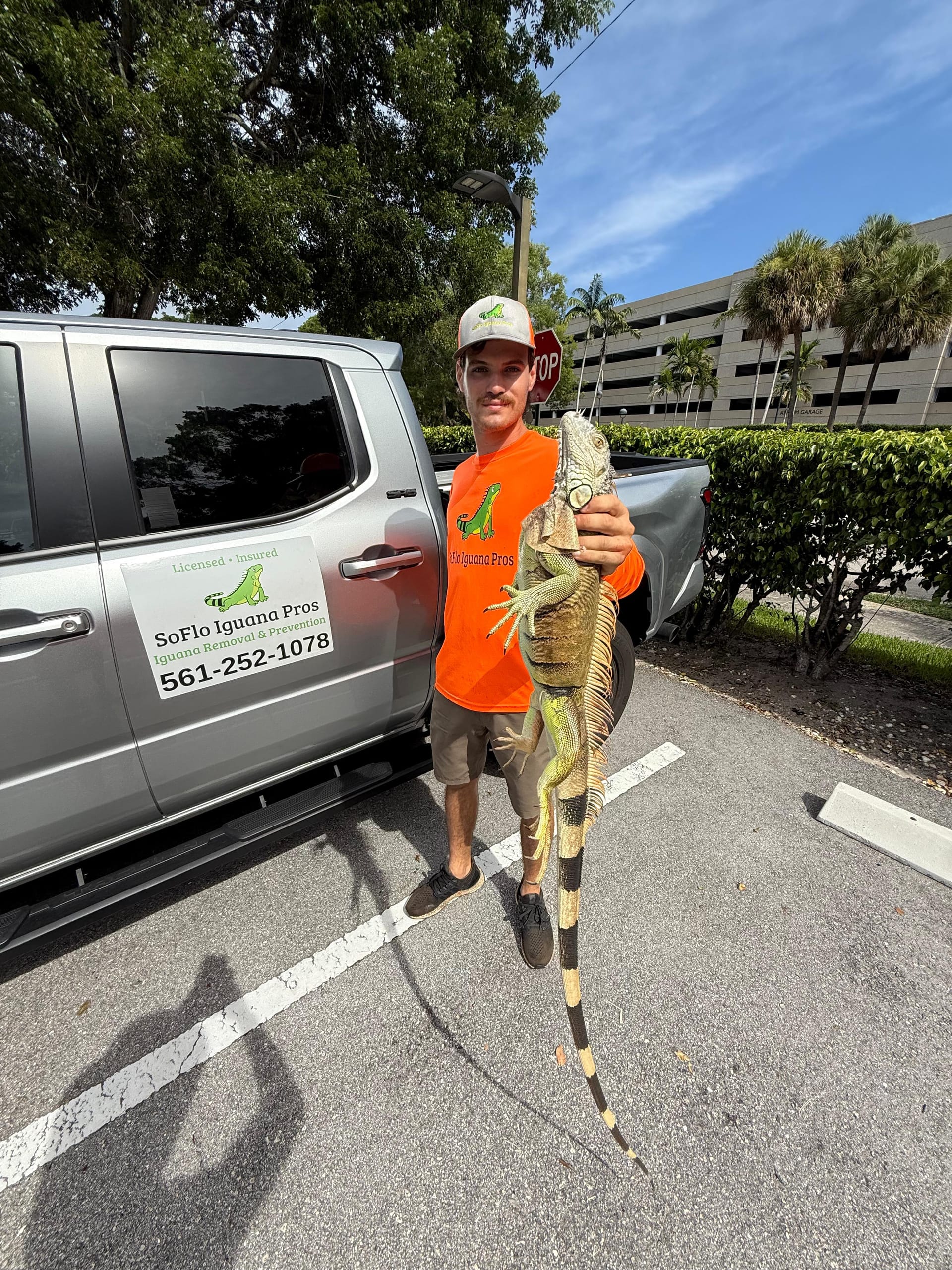
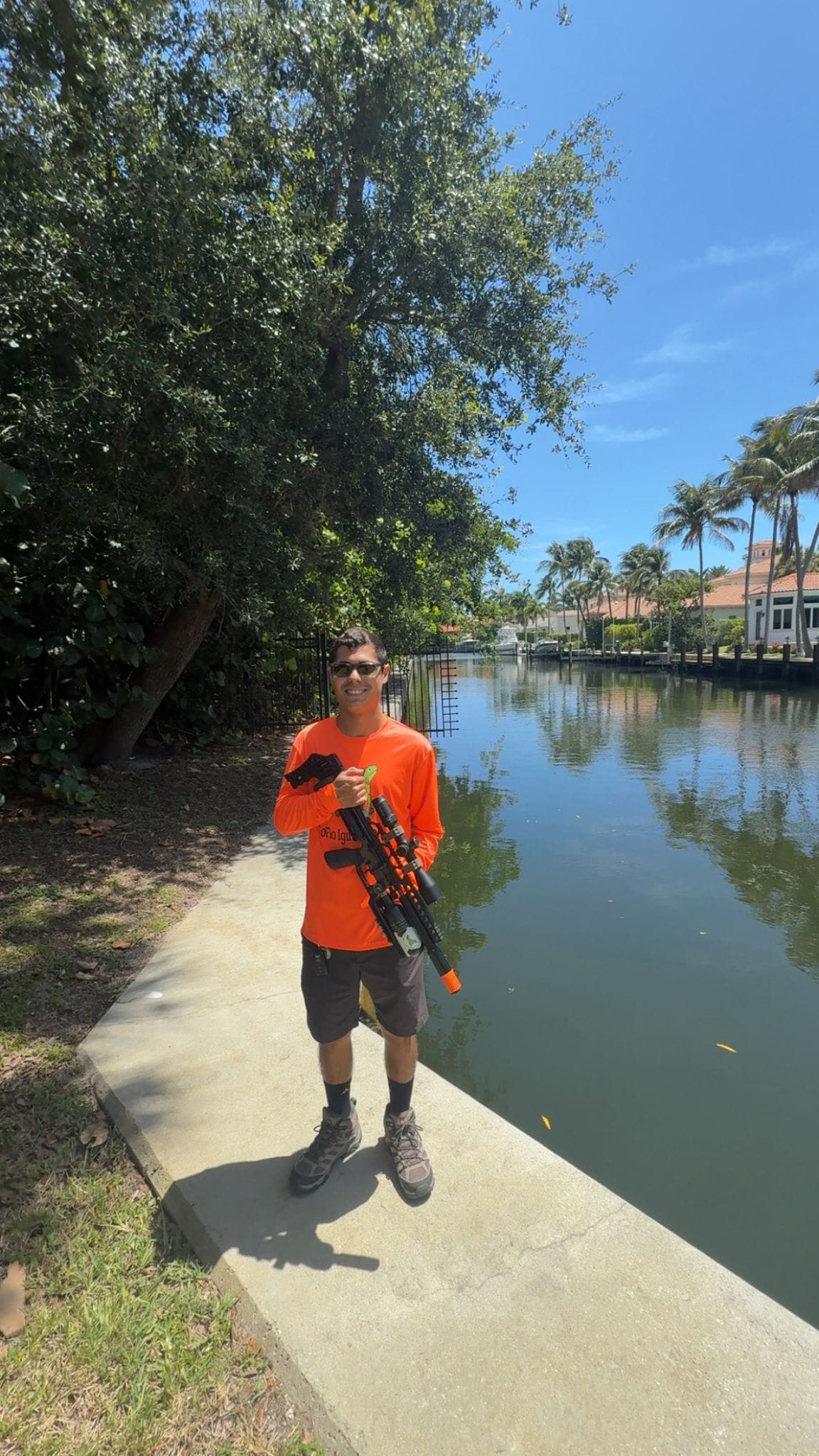
On a course, iguanas foul greens, undermine bunker faces, and burrow the lake banks. Here's what a course-wide program looks like and how it protects playability.
A golf course is an iguana paradise, and superintendents in Palm Beach County know it. You've built acres of manicured turf, dozens of sun-warmed bunker faces, and a network of lakes with soft, diggable banks — then wrapped it all in the kind of quiet, water-rich landscape iguanas thrive in. The result shows up on the greens, in the bunkers, and along every lake edge on the property.
Course iguana control is its own discipline because the damage hits three different systems at once, each with its own maintenance and playability cost. A program built for a course has to work all three.
Greens and tees: the fouling and the grazing
Iguanas graze tender turf and leave droppings on greens, tees, and collars — a sanitation problem your crew ends up managing every morning and a genuine turf-quality issue on high-traffic surfaces. Basking iguanas on a green at first light are also just a bad look for a course selling a premium round. Removing the resident animals and cutting off the routes they use to reach the putting surfaces is the front line of a course program.
Bunkers: the burrows in the faces
Bunker faces are prime iguana digging — steep, sun-exposed, soft sand and soil. Burrows collapse edges, funnel sand where it shouldn't go, and create casual-water and repair headaches that pull your crew off other work after every rain. Locating and collapsing those burrows, then keeping the faces monitored through nesting season, is the piece that keeps bunker maintenance from becoming a daily chore.
- Map the burrows in bunker faces and along the surrounds.
- Collapse and pack them so the faces stop shedding sand.
- Re-check heavily worked bunkers through spring nesting.
Lakes: the banks are the source
The course lakes are where the population actually lives. The banks are soft, sunny, and back onto the water — ideal nesting and denning ground, and the reservoir that reseeds the greens and bunkers after every clear-out. A course program that skips the lake banks is just mowing the symptom. Working the banks — removal, trapping, burrow collapse — is what brings the whole course pressure down and keeps it there.
The lake banks are also a shoreline-erosion issue in their own right, the same way a community seawall is, so the work protects the course's own capital, not just its playability.
Running it as a scheduled program
Course-wide control is a program, not a visit. The pressure refills from the lakes and the property line continuously, so a set cadence — heavier through spring nesting, steady the rest of the year — is what actually holds. You get one accountable contact, Nick, who learns the course's hot spots, documented activity your superintendent can file, and a certificate of insurance for the facility. Pricing is custom to the course; the assessment that produces it is free. You can start at /commercial/golf.
Questions we hear
Can you work around play and tournaments?
Yes. Course work is scheduled around your tee sheet and events, typically early or in maintenance windows, and coordinated through one contact who learns your hot spots. We fit the crew's rhythm rather than disrupting the round.
Which part of the course should we prioritize?
The lake banks, almost always. That's where the population dens and nests, and it's the source that reseeds the greens and bunkers after any surface-level clear-out. Working the banks first is what brings whole-course pressure down and keeps it there.
Do you carry insurance for course work?
Yes — we provide a certificate of insurance for the facility before the first visit, along with documented activity reporting your superintendent can file. Custom pricing follows a free on-course assessment.
Services in this guide