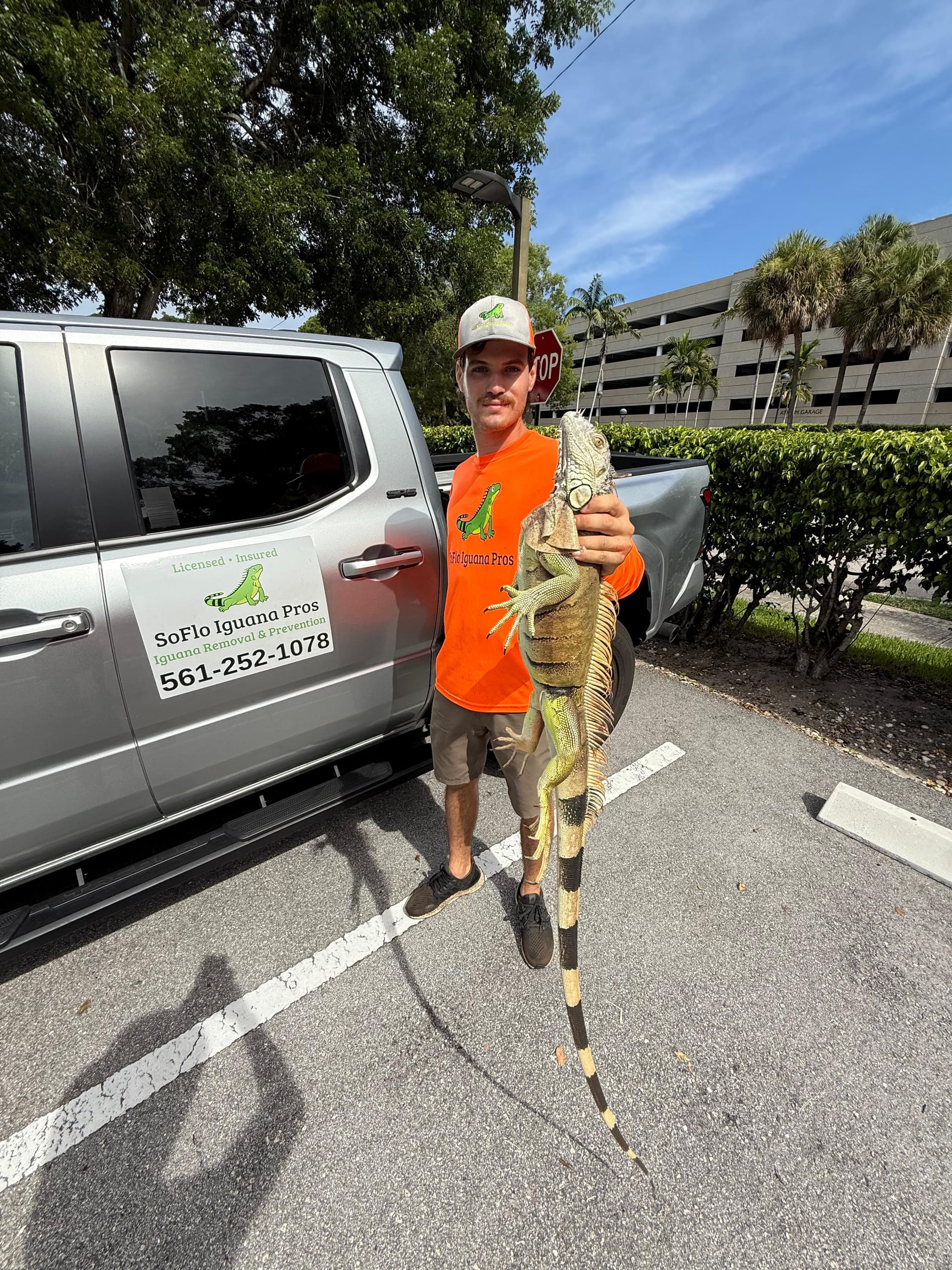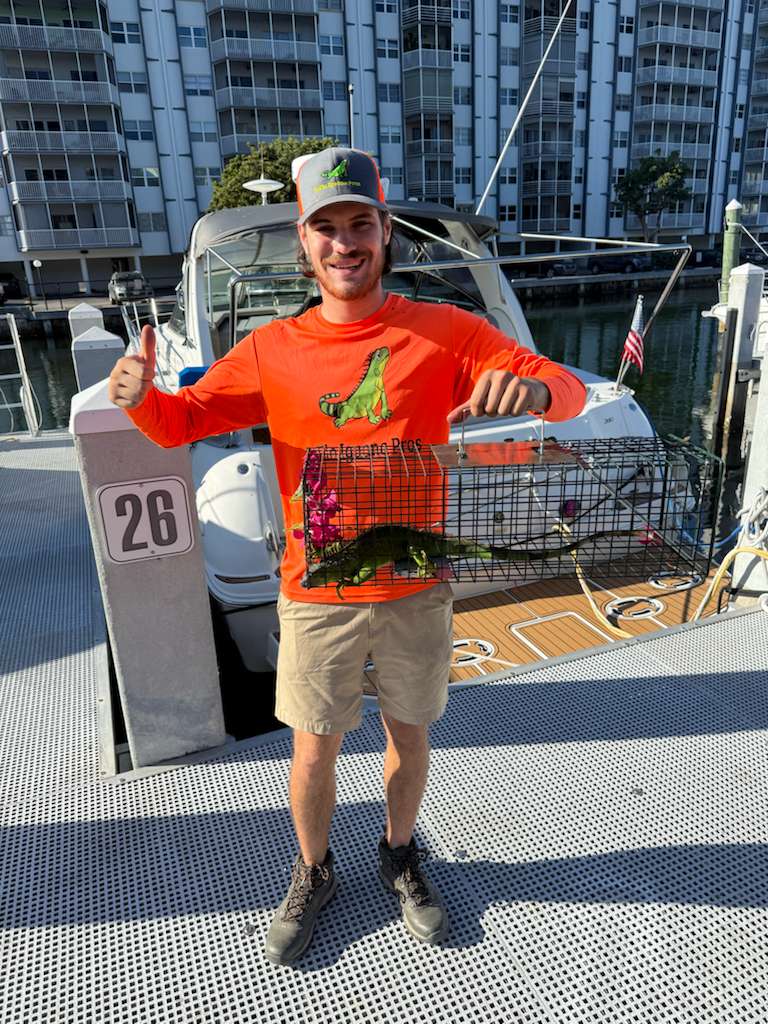
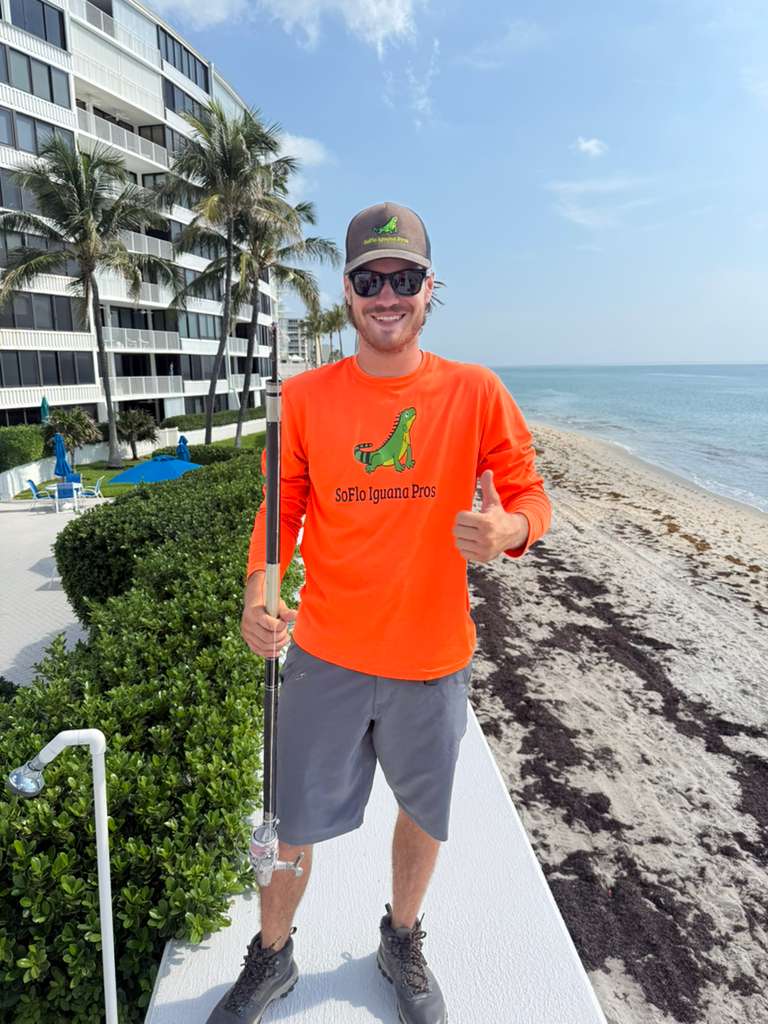
On a resort property, an iguana on the pool deck is a review problem. Here's how hospitality grounds programs keep the guest-facing areas clean without disrupting stays.
For a hotel or resort in Palm Beach County, iguanas aren't just a grounds issue — they're a guest-experience issue and, increasingly, a review issue. A guest who paid for a beachfront room doesn't want to share the pool deck with a five-foot lizard, and they'll mention it in the review. Droppings on the lounge chairs and the walkways read as neglect even when the property is otherwise immaculate. On a guest-facing property, iguana control is part of the product.
Hospitality grounds programs are their own thing because the constraint is guests. The work has to happen without disrupting stays, and the standard is higher than 'mostly clear' — it's clear where guests actually are.
The guest-facing zones come first
On a resort, not all ground is equal. The pool decks, the beachfront lawn, the restaurant patios, the walkways between buildings, and the arrival area carry the guest experience, and they're where a program has to be tightest. Iguanas fouling a lounge area or basking on a pool coping at check-in are the ones that end up in reviews, so a hospitality program prioritizes the guest-facing zones and works outward from there.
- Pool decks and coping, where basking iguanas and droppings hit hardest.
- Beachfront and courtyard lawns guests use to relax.
- Restaurant and bar patios, a sanitation as well as an aesthetic issue.
- Arrival areas and main walkways that set the first impression.
Working around guests, not through them
The scheduling matters as much as the work. Removal and trapping on a resort get timed around occupancy — early mornings, back-of-house routes, low-traffic windows — so guests see clean grounds, not the crew working them. One accountable contact, Nick, learns the property's rhythm and the zones that can't be touched at peak, which is a very different relationship than a vendor who shows up whenever the truck's free.
The source is still the water and the landscaping
The guest-facing surfaces are where you see the problem, but the population lives in the lake banks, the seawall, and the lush landscaping the property is designed around. A program that only clears the pool deck is bailing water — the animals refill from the banks by the next morning. Working the source alongside the guest zones is what keeps the visible areas actually clear rather than clear-until-tomorrow.
It's the same principle as any waterfront property, just with a higher bar and a guest constraint layered on. You can scope a resort program at /commercial/hospitality.
Documentation for owners and brands
Branded and managed properties often need to show the work, not just do it. We provide documented activity reporting a GM or ownership group can file, and a certificate of insurance for the property before the first visit. For a property answering to a brand standard or an owner's asset manager, that paper trail is part of the value. Pricing is custom to the property; the assessment is free.
Questions we hear
Can you service the property without guests noticing?
That's the goal. Work is scheduled around occupancy — early mornings, back-of-house routes, and low-traffic windows — and coordinated through one contact who learns which zones can't be touched at peak. Guests see clean grounds, not the crew.
Why keep clearing the pool deck if the iguanas come back?
Because the source is the lake banks, seawall, and landscaping, not the deck itself. A program that only clears guest-facing surfaces refills overnight. Working the source alongside the visible zones is what keeps the pool deck actually clear rather than clear-until-morning.
Can you provide documentation for our brand or ownership group?
Yes — documented activity reporting a GM or asset manager can file, plus a certificate of insurance for the property before work begins. For brand-standard and managed properties, that paper trail is part of what we deliver.
Services in this guide