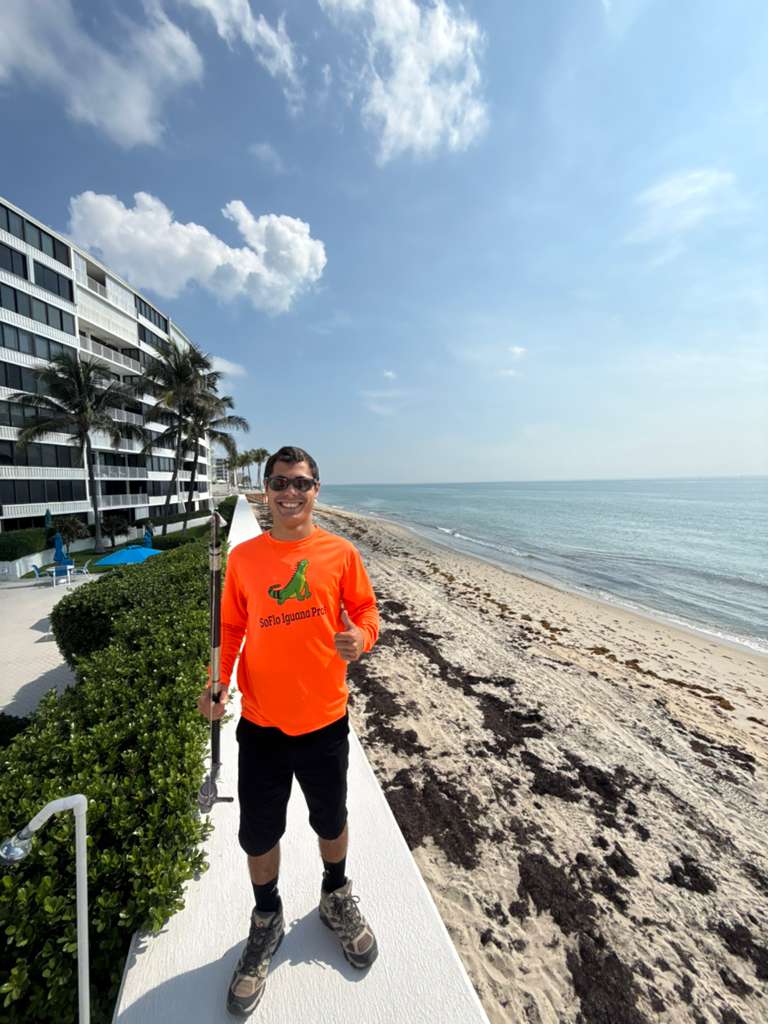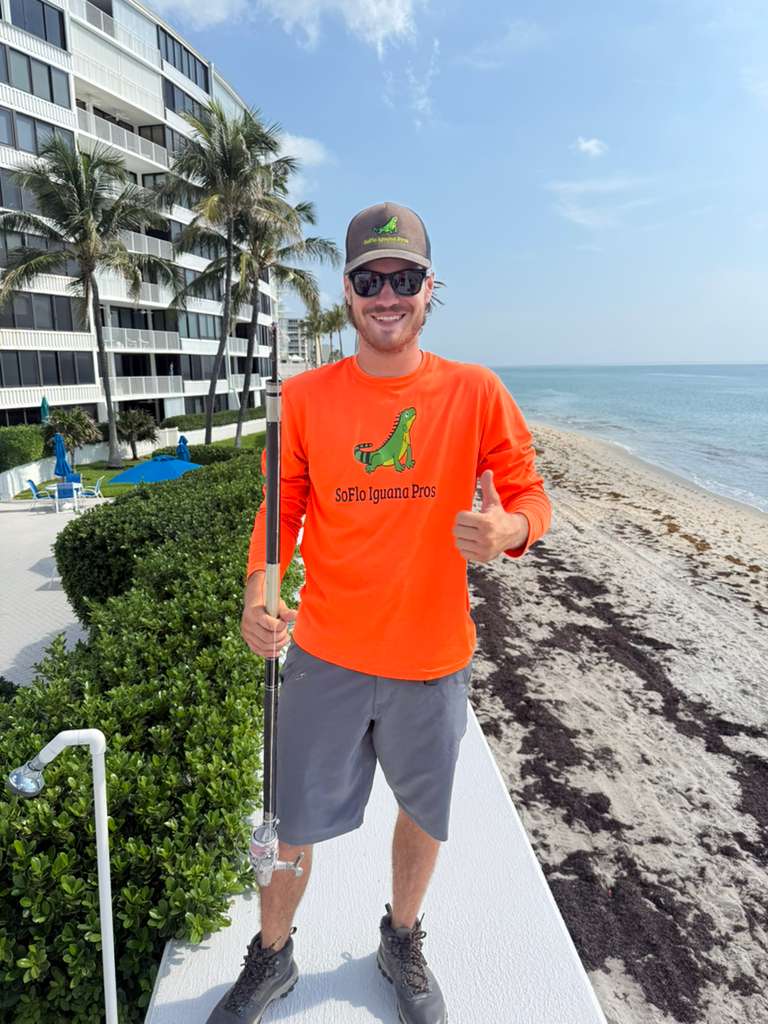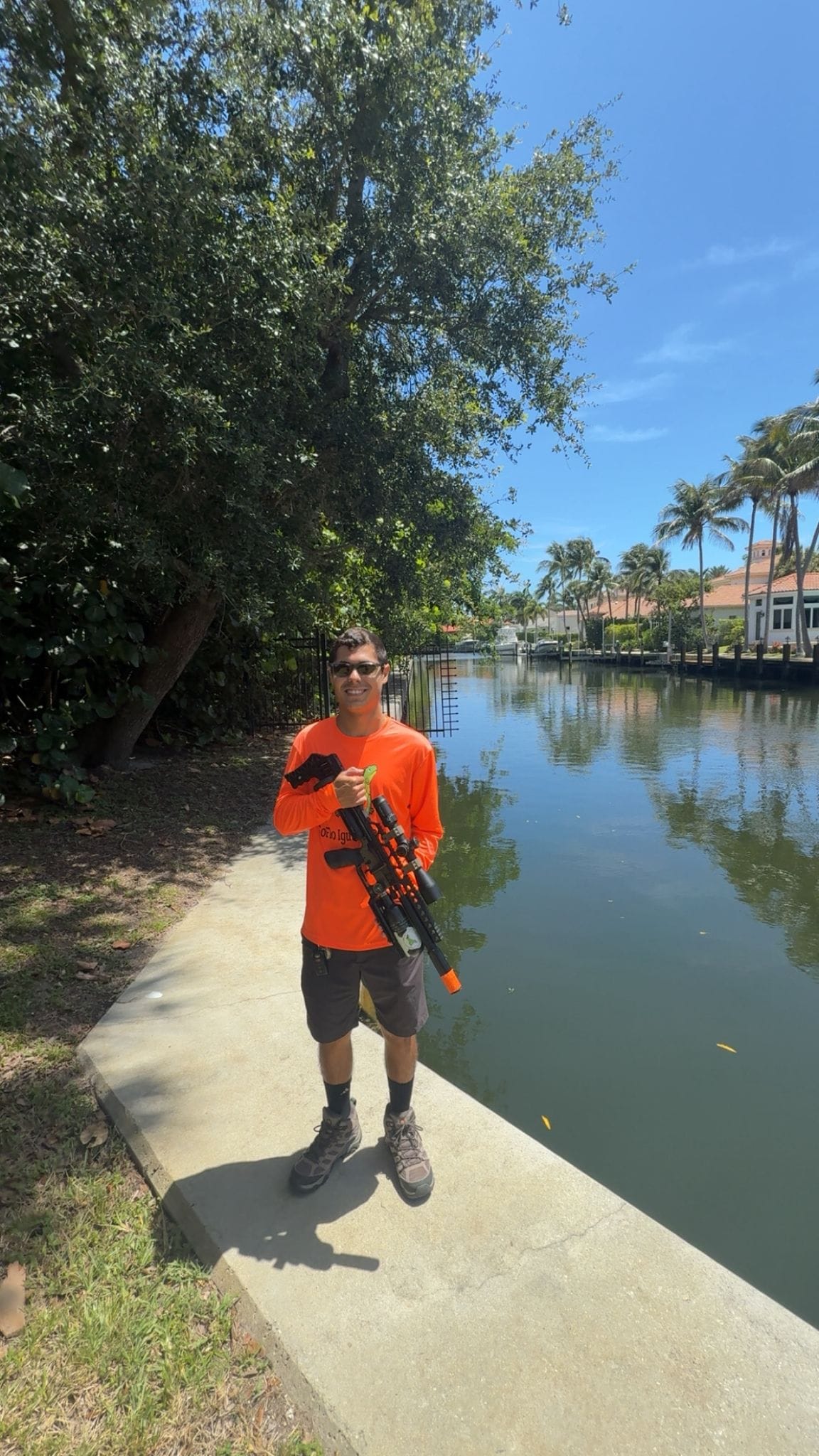
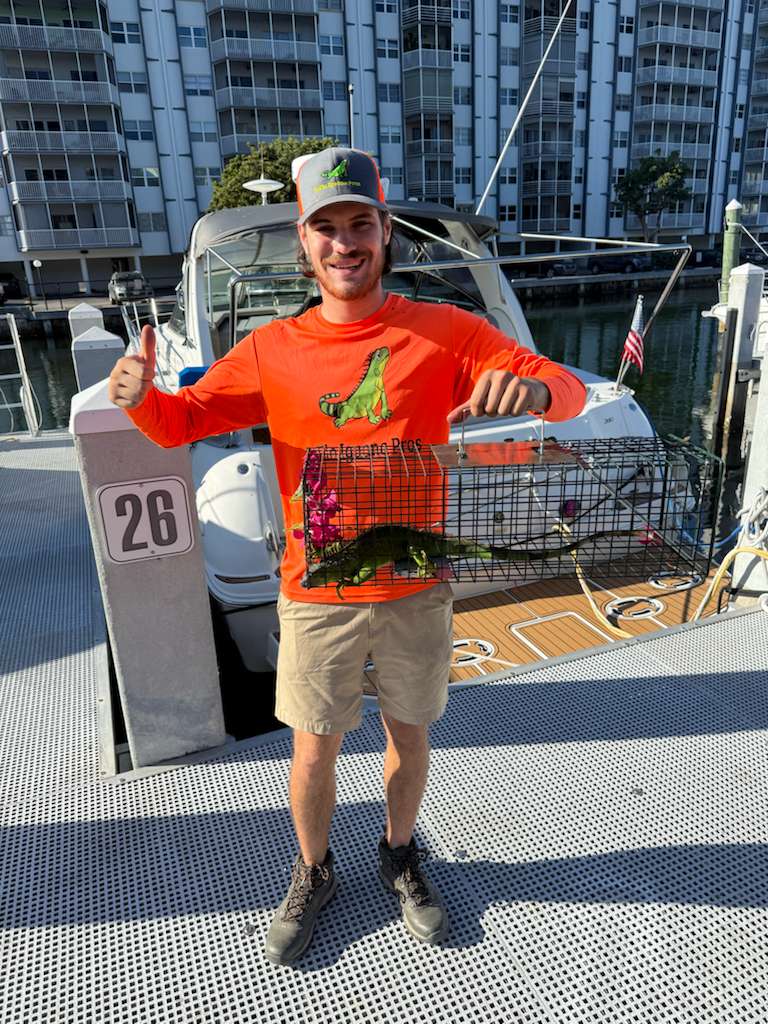
The Lake Worth Lagoon and the Intracoastal give iguanas a warm bench, easy digging, and instant escape. Here's the honest picture for waterfront owners in the county.
If your property backs the Intracoastal or the Lake Worth Lagoon anywhere in Palm Beach County — Flagler Drive in West Palm, the Boca and Delray estates, the North Palm Beach finger canals — you own the hardest iguana assignment there is. The waterline is a continuous corridor iguanas travel, and your seawall is a five-star habitat whether you like it or not.
This isn't meant to scare anyone off the water. It's to be honest about why waterfront takes more work than an inland yard, and what actually holds when it does. The address can't change; the property can become the hard one on the block.
Why the Intracoastal seawall is a magnet
A seawall on the Intracoastal checks every box an iguana is looking for at once. The cap is a long, sun-warmed basking bench with a clear view of anything approaching. The backfill behind it is the softest, easiest digging on the property. And the water is a one-second escape from a dog, a person, or a hawk. You didn't build habitat on purpose — you built a bulkhead — but that's what it is to them.
Because they travel the waterline rather than the property lines, a single neglected seawall a few lots down keeps sending you candidates. Your tidy bank is still on the flight path. That's why waterfront control tends to be ongoing: it's a supply problem, and the supply is the whole Intracoastal.
The damage you can't see from the dock
The expensive Intracoastal damage is structural and hidden. A female digs a nesting burrow into the backfill in spring, it becomes a den that gets reused and extended, and over months a network of tunnels moves soil out from behind the wall. Rain and tidal action pull more through the gaps, the cap loses its support, and the bank starts slumping toward the lagoon.
By the time you can see it from the dock, it's usually a repair, not a patch — and homeowners policies commonly exclude gradual burrowing and earth movement, so the bill lands on the owner.
- Half-moon holes at the waterline or in the grass just behind the cap.
- Soft or sunken spots in the lawn within a few feet of the wall.
- Hairline cracks in the cap, or seams opening between cap sections.
- Pavers, sod, or a walkway near the wall settling unevenly.
What actually holds on the water
Protecting an Intracoastal property is two jobs done in order: get the animals off the bank, then take away what makes it diggable and climbable. Clear the seawall and dock pilings first, collapse and pack the burrows so the wall stops eroding, and guard the vertical routes on trees and pilings so the cleared edge doesn't re-colonize from the next bank.
Then keep it monitored through nesting season, when females return to test the same backfill. On heavy Intracoastal frontage that ongoing re-check is the difference between the work holding and quietly undoing itself. It's why most waterfront owners here end up on a program from $99 a month rather than repeat one-time calls.
When the wall is already cracking
If your cap already shows seams or the bank is slumping, controlling the iguanas won't reverse the structural damage — that's a marine contractor's job. What removal and burrow collapse do is stop the cause, so the repair you eventually pay for isn't undone by the same animals a season later. We're glad to time our work with a seawall contractor so the fresh backfill goes in clean and stays that way.
Questions we hear
Why do iguanas keep coming back to my seawall even after removal?
Because you're on a waterline they travel, and a neglected bank a few lots down keeps sending new animals. Removing the visible ones without collapsing burrows and guarding the climb routes leaves everything that reseeds the edge, which is why waterfront control is usually ongoing rather than one-and-done.
Will insurance cover iguana damage to my seawall?
Commonly not — gradual burrowing and earth movement are typically excluded from homeowners policies, which is a big reason prevention beats waiting for a claim. Confirm the specifics with your carrier, since we can't speak to your individual policy.
My seawall already has cracks — is it too late?
It's not too late to stop the cause, which is the point of removal and burrow collapse. But an already-cracked cap or a slumping bank is a structural repair for a marine contractor. Getting the iguanas out first means that repair isn't quietly undermined again the next spring.
Services in this guide