Everything I'd tell a neighbor over the fence about clearing iguanas from a Palm Beach County yard — what works, what wastes money, and the order to do it in.
I get some version of this call every week: 'Nick, there are iguanas all over my yard, how do I get rid of them?' The honest answer is that there's no single trick — it's a sequence, and doing it in the wrong order is why most people feel like they're spinning their wheels. This guide is the whole sequence, laid out the way we actually work a property from Boca up through Jupiter.
First, a reality check on where you live. If you back up to a canal, a community lake, or the Intracoastal, you're not clearing a yard so much as managing a border. Iguanas travel the waterline, and your neighbor's soft bank is a supply depot. That doesn't mean you can't win — it means the goal is to make your yard the hard one on the block, not to expect zero iguanas forever.
Step one: figure out what you're actually dealing with
Before you spend a dollar, walk the property and read it. Are you seeing one animal passing through some mornings, or the same three or four basking on the seawall cap at first light every day? Are there half-moon holes at the waterline with a fan of loose soil? Is the hibiscus chewed to stubs? A visitor needs nothing. A resident colony — daily basking, burrows, and landscape damage together — is the job this guide is about.
Map where they climb, where they dig, and where they eat. Those three things are the whole problem, and everything below is aimed at one of them.
Step two: remove the residents before you harden anything
This is the step people skip, and skipping it wastes the rest. If you wrap trees and pack burrows while iguanas are still living in the bank, all you've done is fence them in with their food. Clear first.
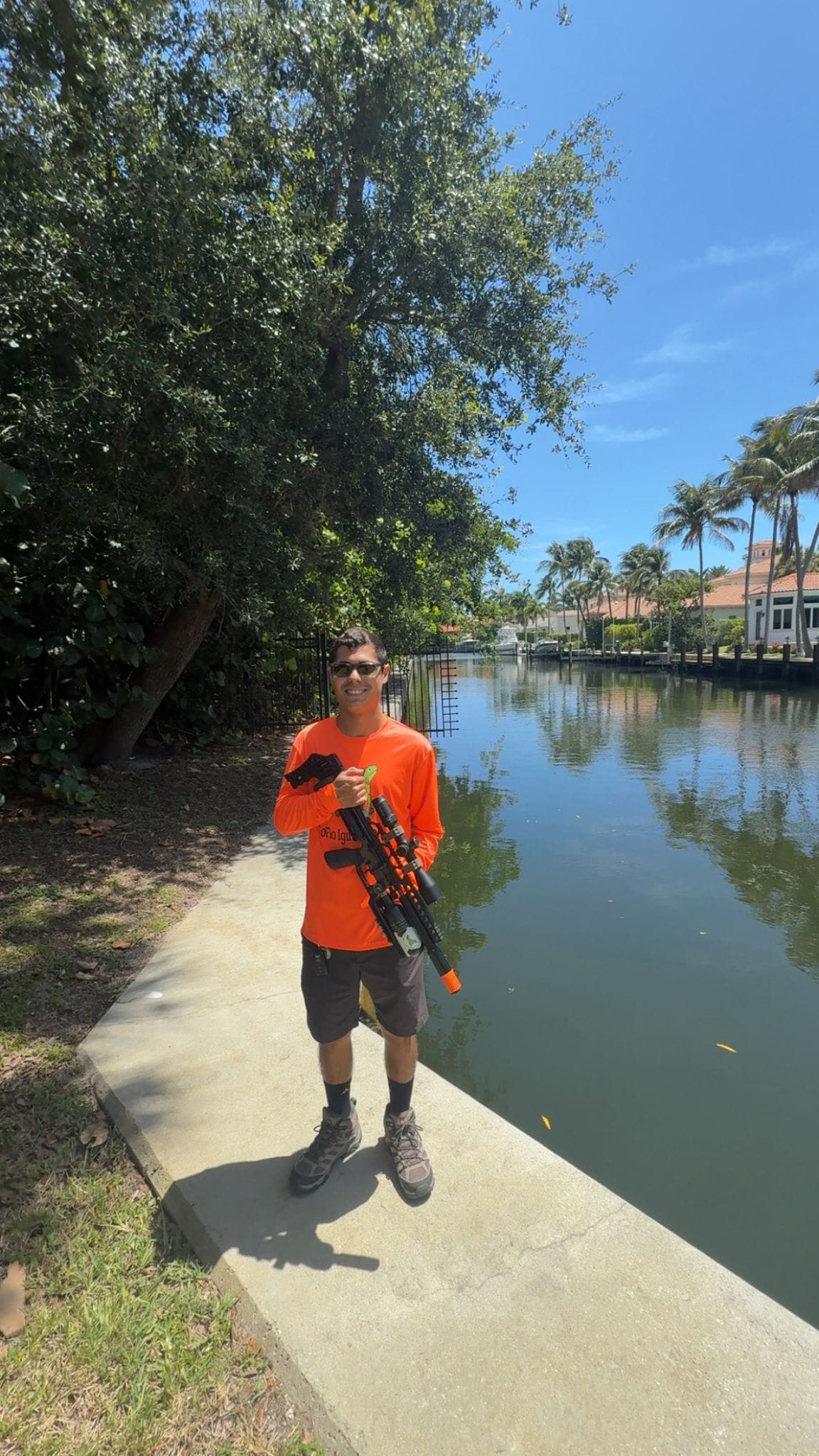
Removal on your own property is legal in Florida year-round — green iguanas are a non-native, invasive species and aren't protected, so you don't need a permit to remove them humanely from land you own or manage. What you can't do is relocate and release them elsewhere; the law doesn't allow it, and dispatch has to be done humanely. That last part is where most DIY attempts get uncomfortable, and it's a big reason people call us to handle the catch and the humane disposal.
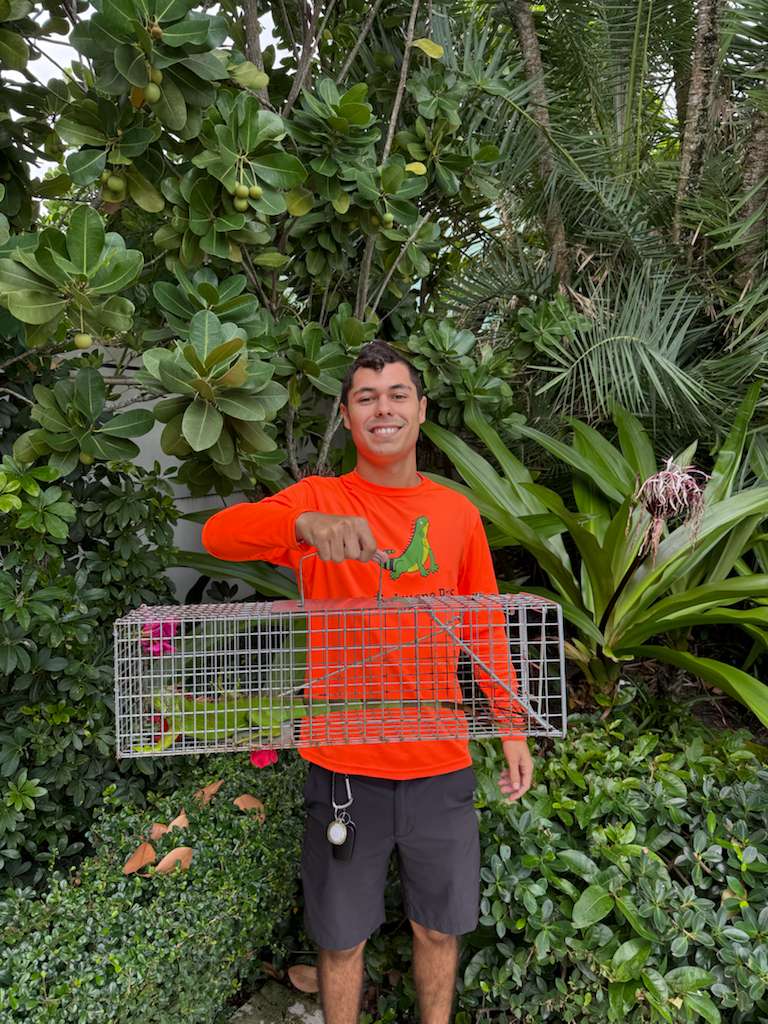
- Trap along the routes they actually use — the cap, the bank, the base of a favorite tree — not out in the open lawn.
- Check traps often; a trap left sitting isn't humane and isn't legal.
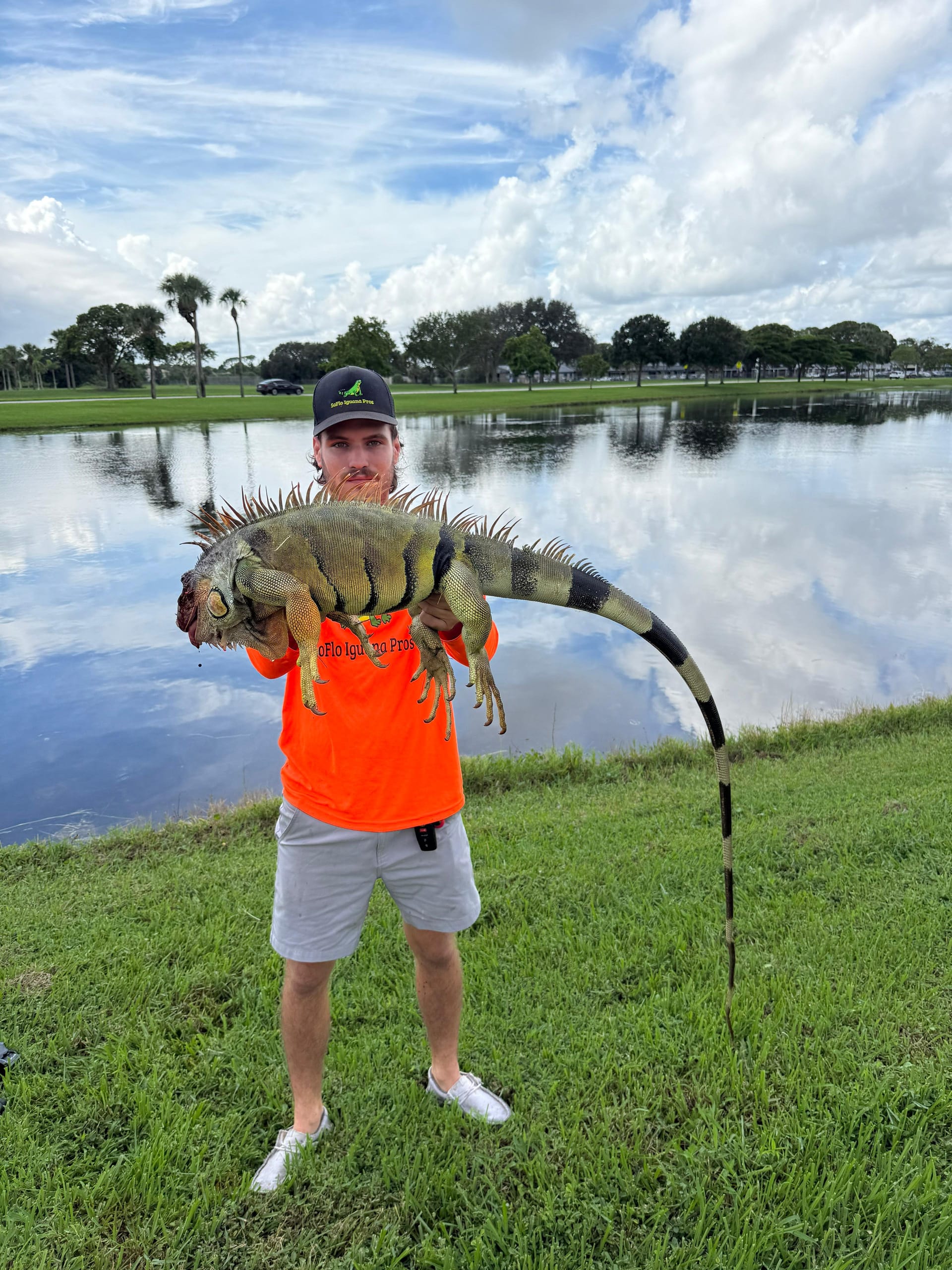
- Don't try to grab a large adult bare-handed — a five-foot male's tail whip and bite draw blood.
Step three: close the climb routes and collapse the burrows
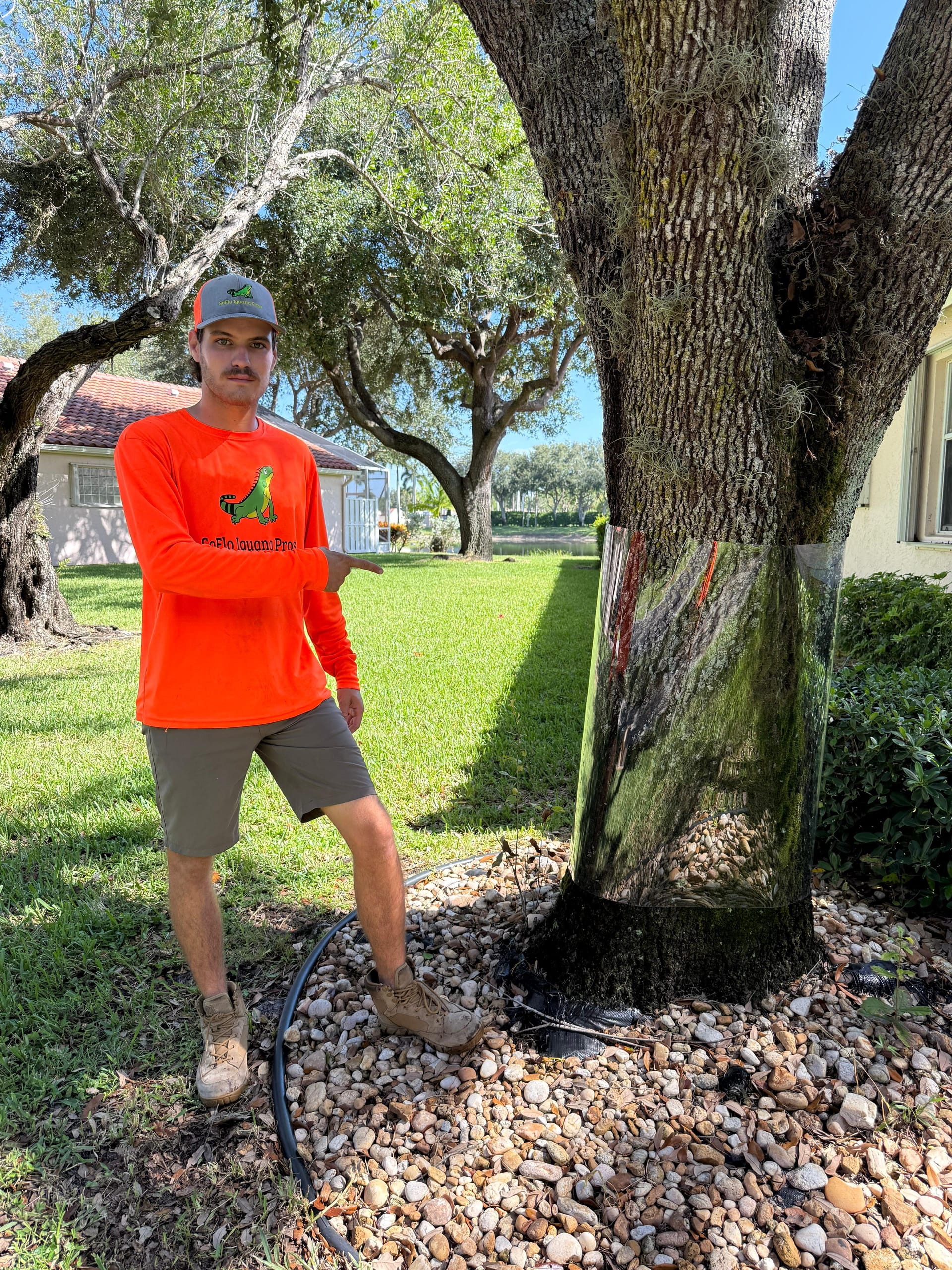
With the residents out, take away what let them settle. Smooth guards on trees and dock pilings remove the grip they need to reach the canopy, the roof, or the dock. Then collapse and properly pack the burrows along the bank and against the foundation — properly, meaning tamped and backfilled so they don't re-open after the next rain.
Fit is everything on the wraps. Too low, too loose, or too short and a determined adult reaches right over it. This is the piece homeowners most often get wrong on their own.
Step four: take away the buffet
Iguanas graze the exact ornamentals we love down here — hibiscus, bougainvillea, orchids, and anything with soft new growth or fruit. Thinning the plants they favor near the house, caging young plants, and cleaning up fallen fruit all make the yard less worth the trip. You don't have to landscape with gravel; you just stop rolling out a salad bar against the seawall.
- Cage or relocate the plants iguanas hit hardest, especially near the water.
- Pick up fallen mangoes, sea grapes, and other fruit that draws them in.
- Secure pet food and don't leave standing water they'll drink from.
What it costs and when DIY is enough
Being straight with you: a light problem on a dry interior lot is often a weekend of your own work. Where it's worth a call is heavy waterfront pressure, burrows near a seawall, or a colony you can't seem to dent. Our single visits start at $125, monitored programs run from $99 a month with no lock-in, and the property walk is free — so at minimum you can have someone read the yard and tell you honestly whether you even need us.
The reason we quote a program on a pressured waterfront lot is simple: the neighbor's bank keeps sending candidates, so control there is ongoing, not one-and-done. On a lighter lot, one good clear-out plus your own prevention often holds fine. Market rates for this work vary, but that's our honest pricing.
Questions we hear
Do I need a permit to remove iguanas from my own yard?
No. Green iguanas are an invasive, non-native species in Florida and aren't protected, so you can humanely remove them from property you own or manage year-round without a permit. You can't relocate and release them elsewhere, and dispatch has to be humane — which is the part most people would rather hand off.
What's the single most effective thing I can do myself?
Take away the climb routes and the food, but only after the residents are cleared. Smooth tree and piling guards sized right, plus thinning the plants they graze, does more lasting good than any spray. Repellents wash off in the first storm and get ignored within days.
How long until my yard is actually clear?
A light interior lot can turn around in a visit or two. A pressured waterfront colony with burrows takes a clear-out plus ongoing monitoring, because animals keep arriving down the waterline. Anyone promising a permanent one-visit fix on a canal lot isn't being straight with you.
Services in this guide