You can't make a South Florida yard iguana-proof by Sunday night, but you can knock out the highest-value prevention in two days. Here's the realistic weekend plan.
Let me be straight up front: 'iguana-proof' is a bit of a marketing word. On a canal or lakefront lot in Palm Beach County, no weekend of work makes iguanas physically impossible — they travel the waterline and the neighbor's bank keeps feeding them. What you can do in a weekend is knock out the handful of high-value jobs that make your yard the hard one on the block, so most of them move along to an easier address.
This plan assumes the residents are already cleared, or that you're on a drier lot without an established colony. If you've got iguanas denned in the bank right now, hardening the yard around them just locks them in — clear first, then do this.
Saturday morning: the climb routes
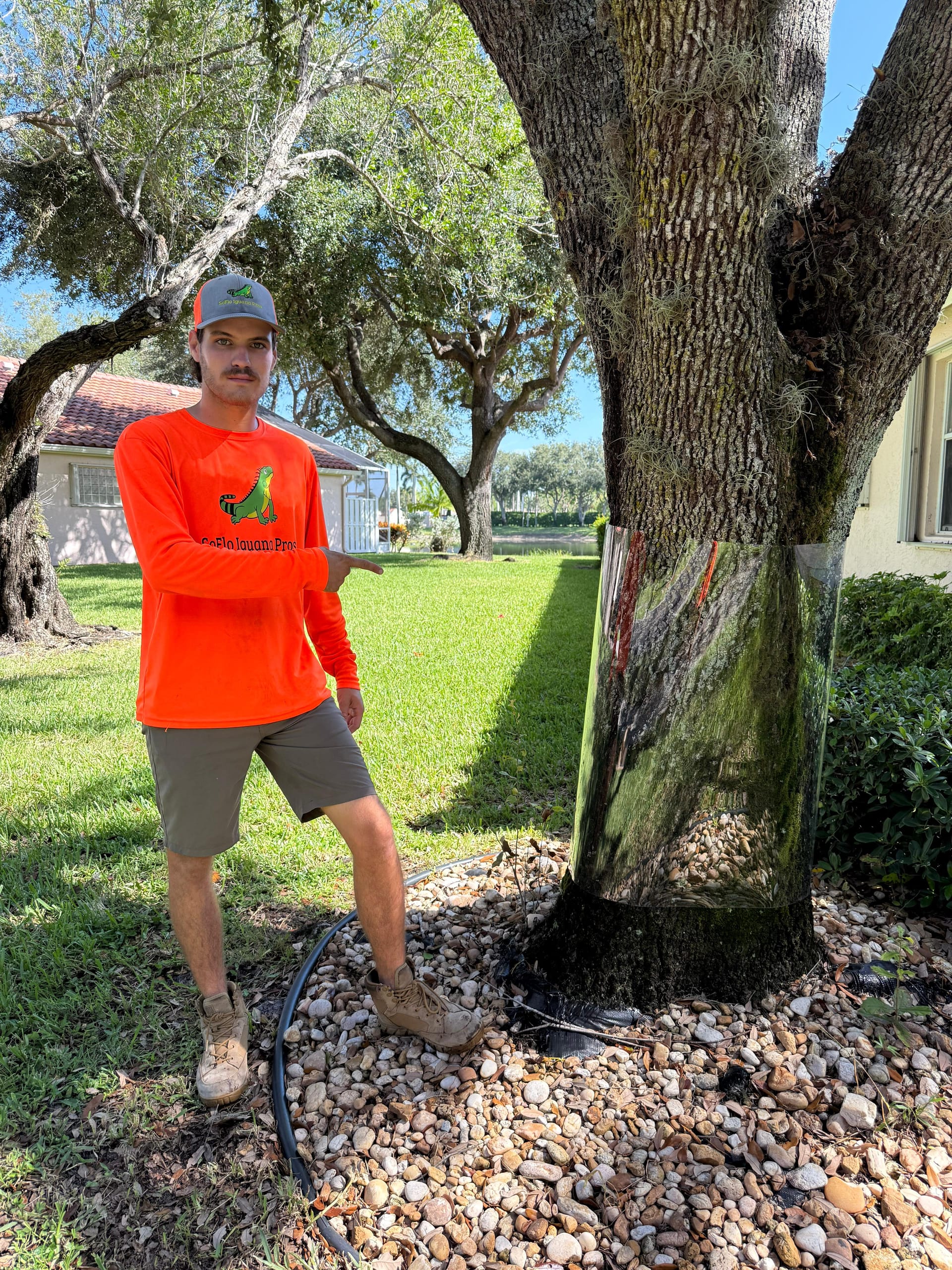
Start with the single highest-value job — cutting off how they get up. Iguanas are climbers, and most of the damage that lands on the roof, the pool cage, and the canopy fruit starts with an easy vertical. Spend the morning wrapping the climbable palms, trees, and dock pilings with smooth guards, and trimming branches back so nothing overhangs the roof or the cage.
Get the height and tightness right or you've wasted the morning. A guard set too low or too loose is one a big adult reaches over. Aim high enough that an adult can't get a grip above it, and snug enough that it can't be defeated.
- Wrap every climbable palm, tree, and piling with a smooth guard, set high and snug.
- Trim branches back at least a body-length from the roof, eave, and screen cage.
- Note any other climbs — trellises, downspouts, rough corners — for the afternoon.
Saturday afternoon: the buffet
Next, take away the food. Iguanas graze exactly the ornamentals we plant down here — hibiscus, bougainvillea, orchids, soft new growth, and fruit. You don't have to rip out the yard; you thin and protect the worst offenders near the house and the water, cage young or prized plants, and clean up fallen fruit that's been drawing them in.
- Cage or relocate the plants they hit hardest, especially near the seawall.
- Pick up fallen mangoes, sea grapes, and other dropped fruit.
- Secure pet food and remove standing water they'll drink from.
Sunday: burrows and gaps
With the climbs and food handled, spend Sunday on the ground. Walk the seawall, canal or lake bank, and the foundation, and collapse any burrows the right way — confirmed empty, tunnel collapsed, backfilled and tamped in layers so they don't re-open after rain. Then close the gaps they exploit: soffit openings, weep holes, and the screen-frame junctions where a pool cage meets the house.
If a burrow runs under a slab or the seawall cap and you find real settling or cracking, note it for a contractor — that's structural and beyond a weekend fix.
What a weekend can't do
Be realistic about the limits. A weekend of prevention keeps new iguanas from settling; it doesn't remove a colony already living in your bank, and it doesn't stop a heavily pressured waterline from sending you candidates. If you finish the weekend and they keep coming, that's the signal you're dealing with resident pressure that needs removal, not more wraps.
That's a free property walk away. We'll tell you honestly whether your weekend work has it handled or whether a single $125 clear-out or a $99-a-month monitored program is the missing piece — no lock-in either way.
Questions we hear
Can I really iguana-proof my yard myself?
You can do the highest-value prevention yourself in a weekend — climb-route wraps, thinning the plants they graze, collapsing burrows, and sealing gaps. What a weekend can't do is remove a colony already denned in your bank or stop a pressured waterline from sending new animals. Prevention keeps new ones out; removal clears the current ones.
What's the most important part of the weekend?
The climb-route wraps on trees and pilings, done at the right height and tightness. Iguanas are climbers, and most roof, cage, and canopy problems start with an easy vertical. A guard set too low or loose is one a big adult defeats, so fit matters more than the product you buy.
I did everything and they're still coming — now what?
That usually means resident pressure — a colony in your bank or a heavily pressured waterline next door — which prevention alone won't fix. It's the signal to clear the residents and collapse the burrows. A free property walk will tell you whether that's a one-time clear-out or an ongoing monitored situation.
Services in this guide