An iguana on the roof isn't just noise — it's droppings, chewed screening, and a climb route you need to close. Here's how to move it along without going up there yourself.
Iguanas love a South Florida roof. Barrel tile holds heat like a radiator, a flat roof is a private sun deck with a view, and the ridge is a safe basking spot above the dogs. The problem is what comes with them — droppings streaking the tile, scratching and thumping over your bedroom at dawn, and gaps into the soffit or the pool cage they'll exploit.
The first rule is the one people ignore: don't chase an iguana across your own roof. Tile is slick, the pitch is unforgiving, and an ER visit costs a lot more than a service call. Everything below is about moving the animal off from the ground.
How it got up there
An iguana didn't fly onto your roof. It climbed something — an overhanging oak or palm, a trellis, a downspout, a screen-cage frame, or a wall it could grip. Finding that route is half the job, because until you close it, you're going to keep repeating whatever gets this one down.
Walk the perimeter and look for the easy vertical: branches touching the eave, a palm within a body-length of the gutter, a rough wall beside a corner. That's your climb route.
Getting the current one down
Most roof iguanas leave on their own if you make the roof unpleasant and give them a clear way off. You're encouraging, not cornering — a cornered iguana may jump, and a jump off a two-story roof onto a pool cage or deck is how they end up injured or through your screen.
- Spray it with a hose from the ground — the water is harmless but iguanas dislike it and will move toward the edge and their climb route.
- Do it in the cool of early morning when they're sluggish and more likely to retreat than bolt.
- Give it an obvious exit toward the tree or wall it came up; don't block the only way down.
- Never poke at one with a pole near the roof edge — a panicked jump can injure the animal and damage whatever it lands on.
Close the route so it doesn't come back
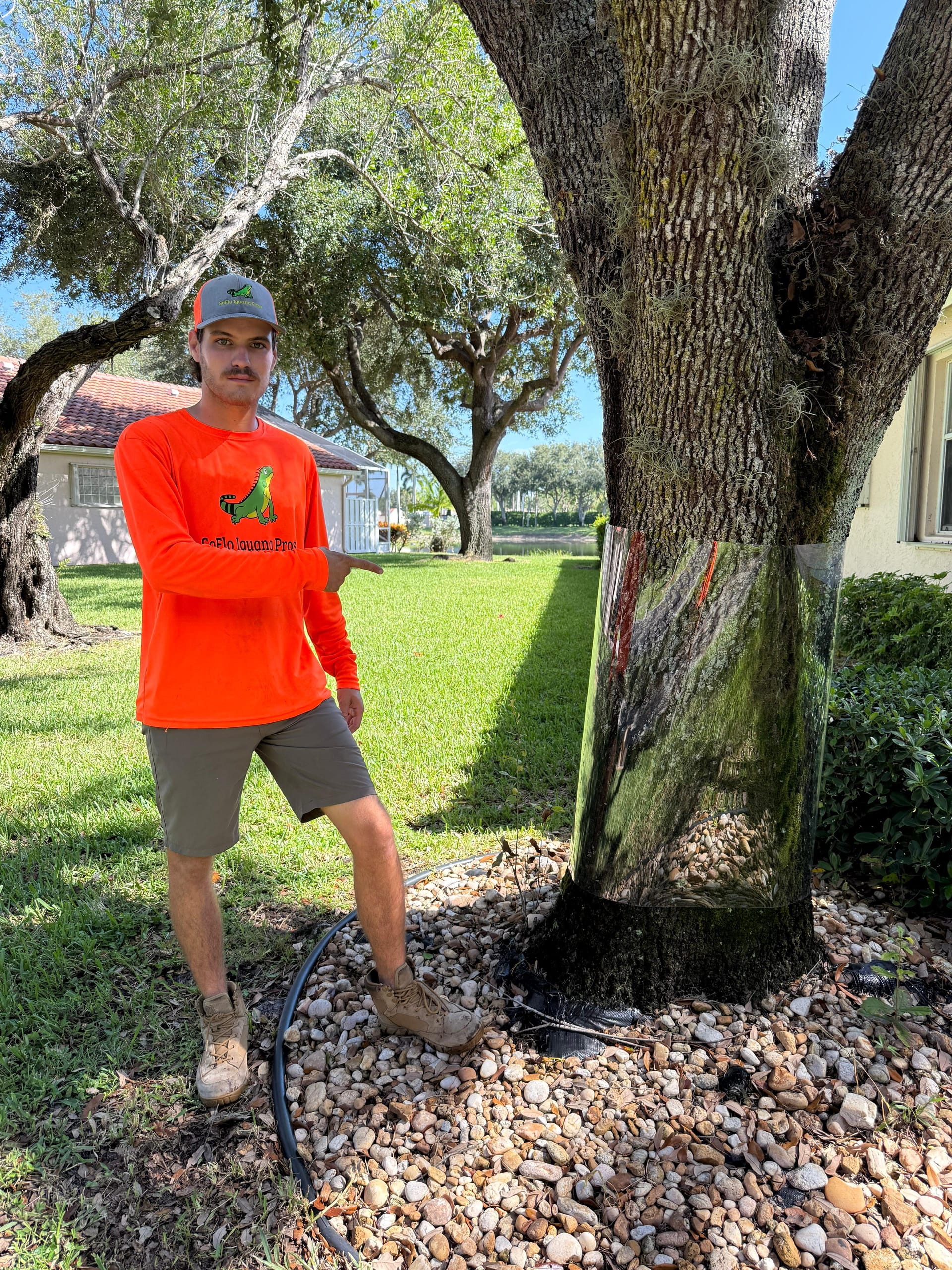
Once it's down, this is the part that actually matters. Trim back branches so nothing overhangs or touches the roofline — a good rule is at least a body-length of clear air between the canopy and the eave. Wrap climbable palms and pilings with smooth guards sized and set high enough that an adult can't reach over. Seal the soffit gaps and screen-frame junctions they use to get from the roof into the cage or the attic.
Get the wrap height and tightness right, or a big adult defeats it. This is the single piece we see homeowners install too low or too loose, and it's why the iguana's back on the ridge a week later.
When to call instead of climbing
If you've got iguanas on the roof most mornings, droppings building up on the tile, or you suspect they're getting into a soffit, that's a call — not a DIY roof adventure. We can clear the resident animals, find and close the climb route, and handle the tree and piling wraps at the right height. The property walk is free, single visits start at $125, and monitored programs start at $99 a month with no lock-in if it's an ongoing waterfront situation.
Questions we hear
Can iguanas damage my roof?
They can. Droppings stain and can carry salmonella, their claws and traffic wear on tile and flat-roof membranes, and they exploit soffit gaps and screen-frame junctions to reach attics and pool cages. A basking spot today can become an entry point tomorrow, which is why closing the route matters as much as moving the animal.
Should I go up on the roof to shoo it off?
No. Tile is slick and the pitch is dangerous, and a cornered iguana may leap off and injure itself or your pool cage. Work from the ground with a hose in the cool morning and give it a clear path back to whatever it climbed up.
How do I stop them from getting on the roof at all?
Cut the climb routes. Trim branches back at least a body-length from the eave, wrap climbable palms and pilings with smooth guards set high enough that an adult can't reach over, and seal the soffit and screen-frame gaps. Getting the wrap height right is where DIY usually falls short.
Services in this guide