
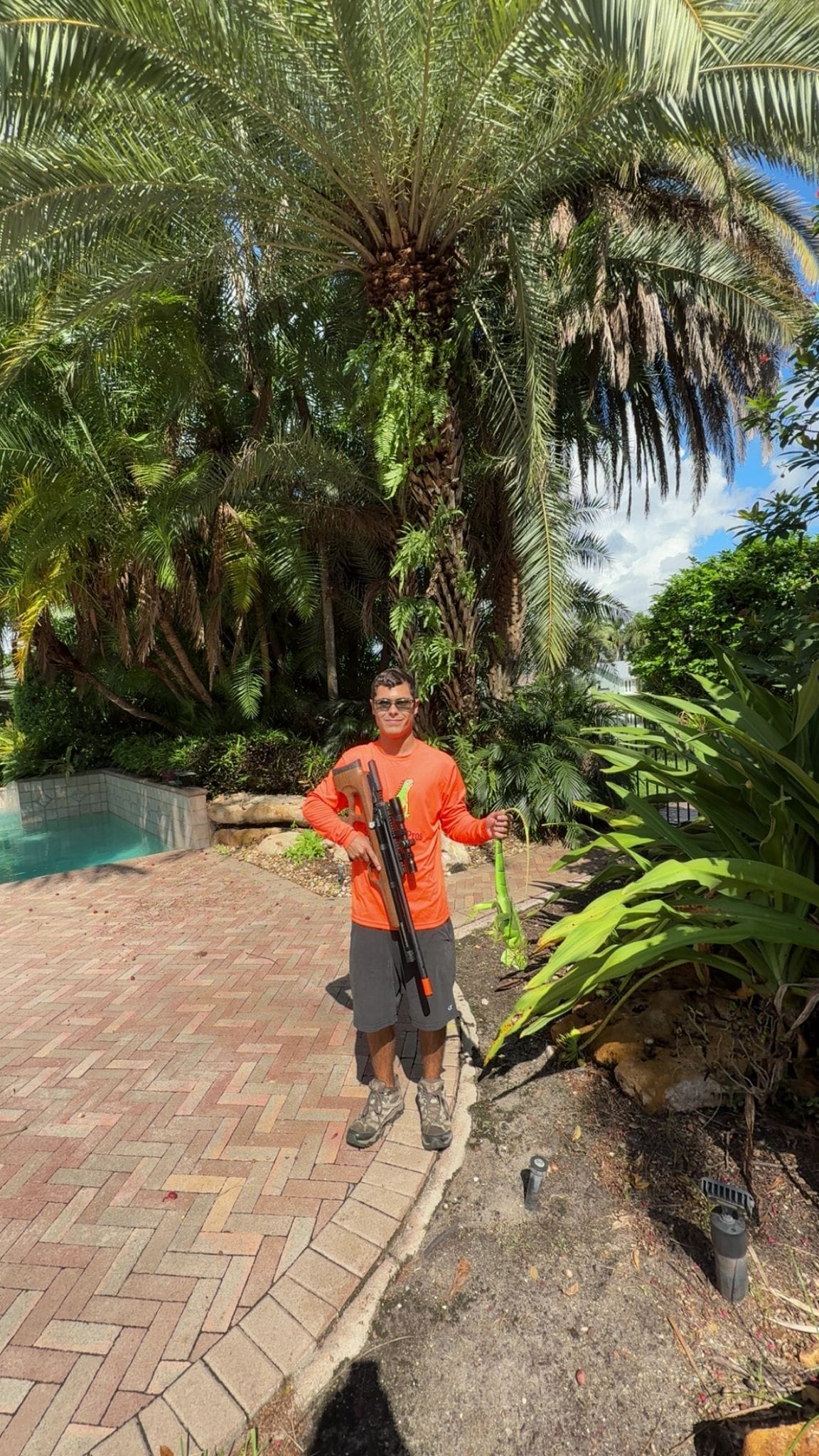
An iguana trapped in your pool cage will tear the screen trying to get out. Here's how to herd it to the door instead of chasing it into the mesh.
A screen enclosure is a trap that works in both directions. An iguana drops in from an overhanging branch or squeezes through a torn corner, and then it can't figure out the way back out — so it panics and climbs the screen, and now you've got claw holes and a torn panel on top of an iguana in your lanai. The whole game here is getting it out the door before it shreds its way out through the mesh.
Screen repair isn't cheap, and a big adult can open a hole fast. So the priority is calm herding toward an exit, not a chase that pins it into a wall of screen.
Open the exits first, then create pressure
Before you do anything else, open every door and slider on the cage as wide as it goes. You want the animal to have an obvious, unmistakable way out. Then you become the pressure that moves it there — slow and behind it, steering, never charging.
Iguanas move away from a perceived threat toward open space and, ideally, water. Use that. Position yourself so the open door is the path of least resistance and the animal naturally drifts toward it.
- Prop every screen door and slider fully open before you start.
- Approach slowly from behind, so the iguana moves away from you and toward the door.
- Use a long, soft tool — a broom or pool pole held low — to guide, not to jab.
- Kill the panic triggers: get barking dogs and running kids inside first.
If it climbs the screen
This is the moment the damage happens. If the iguana bolts up the screen, stop pushing — backing off often gets it to come down on its own once the pressure eases. Chasing a climbing iguana up a screen wall just makes it dig in harder and tear more. Patience here genuinely saves you a repair bill.
If it's clinging high on the mesh or the frame and won't come down, that's a fair point to call rather than risk both the animal and your screen. A wet, cornered adult up on a cage frame is not a bare-hands job.
Close the way it got in
Once it's out, find the entry. Almost always it's an overhanging branch dropping them onto the cage, a torn screen corner, or a gap where the cage meets the roofline. Trim the branches back so nothing overhangs the enclosure, repair the tears promptly before they become the standing door, and check the frame junctions where the cage meets the house.
If iguanas are basking on top of your cage regularly, they'll keep finding their way in and dropping through. Clearing the animals off the cage and roof and cutting their climb routes is what actually ends the cycle — otherwise you're just repairing screen on a schedule.
The health side people forget
An iguana in the lanai means droppings in the lanai, and those can carry salmonella. Clean any affected furniture, deck, or pool water properly rather than just hosing it around, and keep kids and pets off the surface until it's done. It's the same reason we glove up for every catch.
Questions we hear
Why does the iguana tear my screen instead of leaving?
Because it can't find the exit and panics. Its instinct is to climb toward the light and open sky, which means straight up the mesh. Opening every door wide first and steering it low toward the ground-level exit — rather than chasing it upward — is what keeps the screen intact.
How are they getting into my enclosure?
Usually an overhanging branch dropping them onto the cage, a torn screen corner, or a gap where the cage meets the roof. They bask on top of the cage and fall or squeeze in. Trimming the overhang and repairing tears fast closes the door; clearing the basking animals stops them from finding new ways in.
Is it worth calling for one iguana in the lanai?
For a single calm animal you can usually herd it out yourself. Call when it's a large adult clinging to the frame, when it's happening repeatedly, or when there's screen damage and droppings to deal with — at that point you're solving a recurring source, not a one-off visitor.
Services in this guide