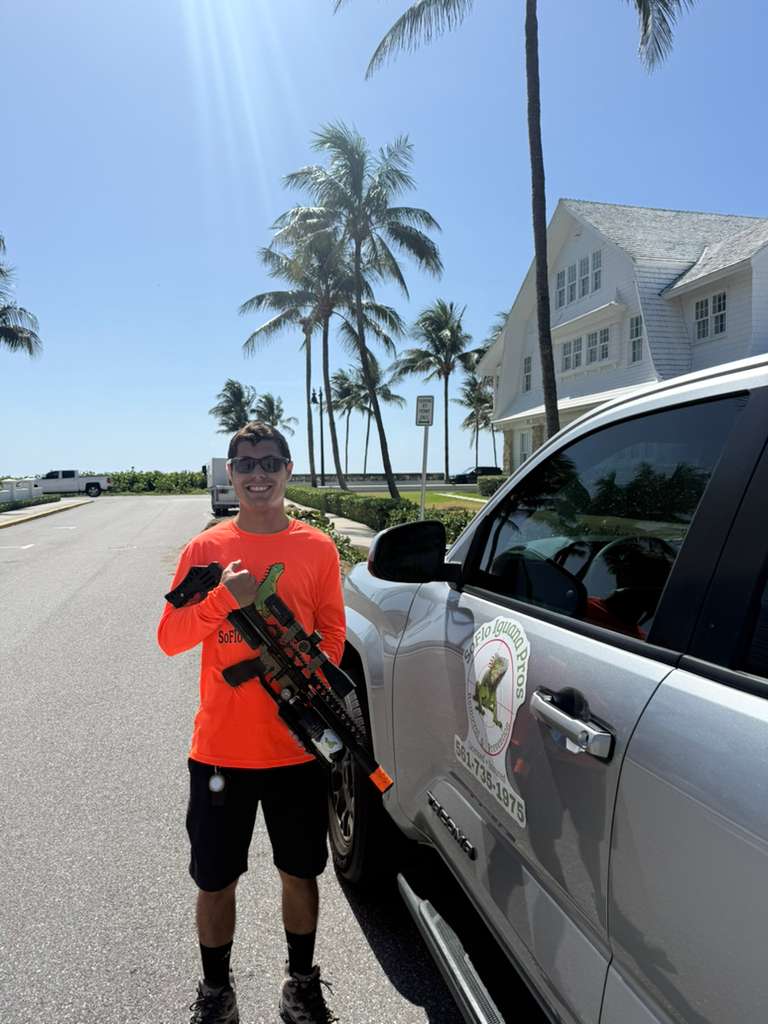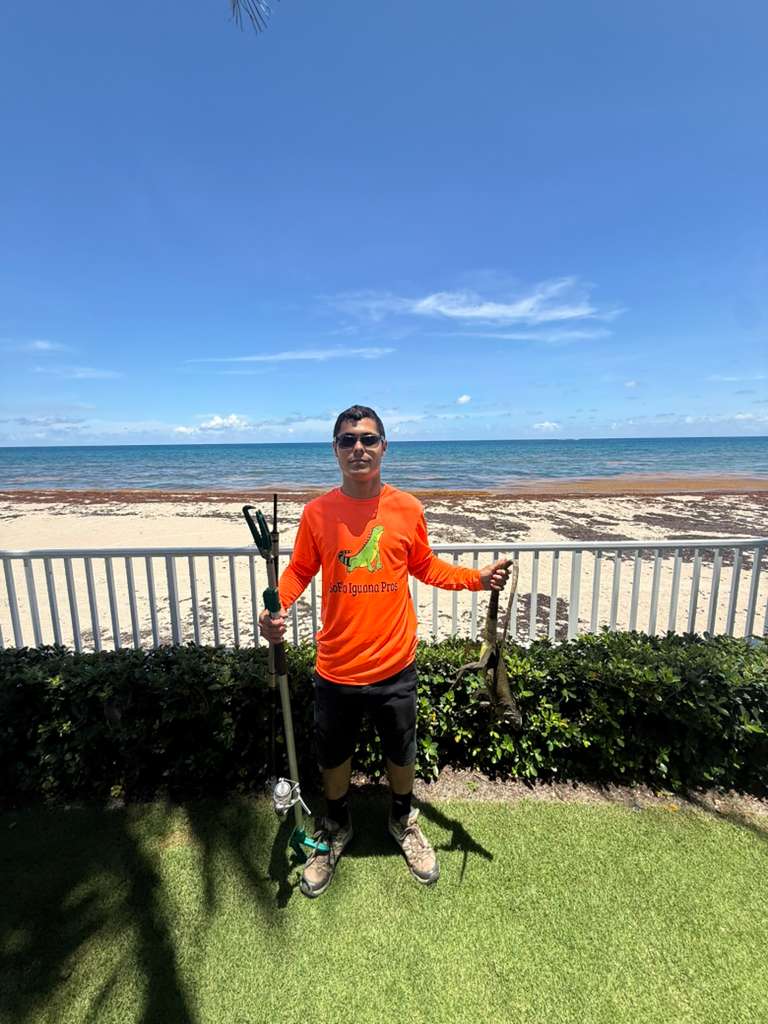
Tropic Isle finger canals, Lake Ida banks, Pineapple Grove fruit trees, Del-Aire fairways — a local read on where Delray's iguanas settle in.
Delray Beach packs a lot of different iguana habitat into a small footprint. You've got Intracoastal estates on the finger canals off Tropic Isle, freshwater bank pressure around Lake Ida, walkable bungalows and fruit trees near Pineapple Grove and the Marina Historic District, and gated golf out west in Del-Aire. Each one calls for a slightly different plan.
We cover the whole city and scale the work to the property — a one-time clear-out for a single yard, or a monitored program for a community with miles of lake bank. The ZIPs and neighborhoods we service are laid out at /service-areas/delray-beach.
Tropic Isle and the finger canals
The finger canals off the Intracoastal in Tropic Isle are ground zero for Delray iguanas. Nearly every lot has a seawall, and nearly every seawall has basking iguanas on the cap and burrows dug into the backfill behind it. The canals connect, so the animals move freely down the waterline from lot to lot.
The work here is seawall-first: clear the cap and bank, collapse and pack the burrows so the wall stops eroding, and guard the dock pilings so they can't climb back to the edge. On these lots the burrowing is quietly undermining a seawall that's expensive to rebuild, which is why getting ahead of it pays for itself.
Lake Ida and the C-15 canal
Around Lake Ida the pressure is freshwater bank burrowing and grazing on the lakeside lawns. The C-15 canal that ties into the system gives iguanas a route through the western neighborhoods. Fresh water or salt, the pattern's the same: soft bank, sun, and an escape into the water.
Lakeside lots do better on a program than a single visit. The lake bank is a continuous supply, and a clear-out that isn't followed up just resets to zero and climbs again.
Pineapple Grove and the historic district
In the walkable blocks near Pineapple Grove and the Marina Historic District, the draw is mature fruit trees and old foundations rather than open water. Iguanas graze the canopy, den against the old footings, and climb the porches. It's a tree-wrap-and-foundation job more than a seawall one.
Because these lots are close to Atlantic Avenue and each other, iguanas travel yard to yard through the canopy, so clearing one property without wrapping the climbs just invites the neighbor's animals over.
- Mango, avocado, and sea-grape grazed and used as basking perches.
- Burrows against 1920s foundations and under raised porches.
- Canopy routes that let them move house to house without touching the ground.
Del-Aire and the golf communities
Out west, gated golf communities like Del-Aire bring lake-bank and fairway-edge pressure across a lot of shared shoreline. This is association work — monitored trapping and prevention around the retention lakes, with records kept for the management office. The argument to a board is straightforward: the lake banks the association already has to maintain are exactly what the iguanas are undermining.
Questions we hear
Do you service the Tropic Isle canals and Intracoastal homes?
Constantly — the finger canals are some of the most iguana-heavy lots in Delray. We clear the seawalls, collapse the burrows, and guard the dock pilings so the cleared bank doesn't refill down the waterline.
How much does iguana removal cost in Delray Beach?
A single-visit clear-out starts at $125 and monitored programs from $99/mo, but the exact number depends on the property and the pressure. The walk and the written quote are free, so you'll have the price before we start.
Can you handle a golf community's lake banks?
Yes. We run monitored trapping and prevention around retention lakes and fairway edges in communities like Del-Aire and keep catch records for the management office and reserve study.
Services in this guide