Leisureville and Hunters Run lake banks, the marina district seawalls, and subdivisions west of Congress on the E-4 — how Boynton's iguana pressure breaks down.
Boynton Beach is really three towns as far as iguanas are concerned: the Intracoastal and marina waterfront on the east, the big 55-plus communities in the middle, and the newer subdivisions backing up to canals and preserves west of Congress. The animal is the same; the setting and the fix are not.
We work all of it, building monitored programs for the community-scale problems and one-time clear-outs for individual yards. The ZIPs and neighborhoods are listed at /service-areas/boynton-beach.
The marina district and Intracoastal seawalls
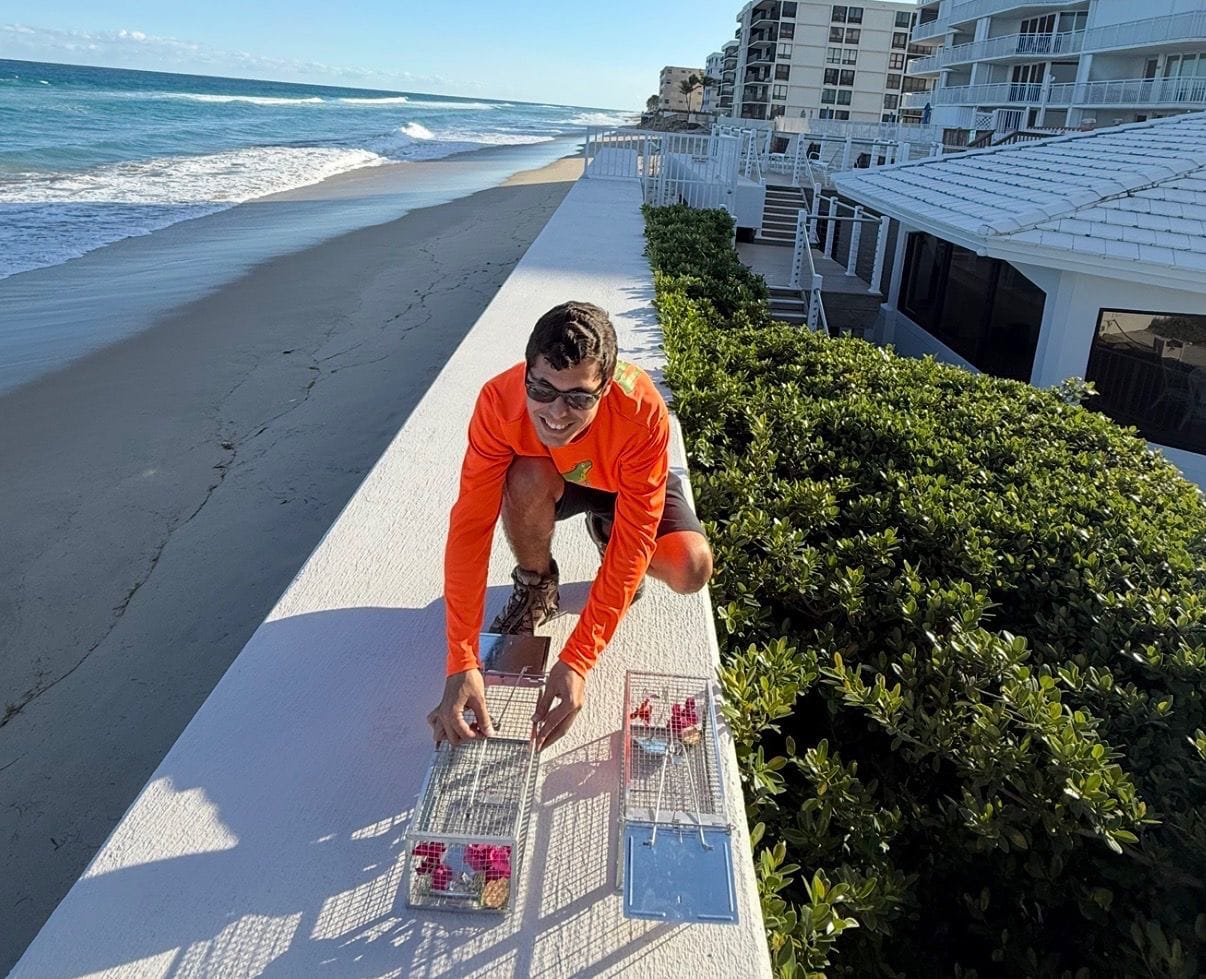
Around Boynton Harbor Marina and the downtown Ocean Avenue blocks, it's classic waterfront pressure — iguanas basking on seawall caps and dock pilings, burrowing into the backfill behind the walls. The Intracoastal is a continuous highway, so this stretch stays busy no matter how many you pull off a given lot.
The work is seawall-and-piling: clear the cap, pack the burrows, and guard the dock climb routes. On a marina or a mixed-use block that usually means a scheduled program rather than a single pass.
Leisureville, Hunters Run, and the 55-plus lakes
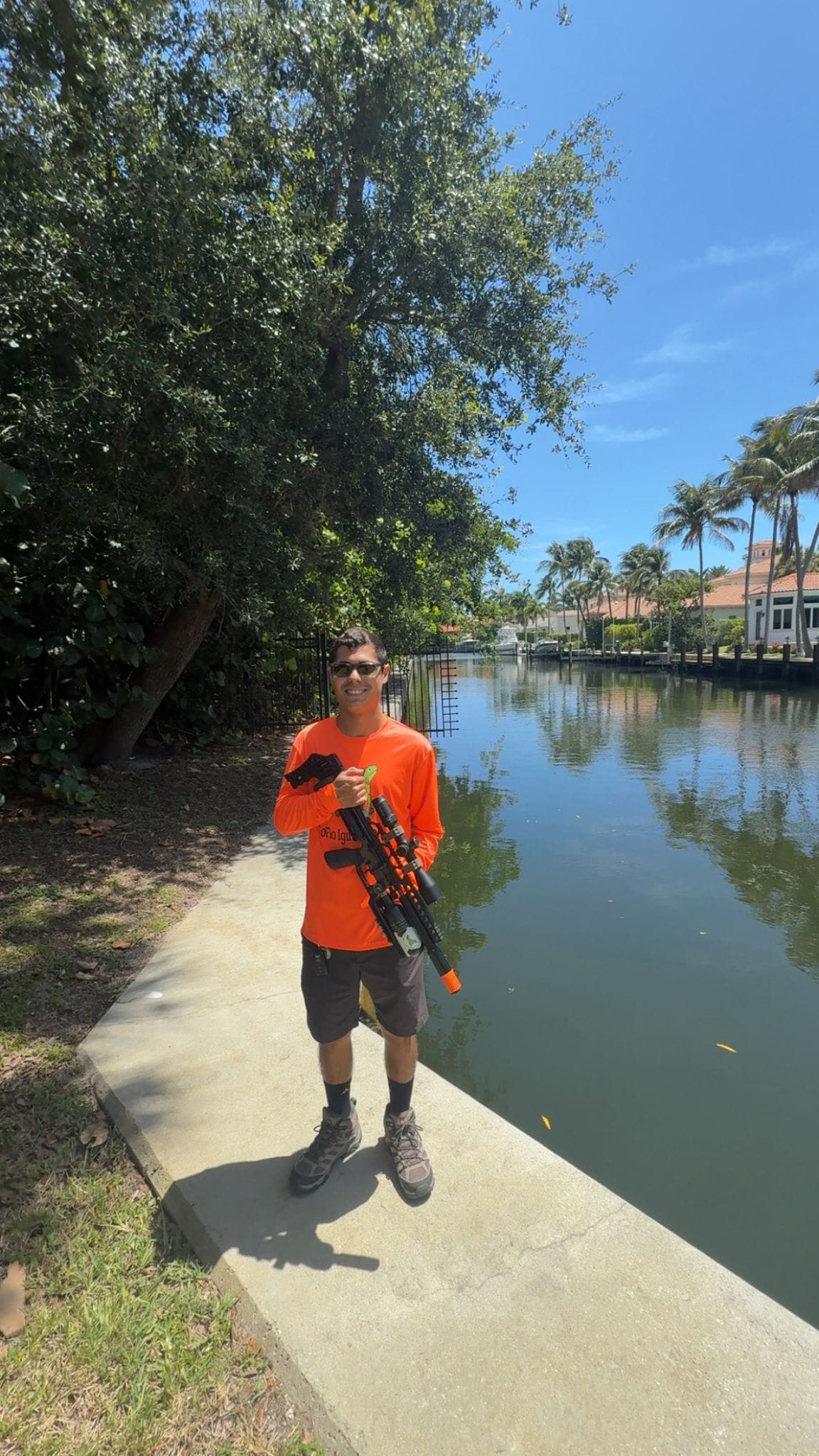
The large 55-plus and golf communities — Leisureville, Hunters Run, Sterling Village, Chapel Hill — have miles of retention-lake bank and Lake Eden nearby, and that's where the volume is. Iguanas burrow the soft banks and graze the shared lawns, and residents notice fast when the numbers climb.
These are the communities where a managed program earns its keep. We walk the banks to map the burrows and runs, then run removal, monitored trapping, and bank work on a cadence, keeping documentation the association can file. A community with that much shoreline can't be handled by a call-when-someone-complains approach; the banks refill faster than that.
- Retention-lake and Lake Eden banks burrowed along long stretches of shoreline.
- Shared lawns and clubhouse beds grazed down.
- Boardwalks, docks, and cart paths fouled with droppings.
West of Congress and the E-4 canal
West of Congress the newer subdivisions back up to the E-4 canal and preserve edges, which feed iguanas straight into the backyards. These lots often mix canal bank with community lakes, so the plan blends bank work with the standard yard clear-out.
Same-day service is normal here — we're just up the road in Lake Worth, and one review from a homeowner in east Boynton had us removing iguanas off the roof and around the property the same day they called. Speed matters most during spring nesting, when a fast visit clears adults before the clutches hatch.
What it costs
Single-visit clear-outs start at $125, and monitored community or waterfront programs run from $99 a month depending on the shoreline and the pressure. The property walk and the quote are free and in writing. For the big 55-plus communities we price the program to the property and give the board the catch logs and COI they need.
Questions we hear
Do you work with Boynton's 55-plus and golf communities?
Yes. Communities like Leisureville and Hunters Run have long stretches of lake bank that need ongoing monitoring. We run scheduled programs and keep documentation for the association.
There are iguanas all over our community lake — where do you start?
With a walk of the bank to map the burrows and runs, then a mix of removal, monitored trapping, and bank work to bring the numbers down and keep them down. A single pass won't hold on that much shoreline.
Do you cover the marina and downtown area?
We do — the Intracoastal seawalls and dock pilings around Boynton Harbor Marina are steady iguana territory, and they usually call for a scheduled program rather than a one-off.
Services in this guide