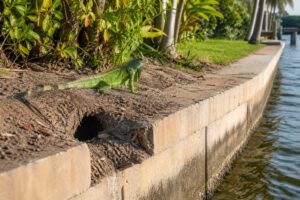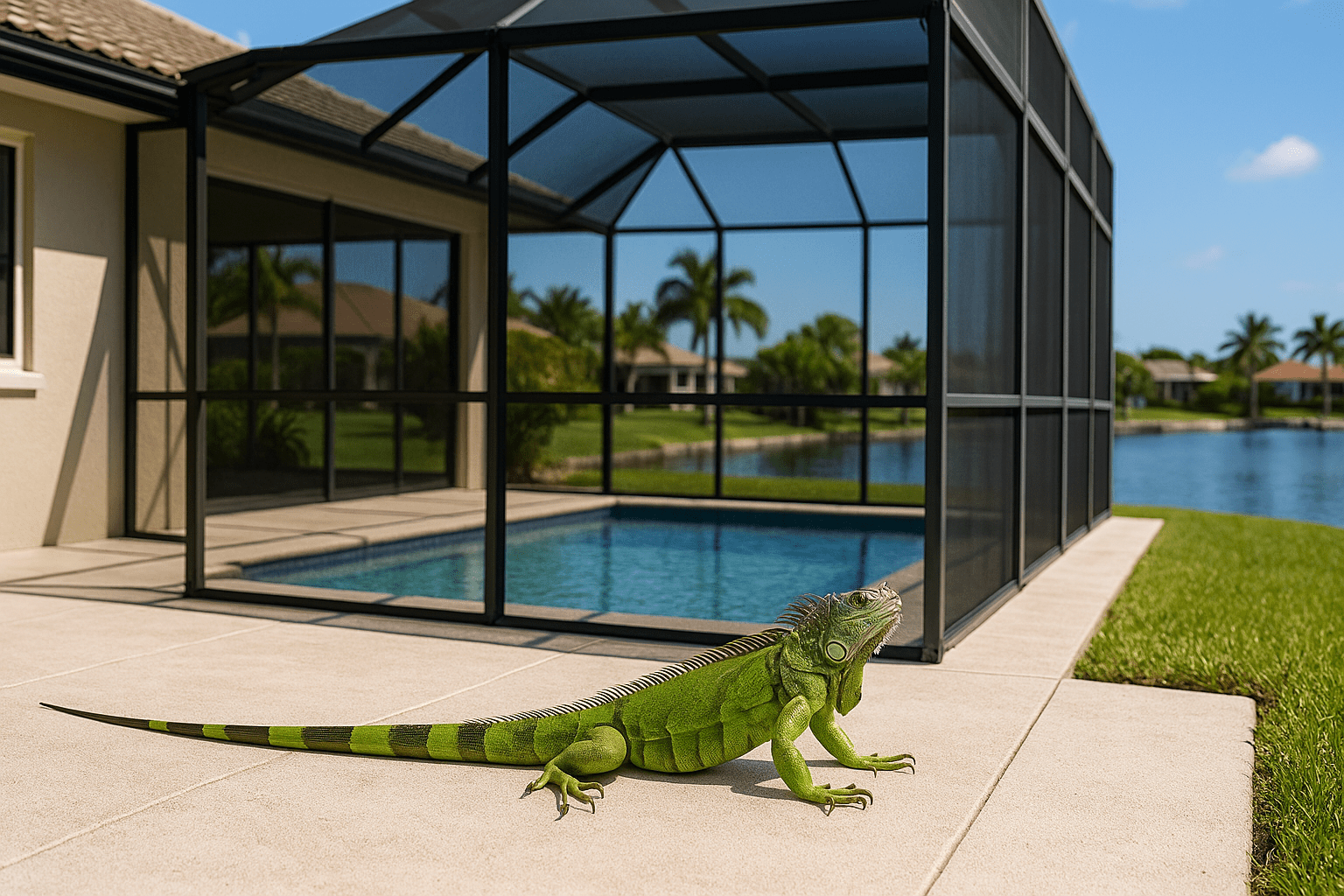
If you’ve noticed small piles of droppings around your pool deck, chances are South Florida’s green iguanas have been visiting more often than you’d like. While iguana droppings might seem like a minor nuisance, they can provide important clues about iguana activity around your property and help you take informed steps toward managing or deterring them humanely. Understanding what these signs mean is the first step in keeping your pool area clean, safe, and enjoyable.
Identifying Iguana Droppings Around Pools
Iguana droppings are typically cylindrical, about 1 to 2 inches long, and can vary in color from dark green to brown or black, depending on their diet. Near pools, you might find them on the pool deck, landscaping beds, or near water features. Unlike droppings from smaller lizards or birds, iguana feces are larger, often containing visible plant material since iguanas are primarily herbivores.
Spotting these droppings consistently in certain areas can indicate frequented iguana pathways or favored basking spots, which often include sunny pool decks and nearby vegetation.
What Droppings Reveal About Iguana Behavior
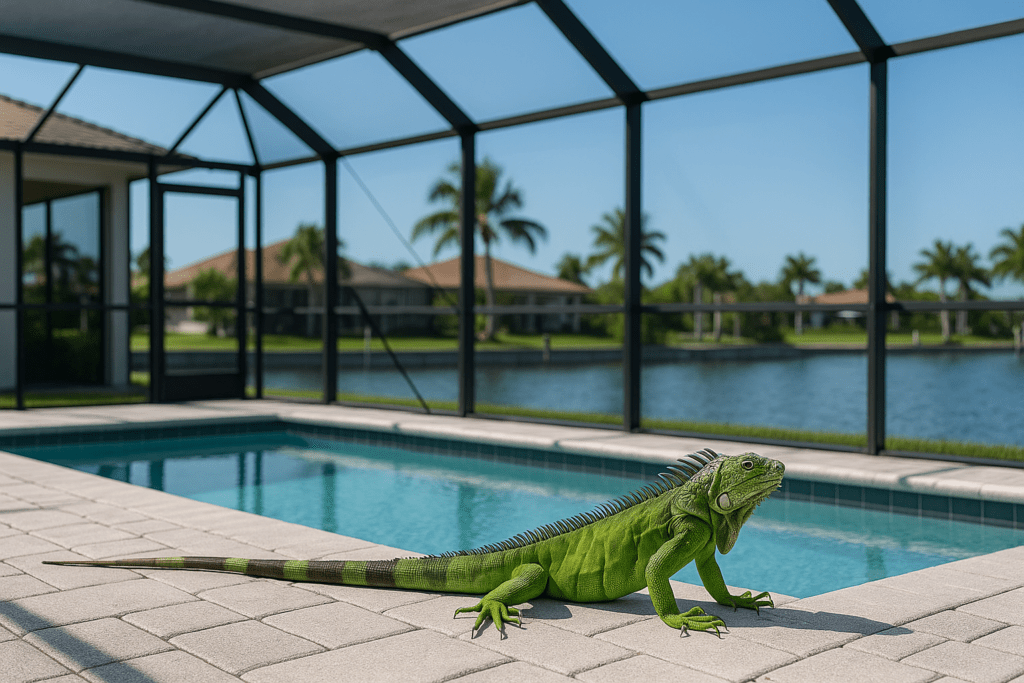
Droppings are more than just messes; they are behavioral markers. Their presence near your pool suggests:
- Regular visits: Iguanas are territorial and tend to return to established routes.
- Feeding activity: Droppings near ornamental plants or edible landscaping may indicate feeding sites.
- Basking preference: Warm pool decks offer ideal sunning spots for cold-blooded reptiles.
- Potential nesting areas: If droppings cluster near sandy or soft soil, females may be preparing nesting sites.
Tracking droppings over days or weeks can reveal activity peaks, often linked to seasonal temperature changes or mating cycles common in South Florida’s subtropical climate.
Sanitation Concerns and Pool Deck Hygiene
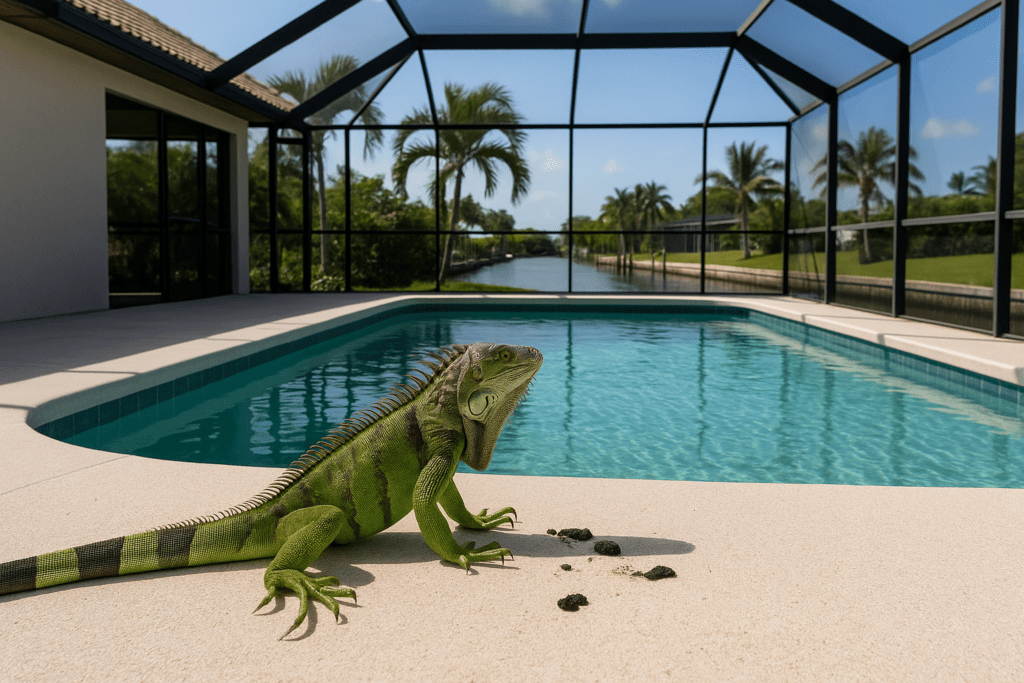
Iguana feces can carry bacteria and parasites that pose health risks, especially near swimming areas. Left unattended, droppings can stain pool decks and create unpleasant odors. It’s important to clean affected areas promptly using gloves and appropriate disinfectants to minimize exposure.
Regular inspection of the pool deck and surrounding vegetation will help catch droppings early and prevent buildup. Installing barriers or modifying landscaping to reduce iguana-friendly cover can also reduce their visits.
Humane Iguana Control: Trapping and Removal Tips
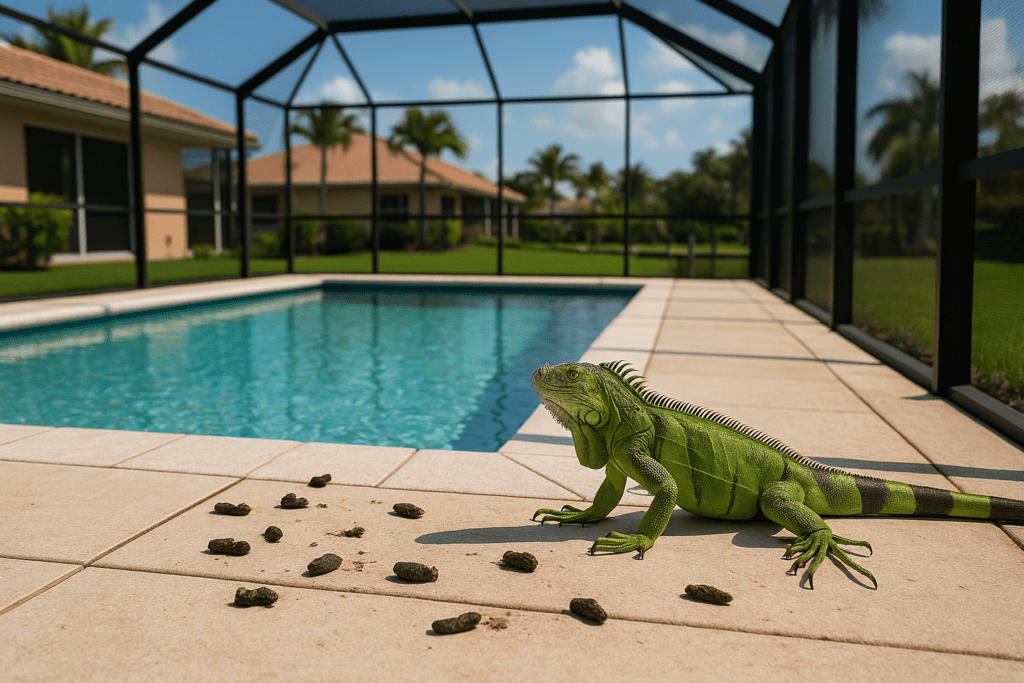
If iguana activity becomes excessive, humane control methods may be necessary. Here are practical guidelines for trapping and removal in South Florida:
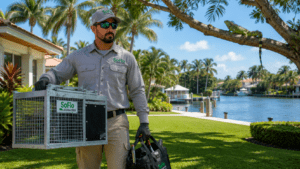
- Use live traps: Select traps sized for iguanas, ensuring they are ventilated and checked frequently to reduce stress on captured animals.
- Bait selection: Iguanas favor leafy greens like collard greens, hibiscus flowers, or tamarind fruit. Place bait toward the back of the trap.
- Placement: Set traps near frequent dropping sites or basking areas, avoiding high-traffic human areas for safety.
- Safety first: Wear gloves and avoid handling iguanas directly to prevent injury or disease transmission.
- Legal and humane considerations: South Florida regulations require humane treatment and proper relocation or surrender of iguanas to authorized wildlife agencies. Always comply with local laws to protect native ecosystems.
Signs of High Iguana Activity to Monitor
<pBeyond droppings, other indicators can help you assess iguana presence near your pool:
- Leaf damage: Chewed or stripped plants are a common sign of feeding.
- Tracks and slide marks: Iguanas leave distinctive claw marks or tail slides on smooth surfaces.
- Shedded skin: Iguanas periodically shed their skin, which may be found around the pool area.
- Sounds: Occasional hissing or rustling noises can indicate nearby iguanas.
Recognizing these signs alongside droppings can help you pinpoint areas requiring attention.
Frequently Asked Questions About Iguana Droppings and Pool Areas
Q: Are iguana droppings harmful to humans?
While iguana droppings can harbor bacteria, proper cleaning and hygiene minimize health risks. Avoid direct contact and clean surfaces promptly.
Q: Can iguana droppings damage pool equipment?
Droppings themselves usually do not damage equipment but can clog drains or filters if washed into the pool.
Q: What’s the best way to prevent iguanas from accessing my pool deck?
Removing food sources, trimming vegetation, and using humane deterrents like motion-activated sprinklers can help reduce visits.
Q: Are iguanas native to South Florida?
No, green iguanas are invasive in South Florida but have thrived due to the warm climate and abundant vegetation.
Q: Should I attempt to capture iguanas myself?
Homeowners can set live traps following local guidelines, but professional help ensures humane handling and compliance with regulations.
Conclusion: Managing Iguana Activity Around Your Pool
Spotting iguana droppings around your South Florida pool is a clear sign these reptiles are frequenting your property. By understanding what these signs mean, maintaining pool deck cleanliness, and taking humane control measures when necessary, you can safeguard your outdoor space. For expert assistance with iguana removal, cleanup, or advice tailored to South Florida’s unique environment, contact SoFlo Iguana Pros at (561) 735-1975. Our team is dedicated to helping homeowners manage iguana activity responsibly and effectively.