Living near South Florida’s beautiful waterways offers many advantages, but it also means sharing your waterfront property with local wildlife — including green iguanas. While these reptiles are fascinating to observe, their burrowing habits and droppings can cause significant problems for seawalls, threatening shoreline stability and property value. Understanding how iguana activity contributes to seawall erosion and learning practical, legal ways to manage the issue are essential for waterfront homeowners.
Why Iguanas Target Seawalls: Burrowing Behavior Explained
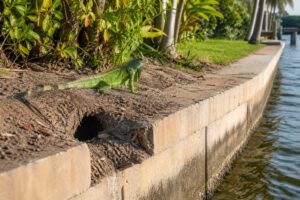
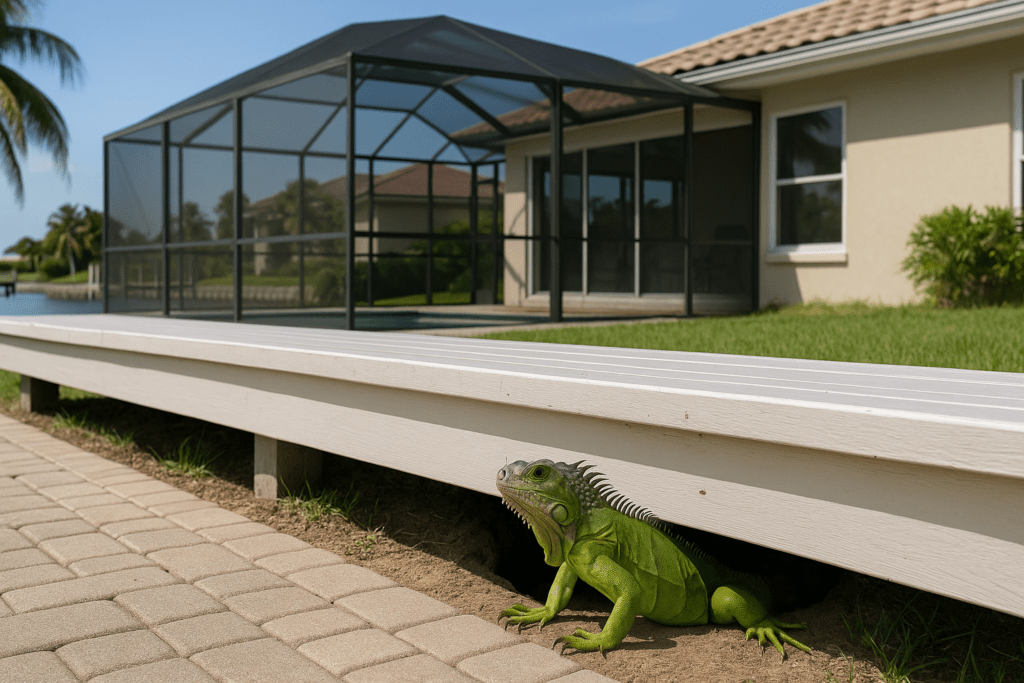
Green iguanas are burrowing creatures by nature. Seawalls, with their soft soil and sheltered areas, provide an ideal place for them to dig. These burrows serve as protection against predators and harsh weather while offering a comfortable habitat close to their food sources.
Unfortunately, when iguanas dig underneath or near seawalls, they create voids that weaken the structural integrity of the wall. Over time, this destabilization can lead to cracks, shifting, and even partial collapse, leaving waterfront properties vulnerable to erosion and costly repairs.
How Iguana Droppings Worsen Seawall Conditions
Besides burrows, iguana droppings present a separate concern. Their feces are highly acidic and can accelerate the deterioration of concrete and other seawall materials. The accumulation of droppings also poses health risks, as they can harbor bacteria and parasites that affect pets and humans alike.
Regular cleaning is important but can be challenging due to the location and volume of droppings, especially during peak iguana activity in warmer months.
Seawall Erosion: The Bigger Picture
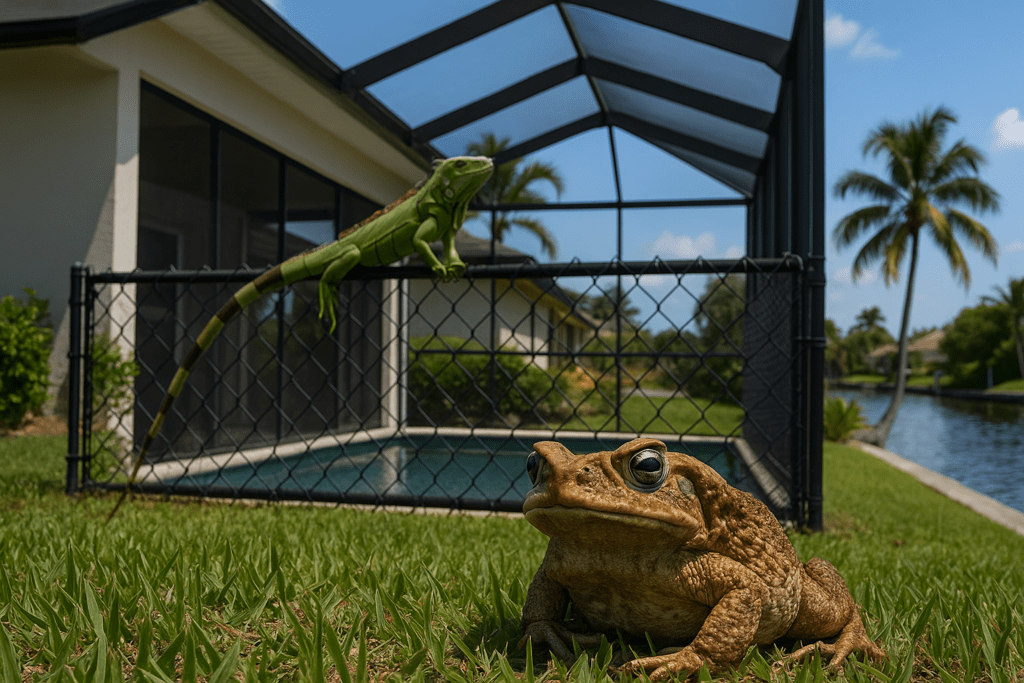
When combined, burrowing and droppings contribute to a cycle of erosion around seawalls. As soil is displaced by burrows, seawalls lose critical support, allowing water to seep in and wash away more sediment. This process intensifies during storms or high tides, accelerating damage.
Ignoring these signs can lead to severe erosion, endangering landscaping, docks, and the overall value of your waterfront property.
Humane Approaches to Managing Iguana Problems on Seawalls
Addressing iguana-related seawall damage requires a balanced approach that respects local wildlife regulations and prioritizes humane treatment. Here are some recommended steps:
- Inspection and Identification: Regularly check your seawall for new burrows or fresh droppings to monitor iguana activity.
- Exclusion Methods: Installing barriers such as mesh fencing along the seawall base can discourage iguanas from burrowing.
- Habitat Modification: Removing dense vegetation near the seawall reduces hiding spots and food sources, making the area less attractive to iguanas.
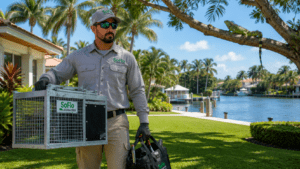
- Humane Trapping: Live traps baited with leafy greens can capture iguanas for relocation, but this must be done following South Florida wildlife regulations to ensure legal and ethical handling.
- Professional Assistance: Working with experts ensures safe, effective, and compliant removal or control strategies tailored to your property.
Setting Up Iguana Traps: Tips for Waterfront Homeowners
If you choose to use live traps, keep the following in mind to maximize success and safety:
- Trap Placement: Position traps near active burrows or along known iguana travel paths close to the seawall.
- Bait Selection: Fresh leafy vegetables like kale, collard greens, or hibiscus leaves are highly attractive to iguanas.
- Monitoring: Check traps frequently (at least twice daily) to minimize stress on captured animals.
- Legal Compliance: Be aware of South Florida’s wildlife rules, which may require permits or professional involvement for relocation.
- Safety Precautions: Wear gloves and handle iguanas carefully to avoid injury and stress.
Preventing Future Seawall Damage: Maintenance and Landscaping Tips
Proactive property management can reduce iguana-related seawall problems over time:
- Regularly fill and compact any new burrows to maintain soil stability.
- Trim overgrown shrubs and trees near the seawall to limit shelter and food supply for iguanas.
- Consider planting iguana-resistant vegetation that discourages feeding.
- Routine seawall inspections, especially after storms, can catch early signs of erosion.
FAQ: Seawall Iguana Issues in South Florida
Q: Are green iguanas protected under South Florida laws?
A: Green iguanas are considered invasive in South Florida. While not protected, handling and removal must comply with humane and legal regulations to avoid penalties.
Q: Can I seal my seawall to prevent burrowing?
A: Sealing may help, but iguanas often dig beneath surfaces. Combining barriers with habitat modification is more effective.
Q: Is it safe to remove iguana droppings myself?
A: Yes, but use gloves and disinfect tools afterward to avoid health risks.
Q: When is the best time to trap iguanas?
A: Early morning or late afternoon is ideal when iguanas are most active and feeding.
Q: How can SoFlo Iguana Pros help with seawall iguana problems?
A: We provide expert assessments, humane trapping, exclusion installations, and ongoing advice tailored to South Florida waterfront properties.
Protect Your Seawall with SoFlo Iguana Pros
Seawall erosion from iguana burrows and droppings is a serious concern for South Florida waterfront homeowners. By understanding iguana behavior and implementing humane, effective control methods, you can safeguard your property’s shoreline and value.
For professional assistance tailored to your unique situation, contact SoFlo Iguana Pros at (561) 735-1975. Our team is dedicated to delivering responsible wildlife control solutions throughout South Florida, helping you enjoy your waterfront with peace of mind.