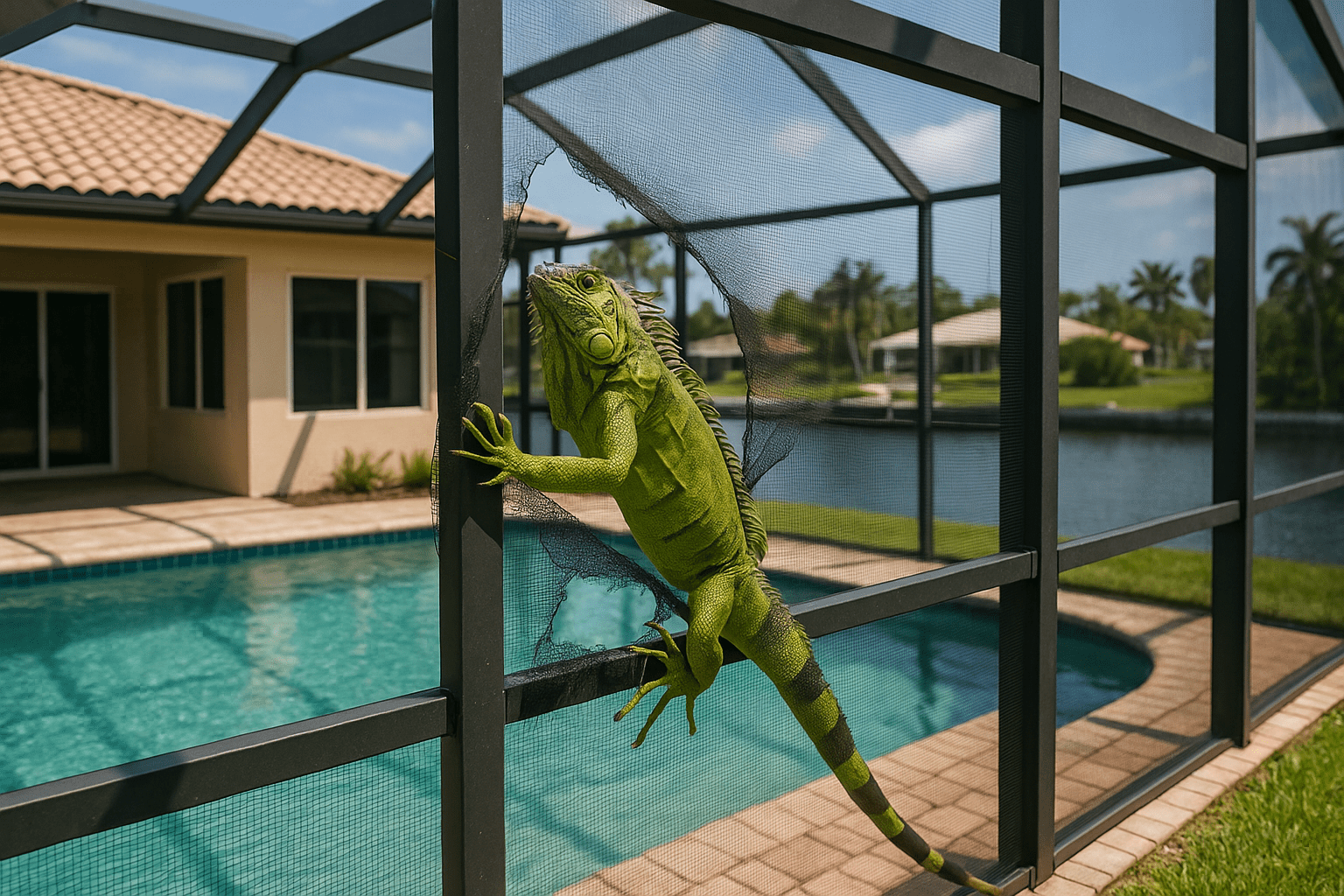
South Florida’s beautiful climate makes screened pool enclosures a popular feature for homeowners seeking to enjoy the outdoors without pests. However, the tropical environment also attracts green iguanas, whose presence can lead to frustrating damage—especially to pool screens. Understanding how iguanas damage your pool enclosure and knowing what to do next can save you time, money, and headaches.
Why Iguanas Target Pool Screens
Iguanas are native to South Florida’s subtropical landscape and are often found in residential yards. While they primarily feed on vegetation, their behavior around pool areas can lead to unintended damage. Pool screens offer iguanas shade, shelter, and an elevated surface to bask or escape predators.
The mesh of these screens is not designed to withstand sharp claws or the weight of a climbing iguana. Over time, their repeated visits and climbing can tear the mesh, creating holes that allow insects and debris to enter your pool area.
Common Types of Damage Iguanas Cause to Pool Screens
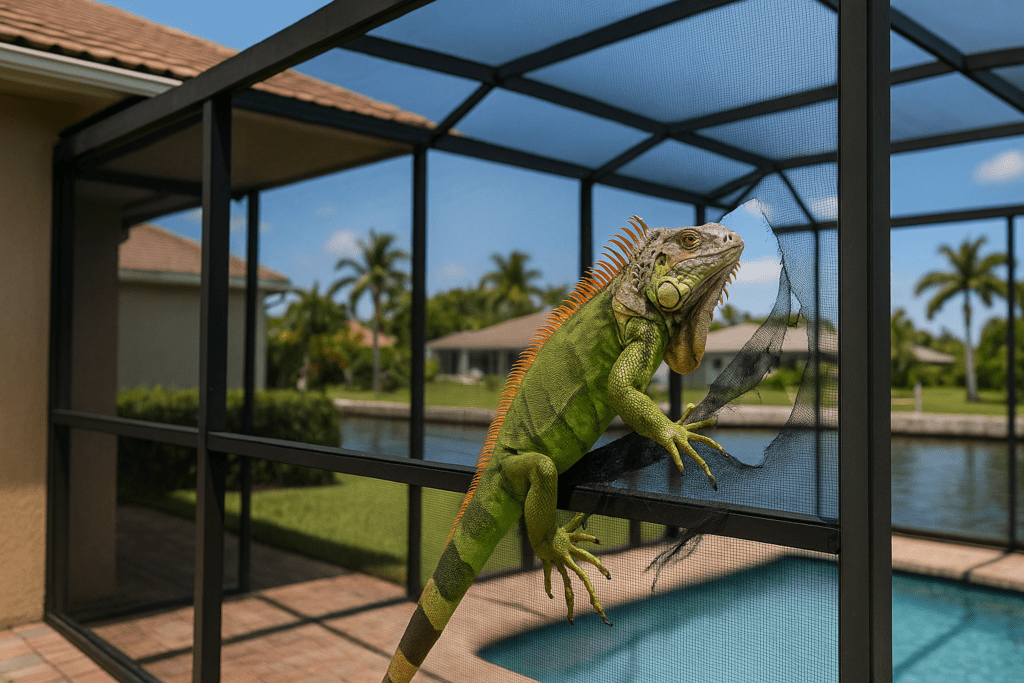
Recognizing typical damage patterns helps homeowners identify iguana issues early. Common damage includes:
- Torn Mesh: Iguanas’ claws can rip or snag screen material, especially at entry points or corners where they climb frequently.
- Frame Displacement: Large iguanas climbing on aluminum frames can loosen or bend the structure over time.
- Debris Accumulation: Iguanas often defecate near or on the screens, which can stain and degrade materials if not cleaned promptly.
Implementing Screen Guards to Protect Your Pool Enclosure
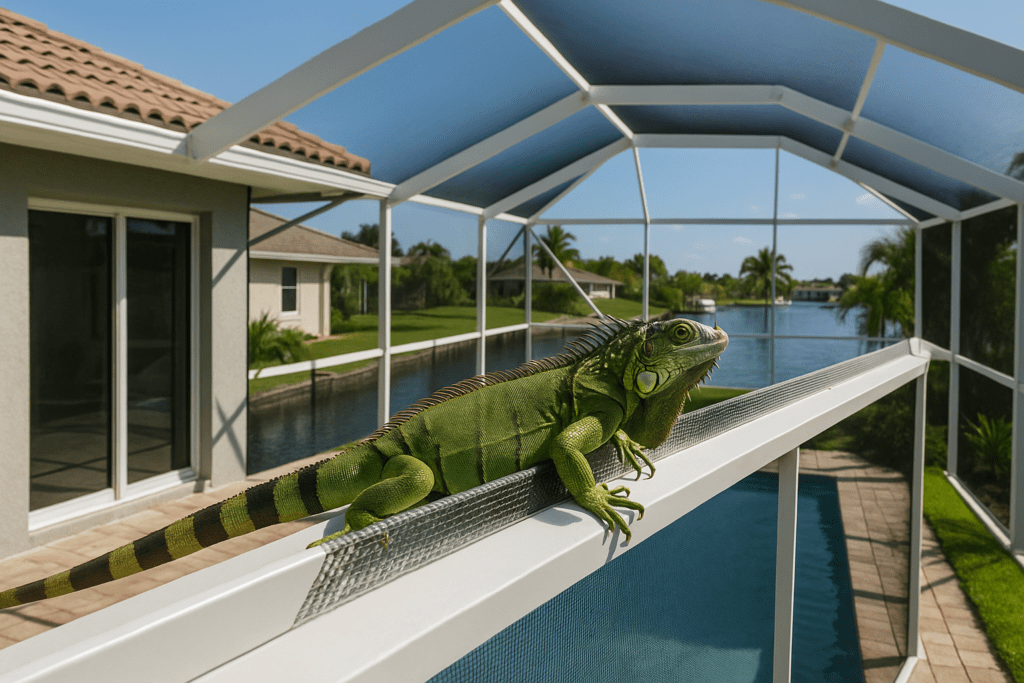
Screen guards are a practical step in reinforcing your pool enclosure against iguana damage. These protective covers or barriers are designed to shield vulnerable areas such as lower panels and corners.
When selecting a screen guard, look for:
- Durability: Materials resistant to tearing and UV damage.
- Ease of Installation: Options that can be added without major frame modifications.
- Aesthetic Compatibility: Guards that blend with your pool’s design for a seamless look.
Properly installed guards can significantly reduce the need for costly screen repairs.
Humane Iguana Control: Trapping and Removal Tips
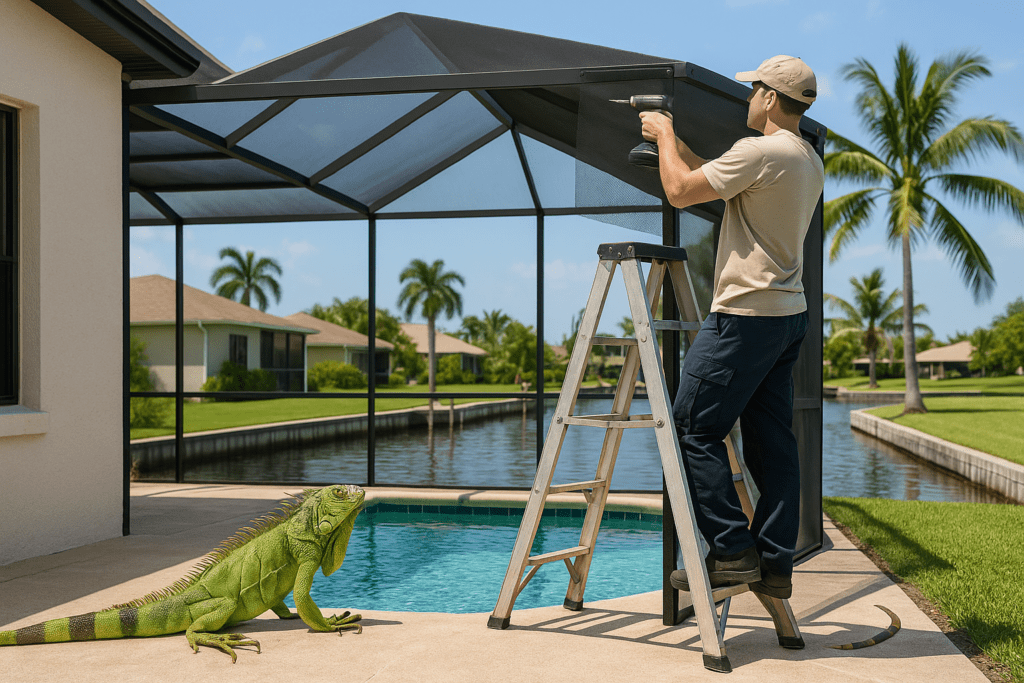
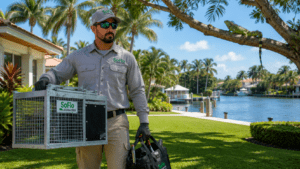
When iguanas become persistent, humane removal may be necessary. In South Florida, it’s important to comply with local wildlife regulations and prioritize safe, ethical handling.
Key points for humane trapping include:
- Trap Selection: Use live traps sized appropriately for green iguanas to avoid injury.
- Bait Choices: Fresh fruits like mango, papaya, or berries are effective attractants.
- Placement: Position traps near common iguana paths or basking spots around the pool.
- Safety Precautions: Wear gloves and handle iguanas carefully to reduce stress and prevent injury to both the animal and yourself.
Remember that releasing iguanas into the wild or relocating them without permits is illegal and harmful to local ecosystems.
Maintaining Your Pool Area to Deter Iguanas
Alongside physical barriers and trapping, certain maintenance habits discourage iguanas from settling near your pool:
- Remove or trim dense vegetation close to the enclosure.
- Clear fallen fruit or garden debris that attracts iguanas.
- Regularly clean up iguana droppings and wash affected screen areas.
- Consider installing motion-activated sprinklers or lights to deter nighttime visits.
FAQ: Iguana Damage and Pool Screen Protection
Q1: Can iguanas completely ruin a pool screen?
Yes, repeated climbing and clawing can cause significant tears and frame damage, eventually compromising the enclosure’s integrity.
Q2: Are screen guards a permanent fix?
Screen guards help protect vulnerable areas but may need replacement over time due to wear. Combined with other control methods, they offer long-term benefits.
Q3: Is it safe to trap iguanas myself?
Humane trapping is possible with proper equipment and precautions, but inexperienced handling can cause harm. Consulting professionals ensures safe, legal removal.
Q4: Will iguanas avoid my pool area if I remove plants?
Reducing food sources and shelter near your pool discourages iguanas but may not eliminate visits completely.
Q5: What are the legal considerations for handling iguanas in South Florida?
Green iguanas are invasive but protected under some local regulations. It’s important to follow humane trapping and removal guidelines to comply with wildlife laws.
Protect Your South Florida Pool with Expert Help
Dealing with iguana damage to pool screens requires a combination of prevention, humane control, and repairs. SoFlo Iguana Pros specializes in South Florida wildlife management with a focus on humane, legal, and effective iguana solutions. If your pool screen shows signs of damage or iguana activity, call us at (561) 735-1975. Let our experienced team help you safeguard your pool area and enjoy a pest-free outdoor space.