It isn't a premium for the zip code — waterfront genuinely is the harder, slower iguana job. Here's why the water changes everything about the cost.
Waterfront owners sometimes worry the higher quote is a zip-code tax — that they're paying more because the house is worth more. It isn't. Waterfront genuinely is the hardest iguana assignment there is, and the price reflects real, additional work, not a markup for the address. Let me walk through exactly why the water changes the economics.
This matters because understanding it helps you spend smart. Once you see why waterfront costs more to control, the case for getting ahead of it — rather than letting it build — gets a lot clearer.
The water is an escape hatch
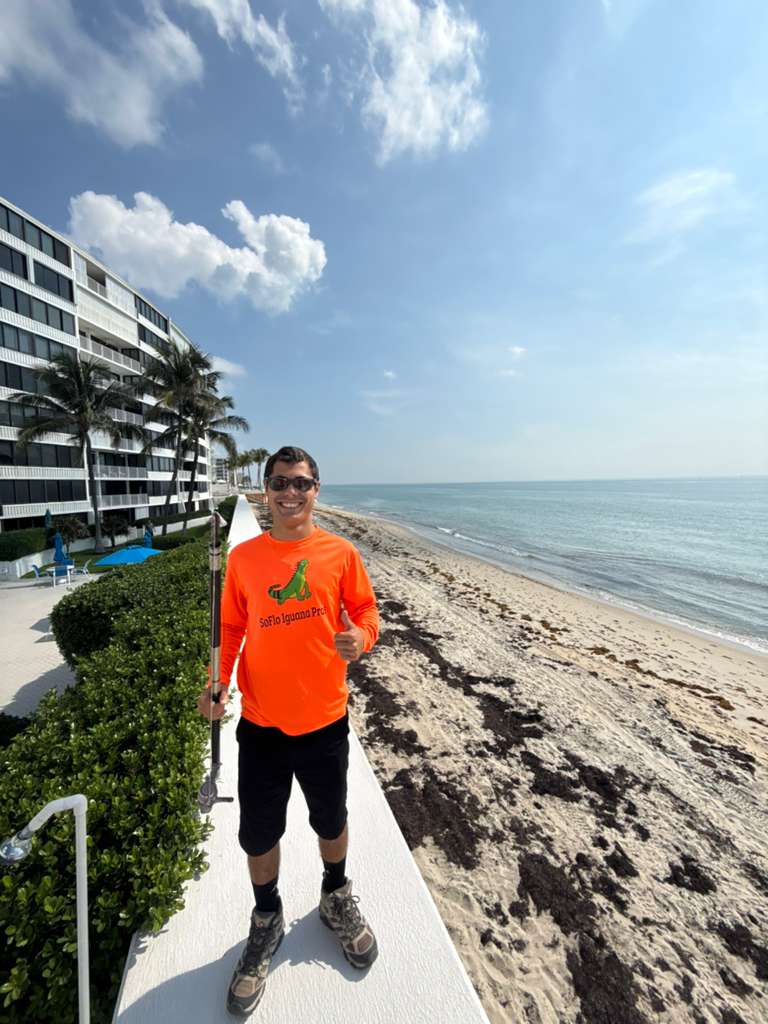
The single biggest factor is that the water gives every iguana an instant, one-second escape. Spook one on an inland lawn and it runs somewhere you can follow. Spook one on a seawall and it's in the canal before you've moved. That makes trapping and removal genuinely slower and more skill-dependent on the water — you're working animals that can vanish at will.
The habitat is ideal and self-refilling
Waterfront isn't just where iguanas happen to be — it's the habitat they'd design for themselves.
- Sun-warmed seawall caps and banks make perfect basking benches.
- Soft backfill and earthen banks are the easiest digging on the property.
- The waterline is a continuous highway, so a neighbor's colony refills your bank constantly.
- Pilings, rip-rap, and docks give ready climb routes onto the property.
The stakes are higher too
It isn't only that waterfront is harder to clear — it's that the damage is more expensive when it lands. The most costly iguana repairs are seawall failure and bank erosion, and those only exist on the water. An inland lot risks chewed plants and maybe some slab settling; a waterfront lot risks a five-figure, uninsured seawall repair. More at stake means control is worth more, and it means letting it slide costs more.
Why 'refill' drives ongoing cost
The refill dynamic is the part inland owners don't have to think about. Because iguanas travel the waterline, clearing your bank doesn't end the supply — the next canal over keeps sending candidates. That's why waterfront properties are usually program properties rather than one-time-visit properties: the from-$99/mo cadence exists precisely to counter a supply that never fully stops.
An inland one-off can often be a single from-$125 visit and done. Waterfront's ongoing nature isn't upselling; it's the waterline doing what it does.
How to keep the waterfront number down
The good news is you have real control over the cost. Getting ahead of it — before nesting, before the colony establishes, before the seawall starts slumping — keeps you in cheaper territory. A monitored program that holds the count near zero costs a fraction of clearing a fully colonized bank and paying for the repair it caused. The free walk is where we figure out the least-expensive path for your specific stretch of water, and there's no lock-in if it turns out you need less than you thought.
Questions we hear
Am I paying more just because I'm on the water?
No — it's not a zip-code markup. Waterfront is genuinely harder: the water gives iguanas an instant escape, the banks are ideal habitat, and the waterline constantly refills your property from neighboring colonies. The higher quote reflects real additional work, not the value of the house.
Why do waterfront homes usually need ongoing service?
Because iguanas travel the waterline, so a neighbor's colony keeps sending new animals down your bank even after you clear it. The from-$99/mo program exists to counter that continuous supply. Inland lots without water can often be a single visit and done.
Can I keep my waterfront cost down?
Yes — get ahead of it. A monitored program that holds the count near zero costs far less than clearing a fully colonized bank plus paying for the seawall repair it caused. The free walk finds the least-expensive path for your stretch of water, with no lock-in.
Services in this guide