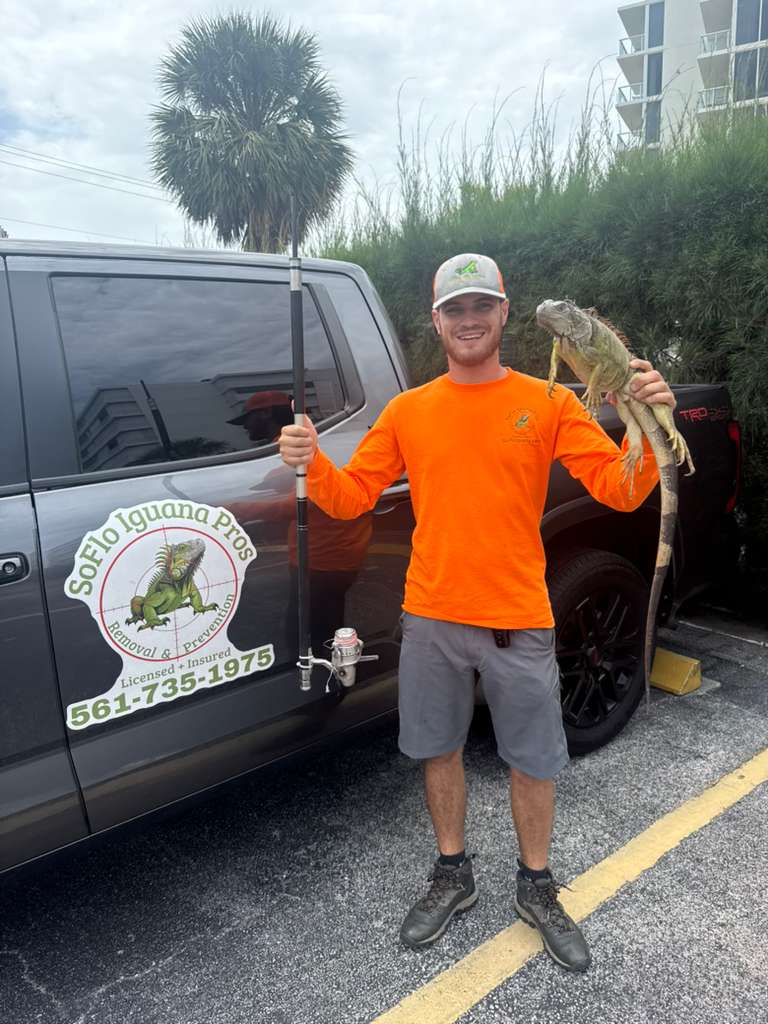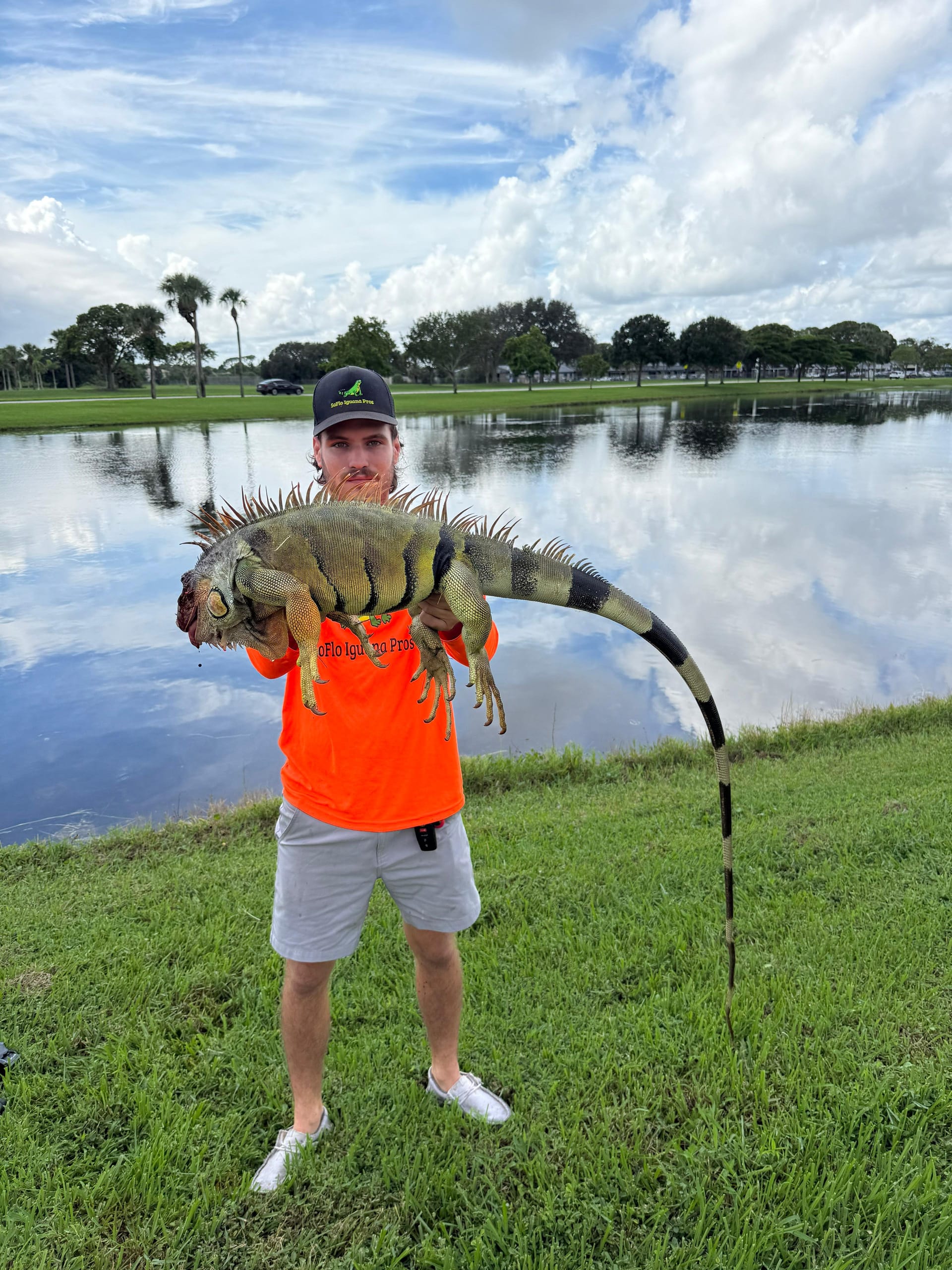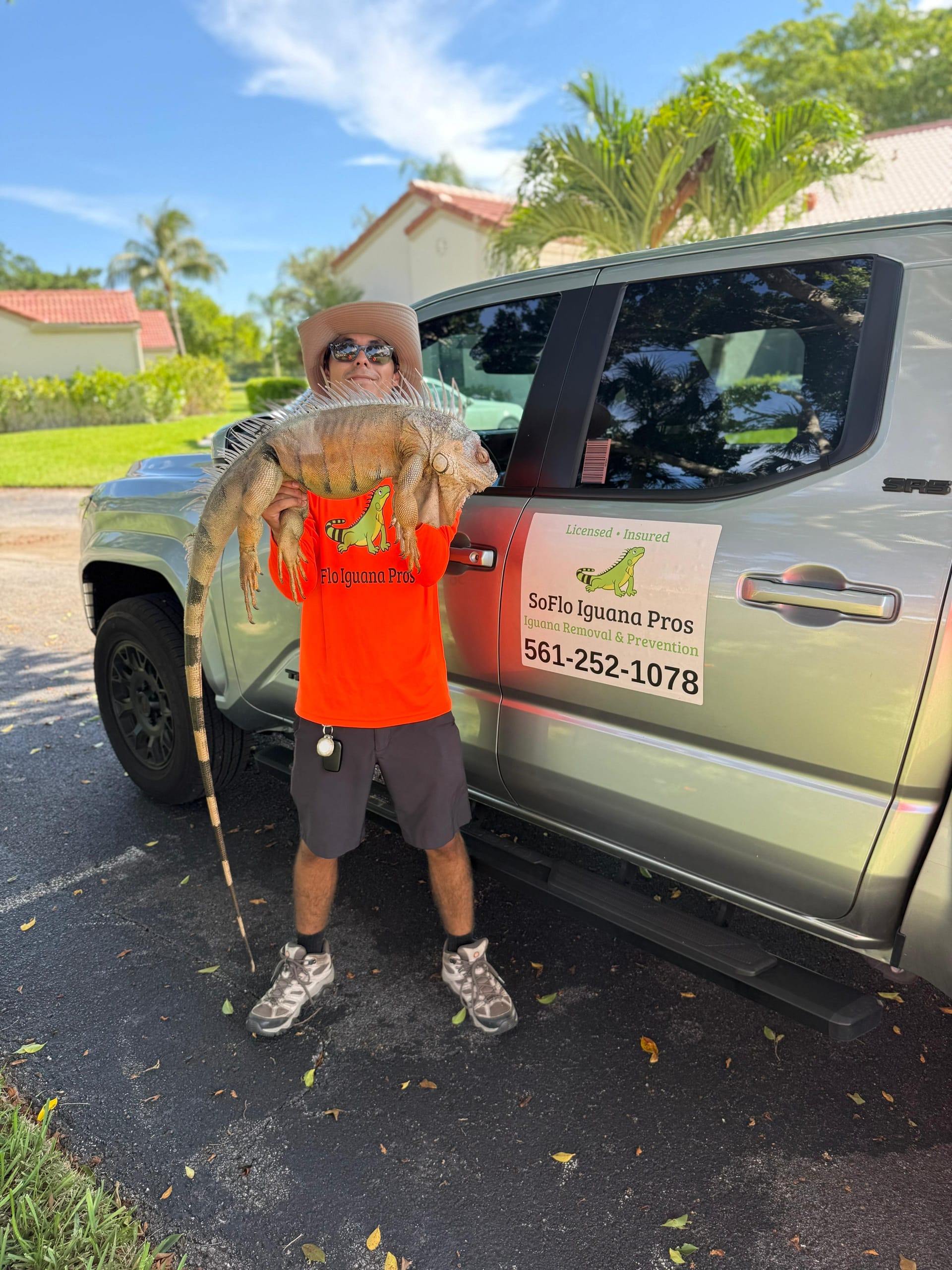
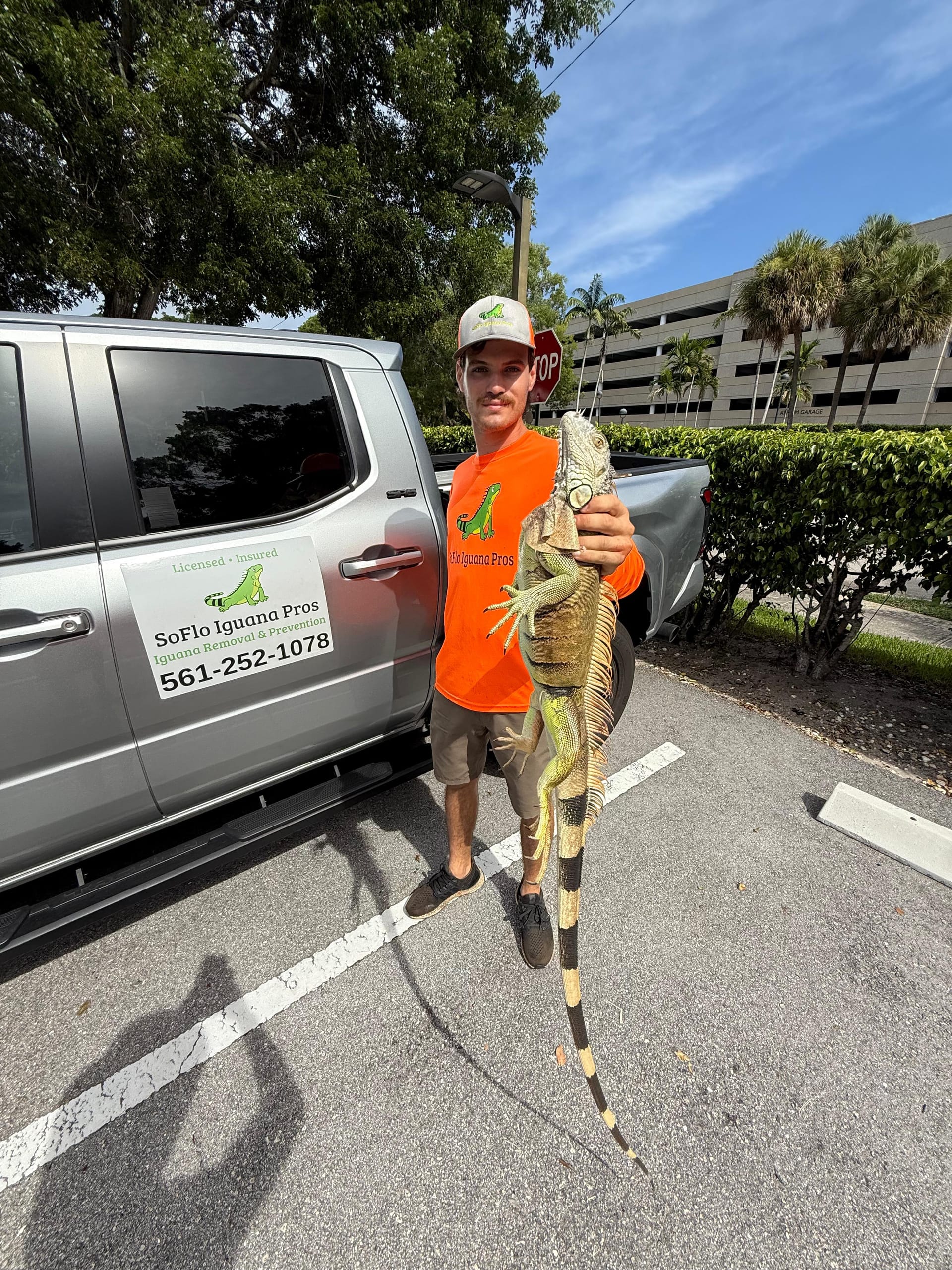
It's a fair question, and one people are often uneasy to ask. Here's the honest, complete answer about what happens once we've caught them.
People often ask this one a little sheepishly, like it's not polite. It's a completely fair question, and I'd rather answer it plainly than have you wonder. When we remove iguanas from your property, they aren't set free up the road — and there's a specific, lawful reason for that.
Here's the whole picture, without dodging the part people find uncomfortable.
Why they aren't relocated
The green iguana is a non-native, invasive species in Florida — it doesn't belong in the ecosystem and it does real damage to native wildlife and to property. Because of that, releasing them somewhere else isn't legal, and it wouldn't help anyway; you'd just be handing the problem to another canal. State rules require that captured green iguanas be dispatched rather than relocated.
How it's handled
Dispatch is done on site, humanely, and under Florida's rules — quickly and correctly, by people who do it every day. That's genuinely part of what you're paying a licensed operator for: not just the catching, but doing the end of it properly, which is harder to get right than it looks and is where DIY attempts most often go wrong.
The remains are disposed of properly. On a cold-snap morning, carcass and dropping cleanup is its own service, handled with gloves and correct disposal because of the salmonella risk in handling any of it bare-handed.
- Humane, on-site dispatch under state rules — no relocation.
- Proper disposal of remains, handled with the salmonella risk in mind.
- The same care whether it's one animal or a bank full.
The bigger picture
It's not a cheerful answer, but it's the honest and lawful one, and it's the same reason these animals are managed as a nuisance species in the first place: they have almost nothing keeping their numbers in check in South Florida, and left alone they overrun banks, seawalls, and native habitat. Removal is population management for an animal that shouldn't be here, done as humanely as the job allows.
If you'd like the full scope of how we work — from the property walk through the handling — it's laid out on /iguana-removal, and a free walk starts from /contact.
Questions we hear
Are the iguanas relocated somewhere safe?
No — releasing this non-native, invasive species elsewhere isn't legal in Florida, and it would only move the problem. State rules require captured green iguanas be dispatched rather than relocated. It's done on site, humanely, by people who handle it correctly every day, which is a real part of what hiring a licensed company covers.
Is the dispatch humane?
Yes — it's done quickly and correctly under Florida's rules, on site. Doing the end of the job humanely and legally is genuinely harder than it looks and is where DIY attempts most often go wrong, which is a big reason people hire it out to a licensed operator rather than improvising.
Services in this guide