Iguana Tree Guards
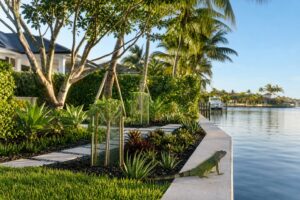
Iguana Tree Guards are a practical prevention service for South Florida properties where iguanas are climbing palms, nesting in landscape beds, eating ornamental plants, or using trees as launch points onto roofs, seawalls, screen enclosures, and pool decks. If you have watched a large iguana sprint up a palm trunk like it owns the place, you already know the problem is not just the animal in the yard. It is the easy access your trees are giving it.
At SoFlo Iguana Pros, we install humane climbing prevention barriers designed to reduce iguana access to palm trees and other suitable landscape trees without using poisons or unsafe shortcuts. The goal is simple: protect the tree, protect the property, and make your yard less convenient for iguanas looking for food, shade, nesting cover, or a safe perch above people, pets, and pool traffic.
When Iguanas Turn Palm Trees Into Property Access Ladders
Palm Trunks Give Iguanas a Straight Route Up
South Florida palms are beautiful, but many have exactly what iguanas need: textured trunks, low fronds, nearby shrubs, and a warm landing area below. Once an iguana learns that a palm gives it a quick escape route, it may return daily. From there, it can sun itself, hide from people, chew tender growth, or drop down into nearby landscaping when the coast is clear.
Tree Access Can Lead to Roof and Screen Enclosure Problems
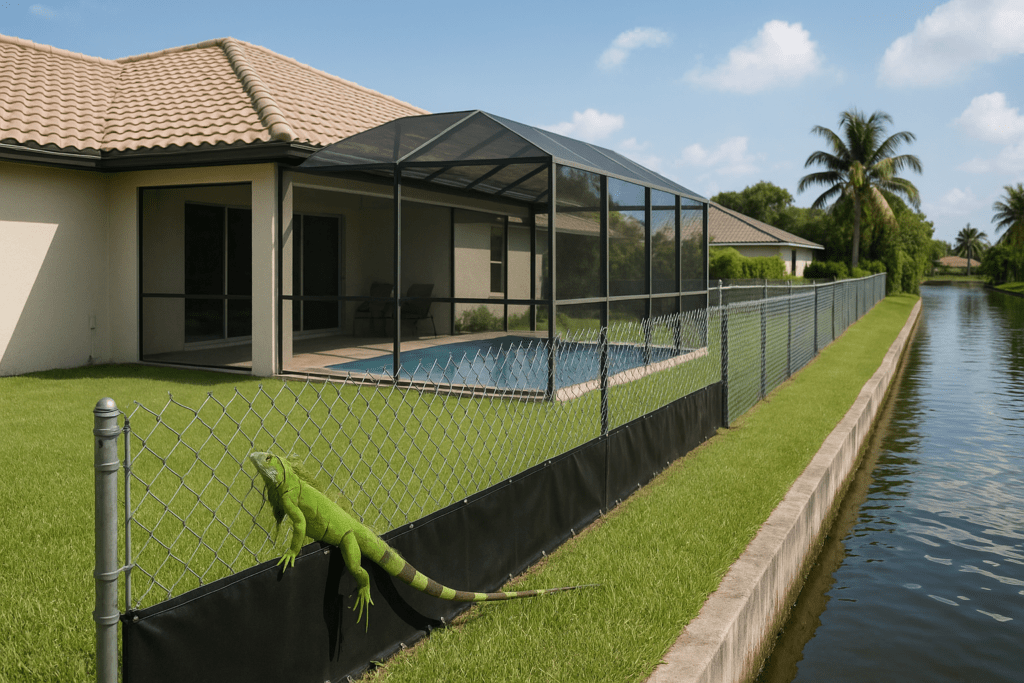
Many properties have palms close to rooflines, gutters, lanais, pool cages, docks, seawalls, and balcony edges. Iguanas use that layout to move from one area to another without crossing open ground. A palm beside a screen enclosure can become a bridge. A tree close to a flat roof can become an iguana ramp. That movement increases droppings, scratching, torn screens, and surprise encounters in areas where families are trying to relax.
Landscape Damage Often Starts Above the Ground
Iguanas do not only feed at ground level. They climb to reach flowers, tender new palm growth, fruit trees, hibiscus, bougainvillea, orchids, and other landscape favorites. Even when the feeding damage appears in beds and planters, the access route may begin at a nearby trunk. Tree guards help cut off one of the most useful pathways iguanas use to reach high-value vegetation.
One Iguana Can Teach Others the Same Route
Iguanas are creatures of habit. If a tree offers food, shelter, warmth, or escape, that route can become part of the property’s daily traffic pattern. In waterfront neighborhoods, golf course communities, canal-side homes, HOAs, resorts, and commercial properties, repeated climbing can quickly become a visible nuisance. The sooner the access point is corrected, the easier it is to change how iguanas use the space.
Our Iguana Tree Guards Plan

1. Property Walkthrough and Tree Access Review
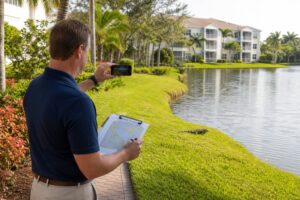
We begin by inspecting the areas where iguanas are being seen most often. That includes palms, fruit trees, ornamental trees, roof edges, seawalls, pool enclosures, docks, patios, and nearby feeding areas. We look for climbing marks, droppings, worn routes, low branches, and places where iguanas can move from the ground to the trunk and then to another structure.
2. Identifying the Trees That Actually Need Guards
Not every tree needs a barrier. Installing protection in the right places matters more than covering every trunk on the property. We identify the trees giving iguanas the most useful access, especially palms near pools, screens, lanais, roofs, garden beds, and water. This keeps the service focused, cleaner-looking, and more cost-effective.
3. Selecting a Humane Climbing Barrier Style
Tree guards work by creating a smooth interruption on the trunk that iguanas cannot grip easily. Depending on the tree type, trunk condition, location, and property appearance, we recommend a professional barrier option that fits the setting. The guard must be positioned correctly, secured properly, and installed with the health of the tree in mind.
4. Measuring the Trunk and Placement Height
A barrier that is too low, too narrow, or placed near a jump point may not solve the issue. We measure trunk size, nearby shrubs, rocks, fences, furniture, retaining walls, and other objects iguanas could use to bypass the guard. Proper placement is what turns a simple-looking tree guard into an effective climbing prevention tool.
5. Installing Guards With a Clean Property Appearance
South Florida properties are built around curb appeal, pool views, palms, and outdoor living. We install iguana tree guards as neatly as possible so the barrier blends with the property rather than looking like an afterthought. For HOAs, resorts, restaurants, and managed communities, we pay close attention to presentation and pedestrian areas.
6. Checking Nearby Bypass Routes
Iguanas are excellent climbers and opportunists. If a tree guard blocks the trunk but a nearby hedge, trellis, patio chair, fence rail, or roof extension creates another route, the animal may simply adjust. We review surrounding access points and explain what may need trimming, repositioning, or additional prevention to strengthen the result.
7. Pairing Tree Guards With Removal When Needed
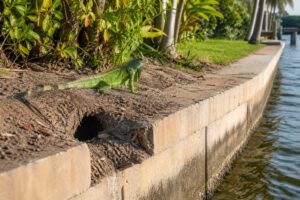
If iguanas are already active on the property, tree guards may be part of a larger humane control plan. Prevention works best when paired with professional removal, burrow assessment, habitat modification, and exclusion strategies where appropriate. We do not use poisons, and we do not recommend unsafe do-it-yourself trapping. Our approach is professional, legal, and designed for real South Florida conditions.
8. Follow-Up Guidance for Long-Term Pressure Reduction
After installation, we explain what to watch for: new climbing attempts, droppings around guarded trees, feeding damage in nearby plants, and any changes in iguana routes. Wildlife pressure can change with weather, breeding activity, landscaping changes, and neighboring properties, so the best prevention plan is one that can be adjusted when needed.
Why South Florida Property Owners Choose SoFlo Iguana Pros
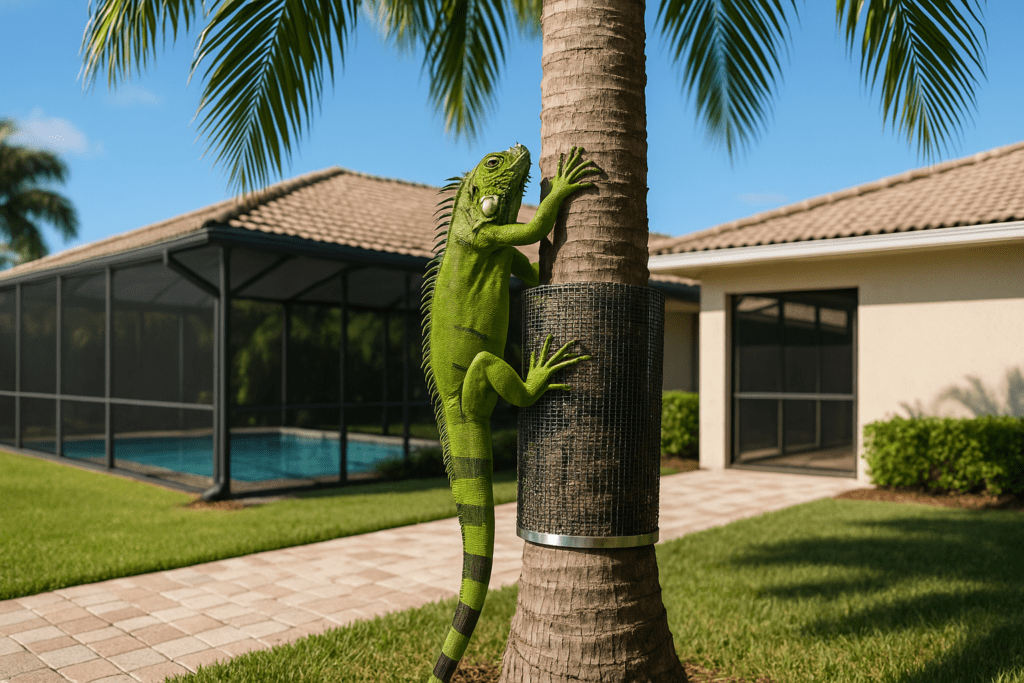
We understand how iguanas use palm trees here. A palm in South Florida is not just a decorative feature. To an iguana, it can be a lookout tower, escape route, feeding platform, and shortcut to the pool cage. Our tree guard recommendations are based on how iguanas actually move through local yards, waterfront lots, golf communities, and commercial landscapes.
We focus on prevention, not panic. Seeing iguanas in the trees can be frustrating, especially when droppings are landing near the pool, patio, driveway, or children’s play area. We help you address the access point calmly and professionally with a prevention method that makes the property less inviting without harming the tree or relying on dangerous products.
We tailor the installation to the property. A coconut palm near a dock is different from a cluster of palms beside a pool enclosure. A commercial courtyard is different from a private backyard in a canal neighborhood. We consider tree type, trunk texture, visibility, irrigation, landscaping, nearby structures, and the level of iguana activity before recommending a setup.
We use humane, legal control language and methods. Iguana management in Florida should be handled carefully. Our work is centered on humane removal support, exclusion, habitat changes, and prevention. We never present poisons as a solution, and we do not give customers risky trapping instructions that could injure people, pets, or wildlife.
We help protect expensive landscaping. Palms, fruit trees, flowering plants, and carefully maintained beds are a major investment. Tree guards can help reduce the repeated climbing that leads to feeding damage, broken fronds, droppings, and ongoing iguana activity around high-value landscape areas.
We know the customer concerns are practical. Most people calling about iguana tree guards are not looking for a science lecture. They want fewer iguanas in the palms, less mess by the pool, less damage to plants, fewer animals dropping onto the lawn from above, and a cleaner-looking property. That is exactly what this service is built to support.
We serve South Florida conditions every day. Heat, humidity, salt air, irrigation overspray, fast plant growth, and year-round wildlife activity all affect prevention work. A barrier that might make sense somewhere else may not hold up or look right here. SoFlo Iguana Pros brings local field experience to each tree guard installation and prevention plan.
Ready to Solve This Iguana Problem?
If iguanas are climbing your palms, reaching your roofline, dropping into your pool area, or using trees as a daily travel route, do not wait for the damage and mess to keep building. SoFlo Iguana Pros can inspect the access points, recommend the right prevention strategy, and install Iguana Tree Guards that help reduce climbing pressure on your South Florida property.
Call SoFlo Iguana Pros today at (561) 735-1975 to schedule humane iguana prevention service and ask about professional Iguana Tree Guards for your home, HOA, resort, waterfront property, or commercial landscape.