In South Florida, it’s not uncommon for homeowners to spot iguanas lounging on their roofs, often causing concern about property damage or safety. Understanding how these reptiles make their way onto rooftops is the first step in preventing unwanted visitors and managing their presence effectively. This article explores the common routes iguanas use to access roofs, practical removal advice, and how to protect your home in a humane, legal manner.
Why Do Iguanas Climb Onto Roofs?
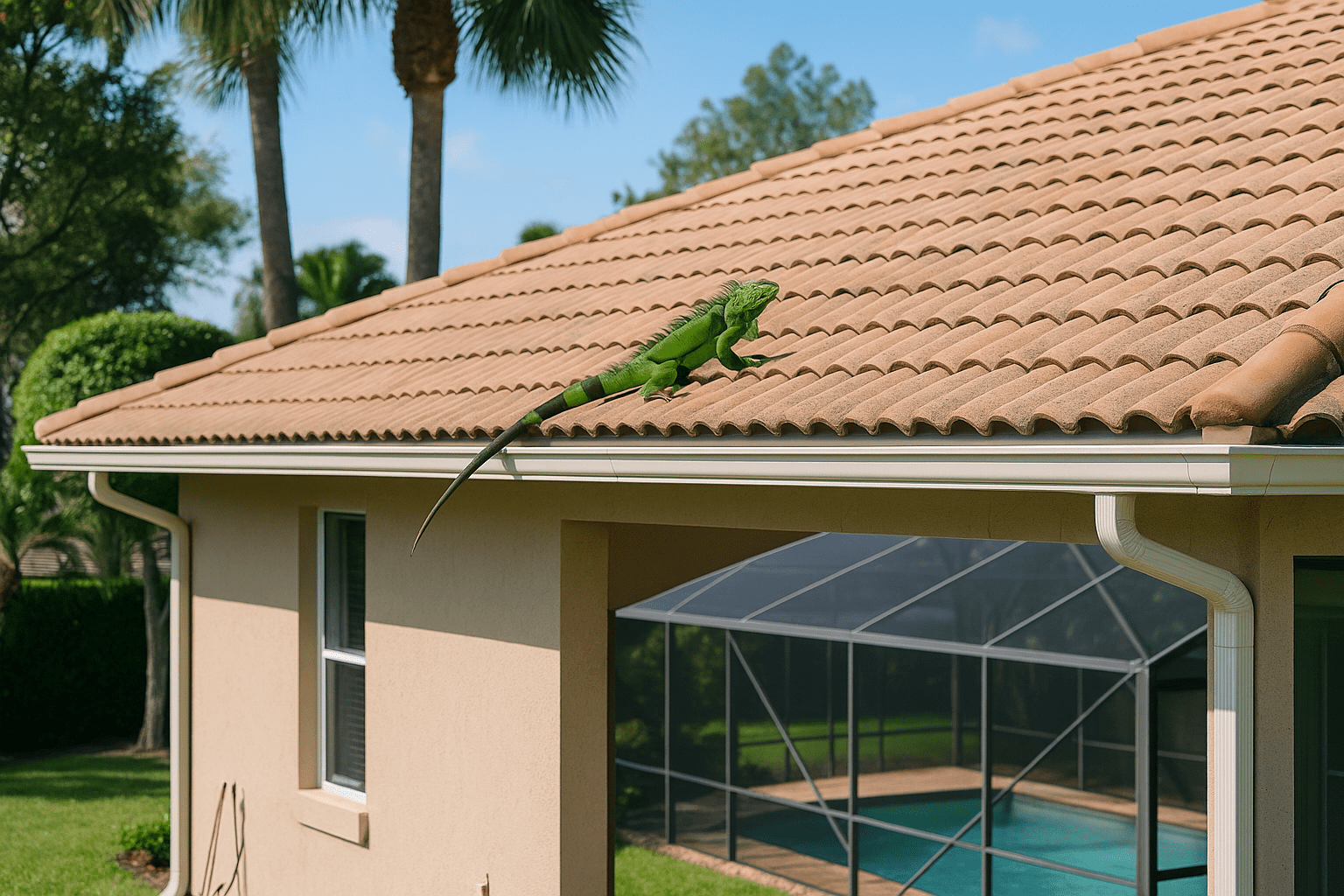
Iguanas are excellent climbers, naturally drawn to elevated spots for basking in the sun, escaping predators, or scouting territory. Roofs offer warm, open areas that mimic their preferred natural habitats. In South Florida’s warm climate, rooftops become ideal sunning spots, especially during cooler months or early mornings.
Common Pathways: Trees and Branches Near Roofs
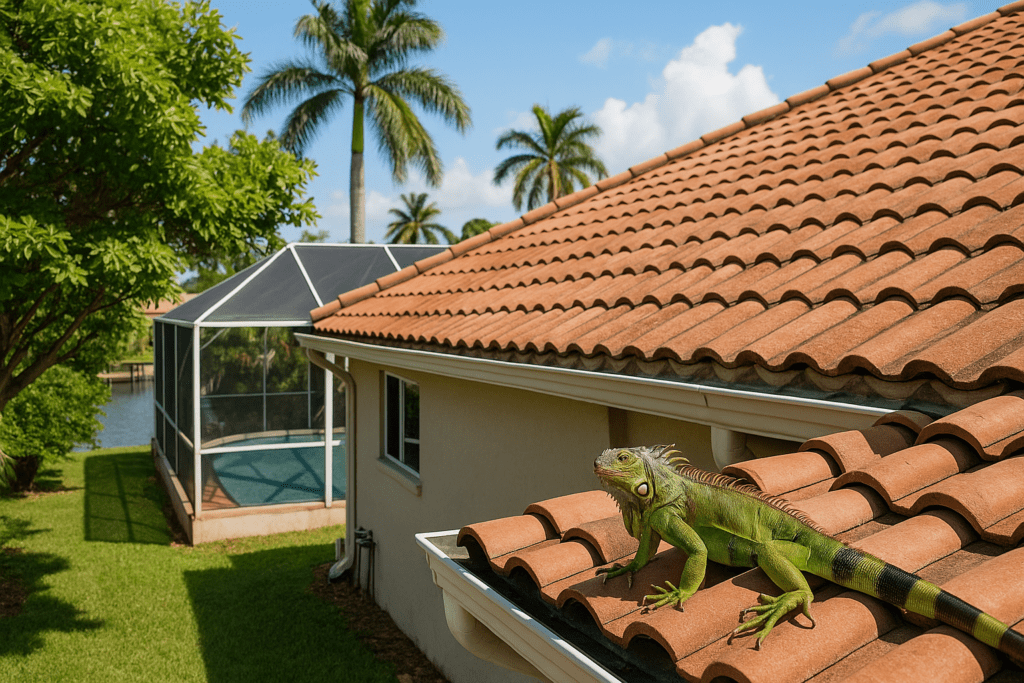
One of the primary ways iguanas access roofs is by climbing nearby trees. Trees with branches hanging close to or overhanging the roof provide a convenient bridge. Iguanas can easily shimmy across branches and leap onto roofs without touching the ground.
Homeowners should inspect their property for:
- Large canopy trees close to the house
- Branches extending over roof edges or gutters
- Vines or shrubs that connect trees to the structure
Pruning these branches away from the roofline reduces iguana access points and helps deter these reptiles from using your home as a perch.
Roof Gutters: A Climbing Highway
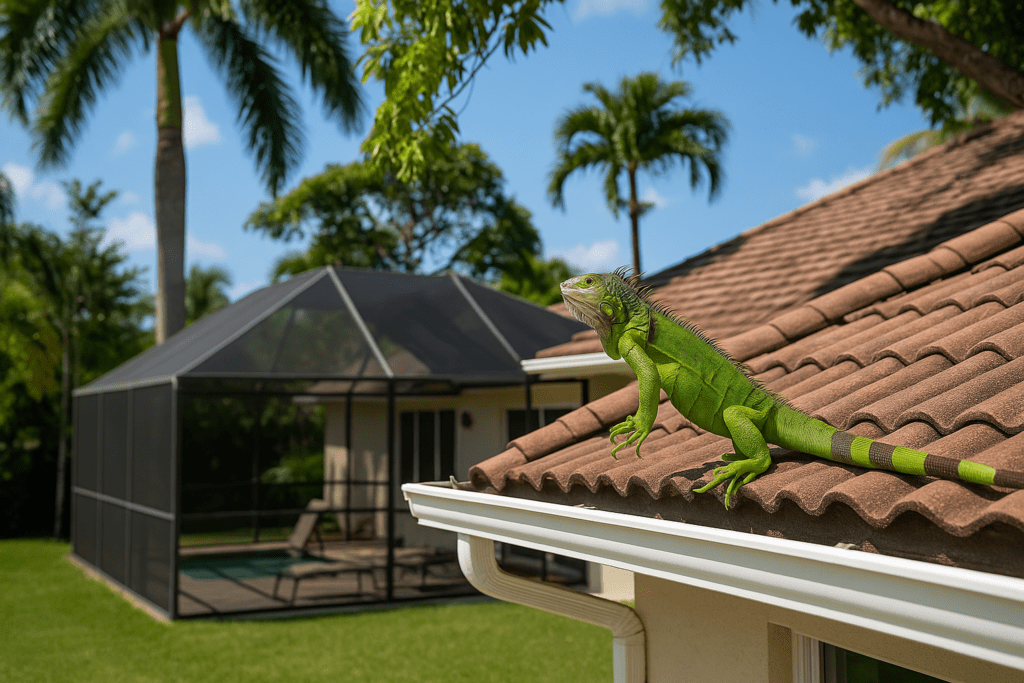
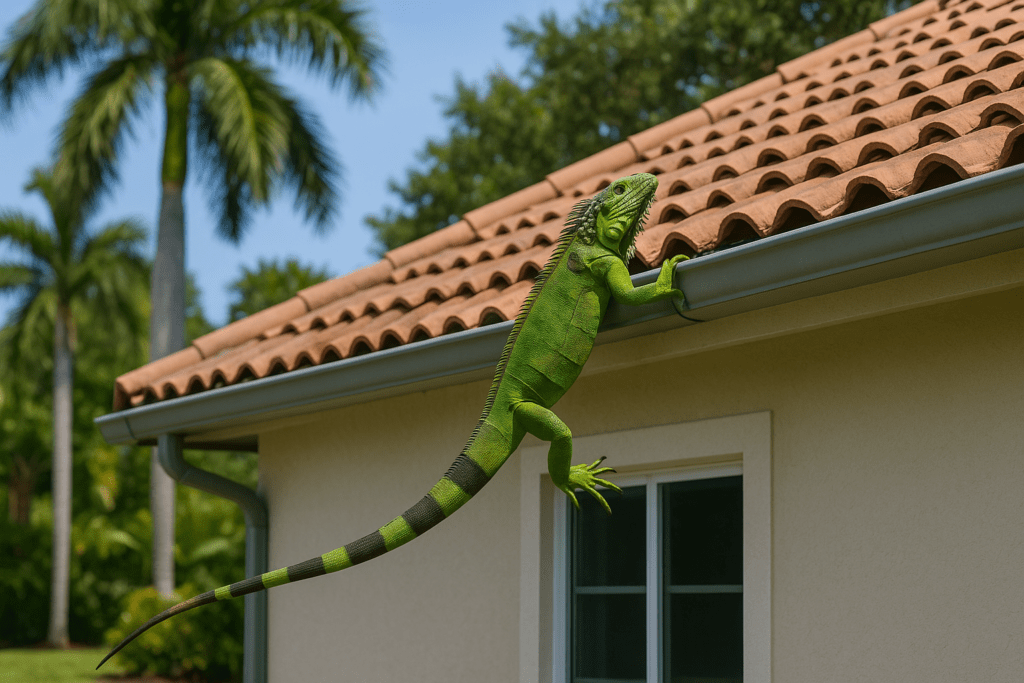
Gutters and downspouts serve as another route for iguanas to reach roofs. Their sharp claws grip the textured metal or vinyl surfaces, allowing them to climb vertically with ease. Once at the top of a downspout, iguanas can traverse gutters to reach the roof edge.
Maintaining gutters is key to discouraging iguanas:
- Keep gutters clean from debris that might attract prey like insects or small animals
- Consider installing gutter guards or covers
- Fill gaps or holes that may assist in climbing
Humane Removal: Trapping and Handling Tips
If iguanas become frequent roof visitors, humane removal may be necessary. South Florida residents should be aware that regulations protect wildlife, so trapping and relocation must be done responsibly.
Here are some practical tips for humane iguana trapping:
- Choose the Right Trap: Use a cage trap designed for reptiles, large enough to comfortably enclose an iguana.
- Bait Selection: Iguanas are herbivores attracted to leafy greens like collard greens, lettuce, or fruits such as mango and papaya.
- Placement: Set traps near common iguana access points such as tree bases, gutters, or roof edges where they frequent.
- Check Traps Frequently: To minimize stress and ensure humane treatment, traps should be monitored multiple times daily.
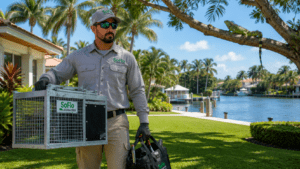
- Contact Professionals: For safe handling, relocation, and compliance with local laws, consider hiring experts who specialize in humane wildlife control.
Safety Precautions When Dealing with Roof Iguanas
While iguanas generally avoid humans, they can become defensive when cornered. Approaching iguanas on roofs or ladders presents risks, particularly in slippery or unstable areas.
To stay safe:
- Avoid climbing onto the roof alone
- Wear gloves and protective clothing
- Do not attempt to grab or scare iguanas aggressively
- Consider professional removal services if you are uncomfortable or unsure
Preventive Measures to Keep Iguanas Off Your Roof
Prevention is often more effective than removal. To discourage iguanas from climbing your roof:
- Trim back tree branches and shrubs near the home
- Maintain and repair gutters regularly
- Remove food sources such as fallen fruit or garden plants iguanas favor
- Install physical barriers like mesh guards on gutters and downspouts
- Use motion-activated sprinklers or lights to deter nocturnal visitors
FAQ: Common Questions About Iguanas on Roofs
Can iguanas damage my roof?
While they do not chew roofing materials, iguanas can dislodge shingles or gutters and leave droppings that may stain surfaces.
Is it legal to trap and relocate iguanas in South Florida?
Regulations vary by county. Humane trapping and relocation require compliance with local wildlife laws; consulting professionals ensures legal handling.
How can I safely remove iguanas from my roof?
Using humane traps near access points is effective. Professional wildlife control services can manage removal safely and responsibly.
Do iguanas pose a health risk?
Iguanas can carry salmonella bacteria, so avoid direct contact and wash hands thoroughly after handling traps or cleaning areas they frequent.
Will trimming trees completely stop iguanas from reaching my roof?
Trimming reduces access but may not eliminate it entirely. Combining multiple preventive methods is best.
Contact SoFlo Iguana Pros for Expert Help
If iguanas are making themselves at home on your South Florida roof, SoFlo Iguana Pros offers experienced, humane wildlife control services tailored to local conditions. We prioritize legal and ethical removal methods that protect both your property and the iguanas. Call us today at (561) 735-1975 to schedule an inspection or learn more about keeping your home iguana-free.