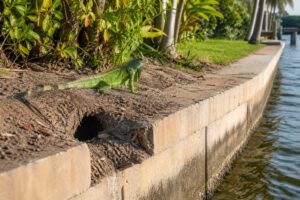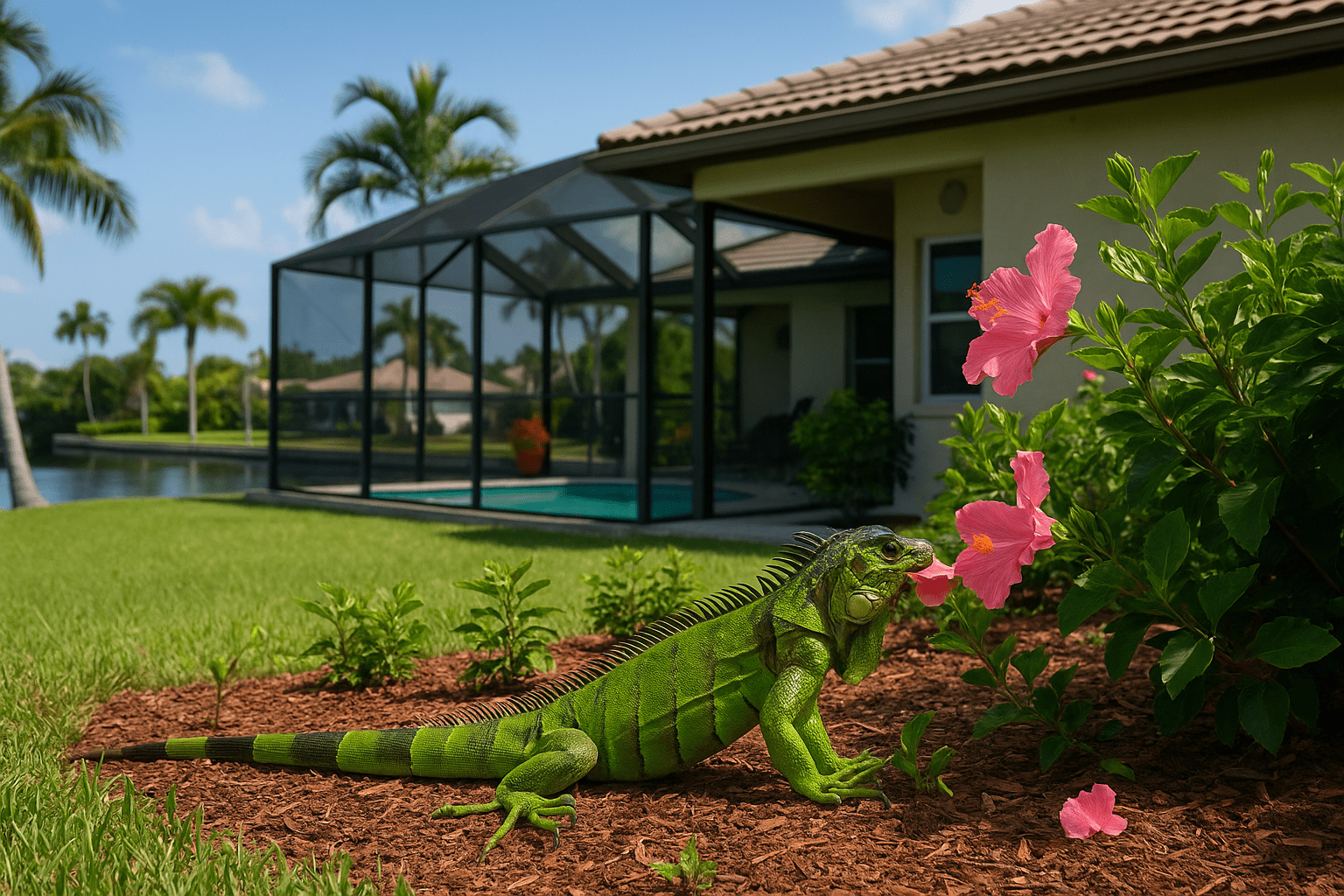
In South Florida, green iguanas have become a common sight in many neighborhoods, often causing concern for homeowners, landscapers, and gardeners. Understanding how iguanas move through your property can be key to managing their presence effectively. One of the most reliable ways to anticipate iguana behavior is by observing their food sources. This guide explains how iguanas’ feeding habits influence their movement patterns, offering practical insights for South Florida residents seeking humane wildlife control solutions.
Why Food Sources Dictate Iguana Movement
Iguanas are primarily herbivores, relying heavily on a variety of plants, fruits, and flowers. Their movement across a landscape is closely tied to the availability of these food sources. In South Florida’s warm climate, lush vegetation provides year-round feeding opportunities, which means iguanas often travel between multiple feeding spots daily.
Recognizing which plants attract iguanas helps predict their routes, enabling homeowners to take targeted action before iguanas cause significant damage. Understanding this relationship is also critical for setting effective, humane traps or deterrents.
Common Iguana-Favored Plants in South Florida

Knowing what plants iguanas prefer can help you identify hotspots for activity around your property. Some popular choices include:
- Young leaves of hibiscus and bougainvillea
- Fruit trees such as mango, papaya, and banana
- Ornamental plants like crotons and caladiums
- Vegetables in home gardens, especially leafy greens
Because iguanas favor tender, nutrient-rich plant parts, they often focus on new growth and fruiting bodies, which can lead to visible damage and loss of plants.
How Seasonal Changes Affect Iguana Movement

Although South Florida’s climate is relatively stable, seasonal shifts still influence iguana feeding patterns. During the cooler months (December through February), iguanas reduce their activity but still seek out the most nutritious and accessible food sources. In warmer months, they are more active and cover larger areas to find a variety of plants and fruits.
Homeowners should monitor plant damage more closely during spring and summer when iguanas are most active. Identifying feeding sites during these times can help in planning humane control measures.
Setting Up Humane Traps Using Food as Bait

When humane trapping is necessary, using the right bait significantly increases success. Bait selection should mimic the iguanas’ natural food preferences to entice them effectively. Some effective baits include:
- Fresh leafy greens (collard greens, kale)
- Pieces of ripe fruit (mango, papaya, banana)
- Vegetable slices such as cucumber or squash
Place bait near known travel routes or feeding areas to increase the chance of capture. Always ensure traps are checked frequently to minimize stress on captured animals and comply with South Florida wildlife regulations.
Safety and Legal Considerations When Managing Iguana Movement
While iguanas can be a nuisance, it is important to approach their management responsibly. South Florida has specific guidelines regarding the humane treatment and removal of iguanas. Always handle traps and removal with care to avoid injury to both the animal and yourself.
Illegal relocation or release of iguanas into new areas can worsen problems and is prohibited by local laws. Engaging professional wildlife control experts ensures compliance with regulations and promotes ethical handling.
FAQs About Iguana Movement and Food Sources
Q1: Can I stop iguanas from eating my plants by removing their food sources?
A1: Removing or protecting favored plants can reduce iguana visits, but it’s often challenging to eliminate all food sources in South Florida’s lush environment. Combining plant protection with other humane deterrents is more effective.
Q2: Are homemade baits effective for trapping iguanas?
A2: Yes, homemade baits using fresh fruits and leafy greens work well, but placement and trap type are equally important for success.
Q3: How often should traps be checked?
A3: Traps should be inspected at least once daily to reduce stress and ensure humane handling of captured iguanas.
Q4: Do iguanas return to the same feeding spots?
A4: Iguanas tend to revisit reliable food sources regularly, making these locations ideal monitoring points.
Q5: Can I use pesticides to protect my plants from iguanas?
A5: Pesticides are not effective against iguanas and can harm other wildlife and pets. Focus on physical barriers and humane deterrents instead.
Conclusion: Understanding Food Sources to Manage Iguana Movement
Tracking iguana movement through their food sources offers South Florida homeowners a strategic advantage in managing these reptiles humanely and effectively. By identifying preferred plants, monitoring seasonal behaviors, and using appropriate bait for traps, you can protect your landscape while respecting local wildlife regulations.
For expert advice, humane removal, and tailored solutions in South Florida, contact SoFlo Iguana Pros at (561) 735-1975. Our team is ready to help you manage iguana activity with care and professionalism.