Iguanas Digging Under My Seawall
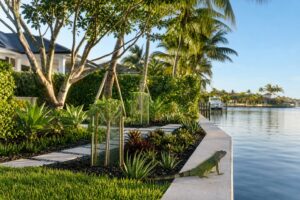
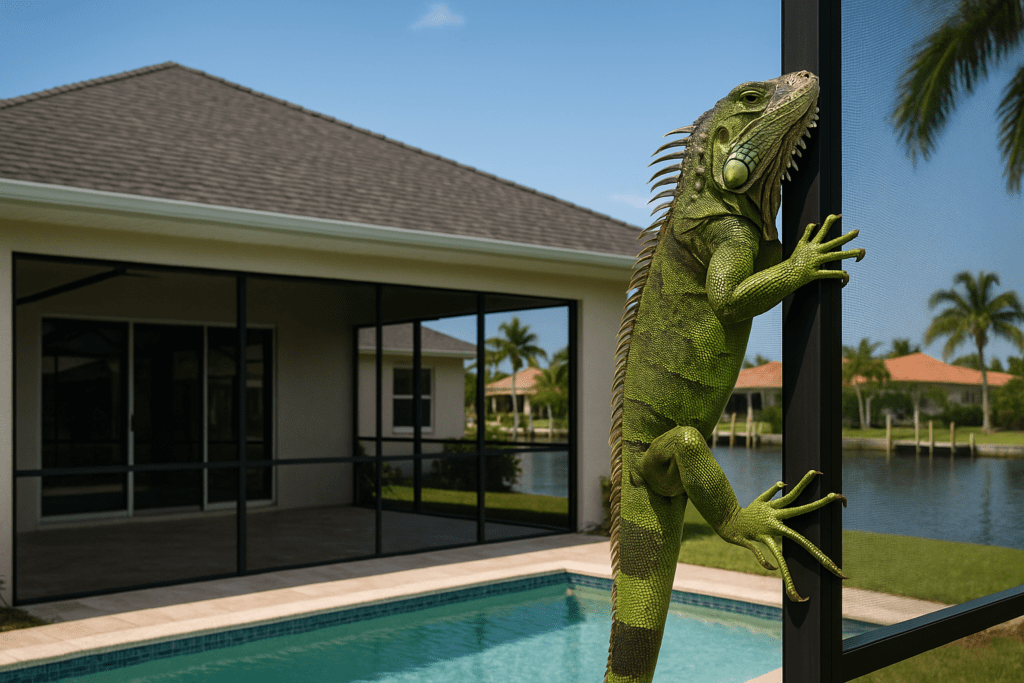
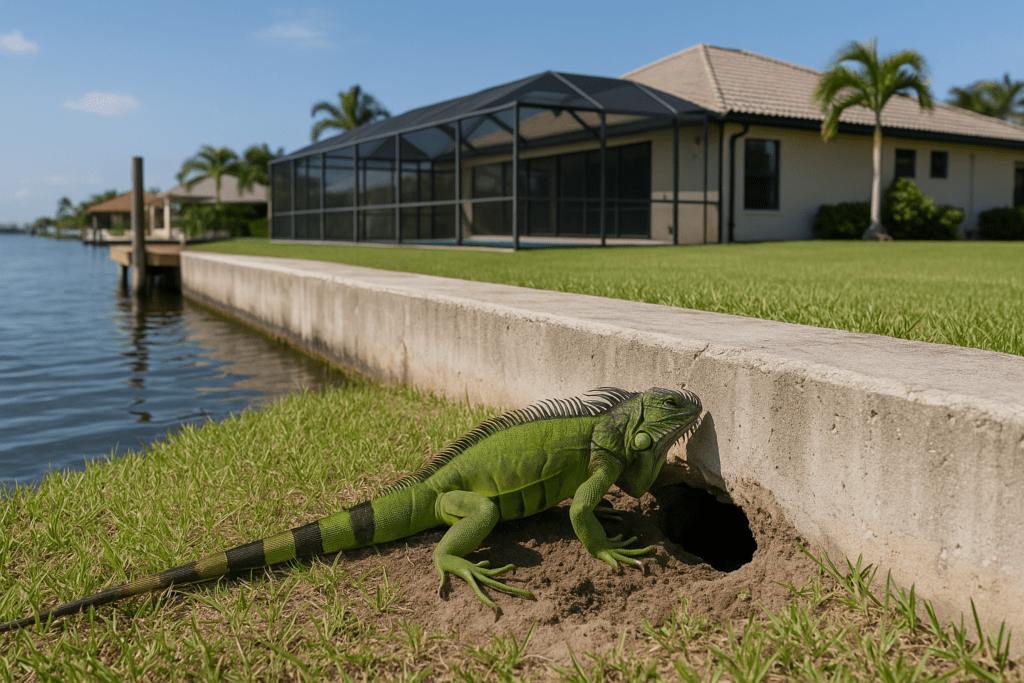
If you are searching for help with iguanas digging under my seawall, you are probably seeing more than a few lizards sunning by the water. You may be noticing loose soil at the seawall cap, holes near the canal edge, dirt washing out after rain, or a burrow opening beside a dock, patio, pool deck, or boat lift. In South Florida, waterfront properties give iguanas exactly what they like: warmth, vegetation, open sun, and quick escape routes into the canal.
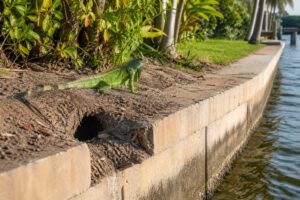
Seawall burrows deserve attention before they turn into a bigger property problem. Iguanas can dig into soft soil behind seawalls, under landscape beds, around dock pilings, and along narrow access strips where the yard meets the water. The concern is not just the animal activity. It is the soil loss, water intrusion, voids, erosion, and safety issues that can follow. SoFlo Iguana Pros helps homeowners, HOAs, marinas, and waterfront property managers inspect the activity, identify access routes, and build a humane, legal control plan before prevention or repairs are attempted.
Why Iguanas Digging Under My Seawall Is More Than a Nuisance
Burrows Can Create Hidden Voids Behind the Wall
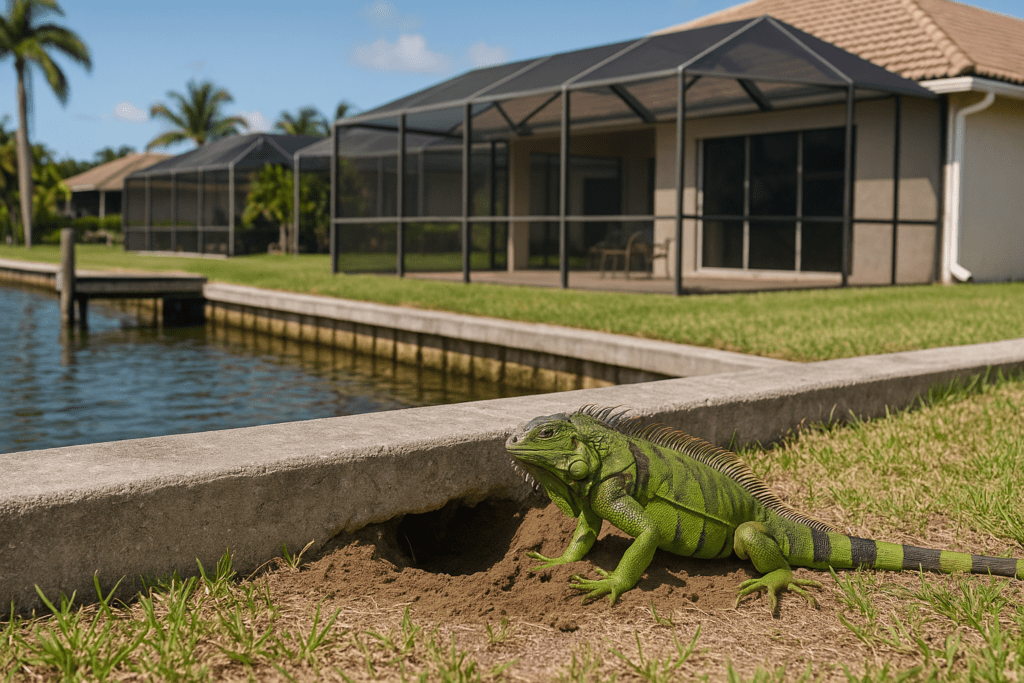
A seawall can look solid from the canal while the soil behind it is being disturbed. Iguanas often dig where the ground is softer, especially near planting beds, sprinkler lines, drain outlets, and small gaps at the edge of hardscape. Over time, those tunnels may loosen soil and create pockets that are not obvious until a section settles, a paver dips, or soil starts disappearing after heavy rain.
Canal Edges Give Iguanas a Perfect Escape Lane
Waterfront iguanas are not wandering randomly. They use the canal as a fast travel route and the seawall as a warm resting area. A dock ladder, riprap section, neighbor’s overgrown hedge, low branch, or boat lift can become part of the same daily pathway. That is why seawall iguana problems often return when only the visible hole is addressed and the access pattern is ignored.
Dock Areas and Patios Often Show the First Warning Signs
Many owners first notice the issue while walking near the dock or cleaning the patio. You may see fresh dirt, claw marks, droppings, collapsed turf, or a hole angled back toward the yard. These signs matter because docks, walkways, pool decks, and seawall caps are high-use areas. A burrow near foot traffic or structural features should be inspected before anyone assumes it is just a shallow hole.
Repair Work Should Not Start Until Activity Is Checked
Filling a burrow without understanding whether iguanas are still using it can lead to repeated digging, wasted repair money, and more frustration. Before soil is replaced, pavers are reset, erosion areas are patched, or exclusion materials are installed, the active wildlife pressure should be evaluated. The better the inspection, the smarter the prevention plan.
Our Iguana Seawall Burrow Inspection and Control Plan
1. Waterfront Activity Assessment
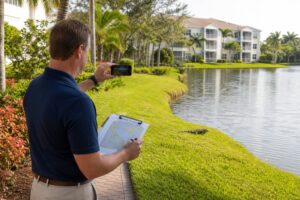
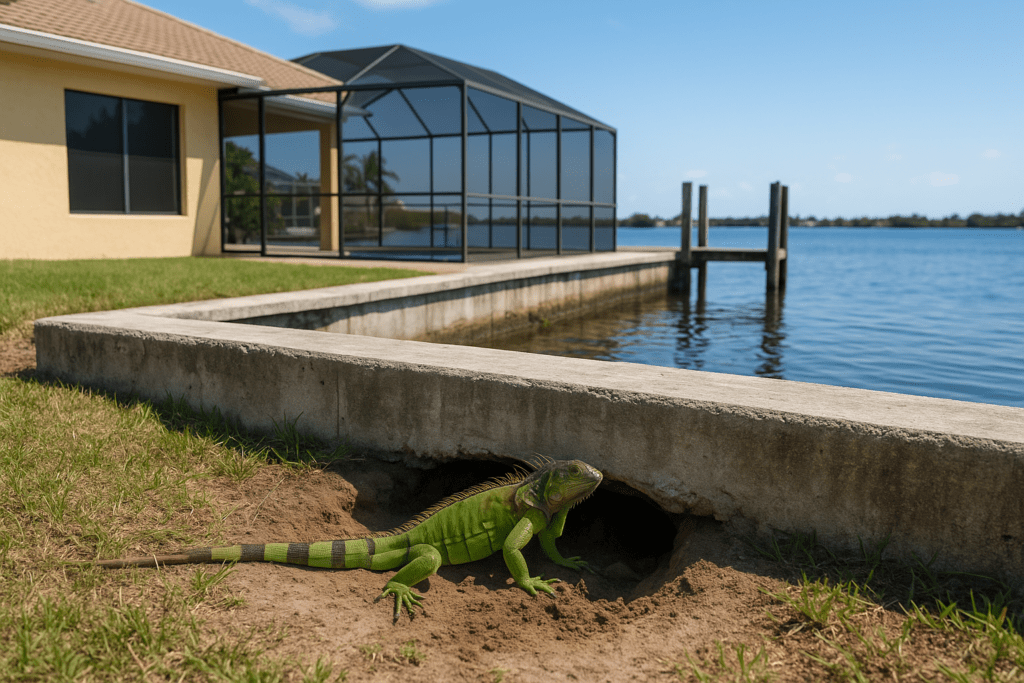
We begin by looking at the seawall area the way iguanas use it. That includes canal frontage, seawall cap, dock edges, landscape beds, side yards, pool enclosures, boat lifts, drainage points, and nearby vegetation. The goal is to determine where iguanas are entering, where they are basking, and where digging is concentrated.
2. Burrow and Soil Disturbance Inspection
Next, we inspect visible holes, loose fill, washout areas, and soft spots along the seawall. We look for fresh dig marks, tunnel direction, repeated use, and signs that soil is moving toward the canal. We do not treat every hole the same. A small test scrape near a shrub is different from an active burrow at the seawall edge near a dock piling.
3. Access Route Mapping
Iguana control around seawalls works best when travel routes are understood. We identify common entry points such as neighbor-to-neighbor fence gaps, canal ledges, low seawall sections, floating docks, shoreline vegetation, and open side yards. This helps us explain why the activity is happening and what can be done to reduce repeat visits.
4. Humane Removal Recommendations
When active iguanas are present, we recommend lawful, humane control options appropriate for the property and the level of activity. Our work is professional and safety-minded. We do not use poisons, and we do not provide risky do-it-yourself trapping instructions. The objective is to reduce pressure on the seawall while following Florida rules and responsible wildlife practices.
5. Seawall-Specific Prevention Planning
Prevention near a seawall is different from prevention in a typical backyard. Materials must account for water exposure, drainage, landscaping, lawn service, dock access, and visual appearance. We may discuss habitat modification, vegetation trimming, access reduction, burrow monitoring, and targeted exclusion concepts that make sense for waterfront conditions.
6. Coordination Before Soil or Structural Repairs
If erosion or settlement is already visible, we can help you understand what should be inspected from a wildlife activity standpoint before repair crews begin. We are not seawall engineers, but we know how iguana burrows behave along South Florida canals. Addressing active digging before fill, paver, turf, or seawall repair helps reduce the chance of immediate re-disturbance.
7. Dock, Pool, and Patio Protection Focus
We pay close attention to the areas your family, tenants, guests, or customers use most. That may be the dock walkway, the pool deck, a waterfront dining area, or the narrow strip between the seawall and a hedge. Iguanas often choose quiet corners, but the damage can affect the places people walk, sit, launch kayaks, or board boats.
8. Follow-Up Strategy for Ongoing Waterfront Pressure
South Florida canal properties can experience recurring iguana pressure because the animals move freely along waterways. We help set realistic expectations and recommend follow-up service when needed. The goal is not to promise that wildlife will never appear again. The goal is to reduce activity, catch new digging early, and keep your seawall area from becoming an easy burrow site.
Why South Florida Property Owners Choose SoFlo Iguana Pros
We understand canal-front properties. Iguana problems behind a seawall are not the same as iguanas on a roof or in a garden. Waterfront work requires attention to soil, access, docks, neighboring properties, and waterline behavior. We focus on the details that matter along South Florida canals.
We inspect before recommending prevention. A seawall hole should not be covered just because it is inconvenient. We look at activity level, location, travel routes, and risk factors first. That gives you a clearer plan and helps avoid spending money on the wrong fix.
We use humane and legal methods. Florida property owners need responsible help, not guesswork. Our approach is professional, compliant, and built around safe control practices. No poisons. No careless shortcuts. No advice that puts you, your neighbors, or the animals at unnecessary risk.
We speak homeowner and property-manager language. You may be worried about a sinking paver, a dock area guests use, a landscaping contract, a seawall repair estimate, or complaints from residents. We explain what we see in plain English so you can make practical decisions.
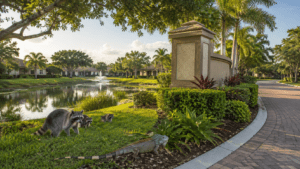
We know South Florida iguana pressure is persistent. From Boca Raton canals to Palm Beach County lakefront communities and coastal neighborhoods farther south, iguanas use waterways like highways. A good plan has to account for the local environment, not pretend the property exists in a bubble.
We help protect the value of waterfront space. A seawall is not just a boundary. It supports how you use your backyard, dock, boat, pool area, and view. When iguanas start digging along that edge, quick, informed action can help reduce damage and keep small warning signs from becoming expensive surprises.
Ready to Solve This Iguana Problem?
If you are dealing with iguanas digging under my seawall, do not wait until the soil loss, burrow openings, or erosion concerns get worse. Call SoFlo Iguana Pros at (561) 735-1975 for professional South Florida iguana seawall burrow inspection and control. We will evaluate the waterfront access routes, check the digging activity, and help you build a smart plan before prevention or repair work begins.