You can't landscape iguanas away entirely, but the right plant list makes a yard far less of a buffet. Here are nine that hold up in Palm Beach County.
Iguanas eat plants, and some plants they eat with real enthusiasm — hibiscus and bougainvillea might as well be a menu board. Others they leave mostly alone: too tough, too aromatic, too fibrous, or just not to their taste. You can't landscape a yard into being iguana-proof, but you can stop planting the buffet and lean on the things they tend to skip.
A quick honesty note before the list: 'iguana-resistant' means less preferred, not immune. A big enough population that's hungry enough will sample almost anything, and young plants get grazed more than established ones. Think of this as tilting the odds — fewer of the plants they love, more of the ones they ignore, so the yard stops advertising itself.
Why some plants get left alone
Iguanas favor soft, colorful, tender foliage and flowers — the more like a salad, the better. They tend to avoid plants that are tough and leathery, strongly aromatic, spiny, milky-sapped, or coarse and fibrous. That's the pattern behind the list: pick for texture and chemistry the animal finds unrewarding, and you drop off their radar.
It's also why native and Florida-friendly choices tend to do double duty here — many of them are tough, drought-adapted plants that happen to be low on an iguana's preference list, and they hold up better to our heat and salt air besides.
Nine that tend to hold up
None of these is a guarantee, but in Palm Beach County yards these consistently take less grazing than the hibiscus-and-bougainvillea standard.
- Crotons — tough, leathery, colorful foliage that iguanas generally pass over.
- Oleander — rarely touched (it's toxic; site it away from kids and pets).
- Society garlic — the oniony scent tends to keep them off it.
- Ixora — firm foliage that usually holds better than tender flowering shrubs.
- Bird of paradise — coarse, upright leaves they mostly ignore.
- Milkweed — the milky sap makes it unappealing (and it feeds pollinators).
- Cordyline / ti plants — stiff, colorful, generally low on the menu.
- Firebush — a Florida native that takes some grazing but bounces back hard.
- Aloe and other tough succulents — fibrous and unappetizing to most iguanas.
Protecting the plants you won't give up
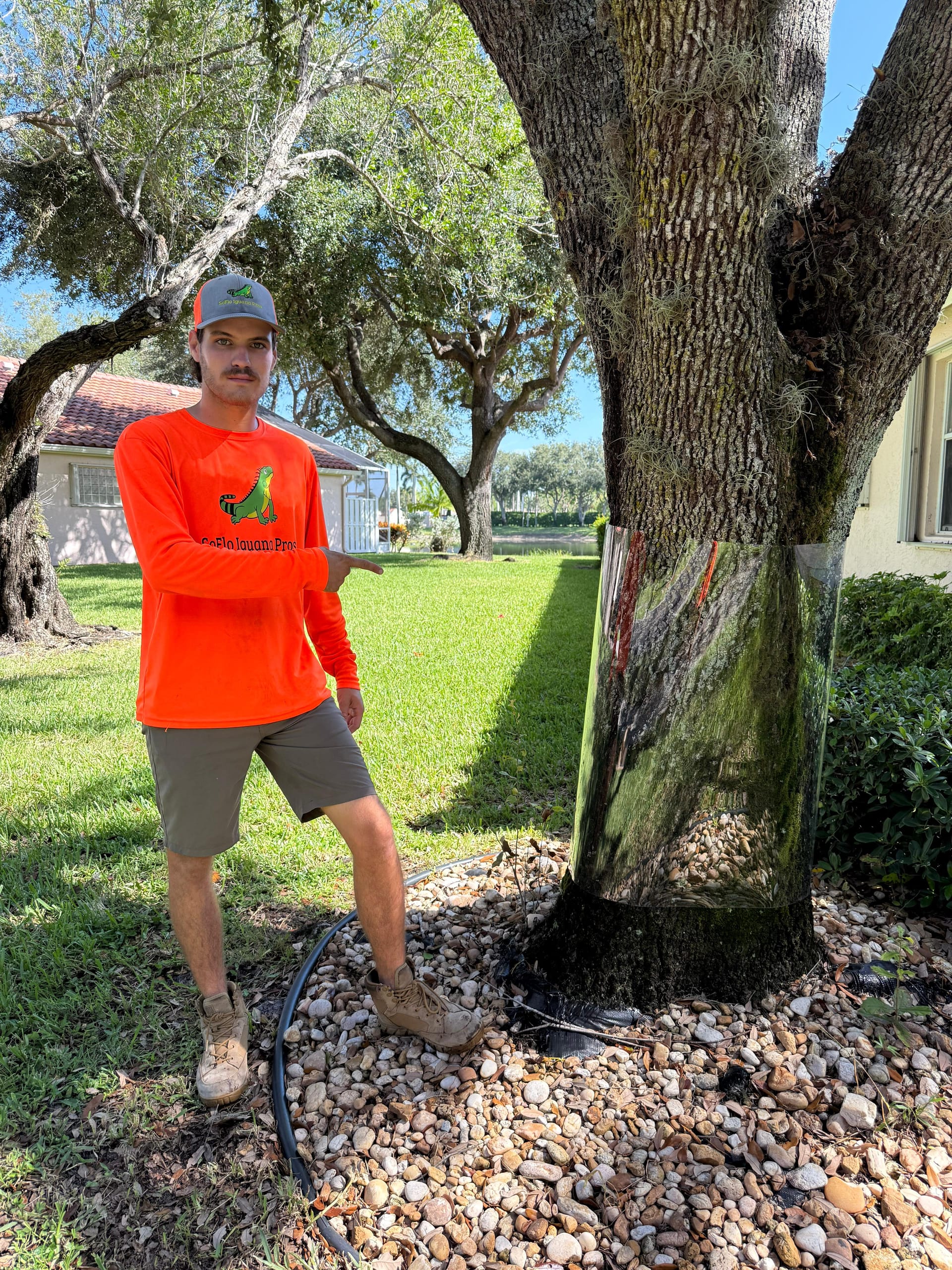
Most people have a hibiscus hedge or an orchid collection they aren't ripping out no matter what an iguana thinks, and that's fine. For the plants you love that iguanas also love, the answer is protection rather than replacement — cage the base of a prized specimen, plant tender favorites closer to the house and activity, and keep the iguana-candy away from the canal bank where the animals travel.
Placement is quietly half the battle. The same hibiscus is a magnet on the seawall and mostly ignored in a busy courtyard by the front door, because iguanas prefer to graze where they've got a fast escape to water and no people. Put the buffet where the traffic is, not where the water is.
Where planting fits in the plan
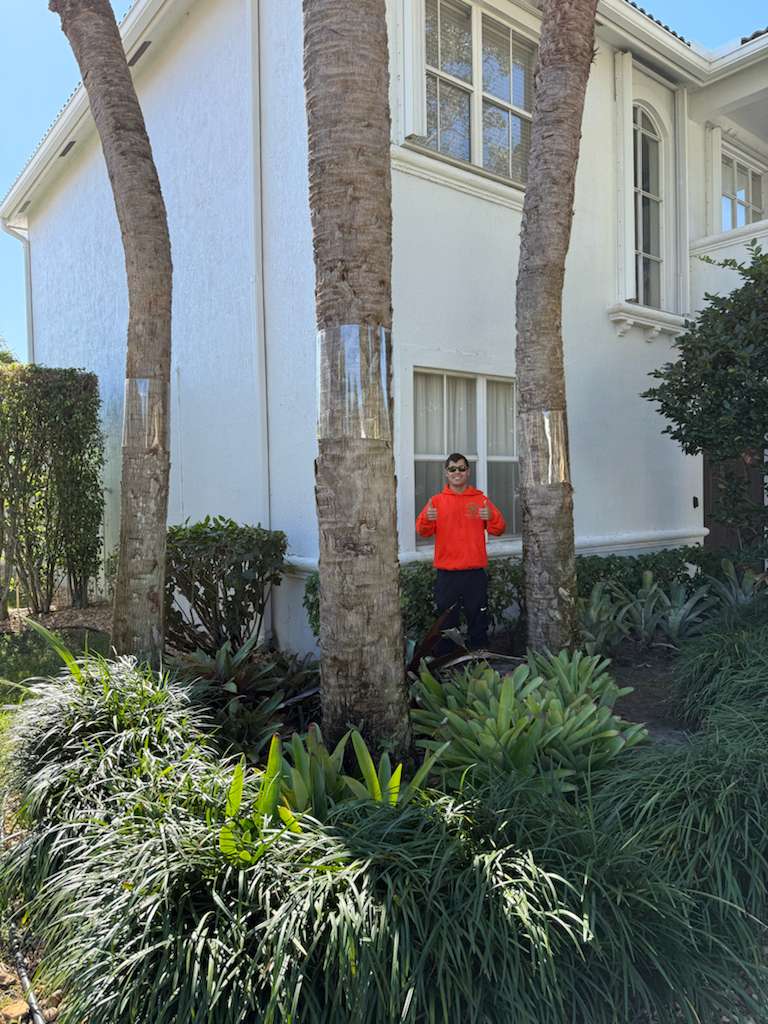
Swapping the plant list is prevention, not removal — it makes a yard less rewarding to settle in, but it won't clear a colony already denned in your bank. On a lightly pressured lot, a smarter plant palette plus a couple of tree wraps can be most of what you need. On a heavy waterfront, it's one layer alongside removal, burrow collapse, and climb-route guards.
Questions we hear
Is any plant truly iguana-proof?
No — 'resistant' means less preferred, not immune. A large, hungry population will sample almost anything, and young plantings get grazed more than mature ones. The right list tilts the odds heavily in your favor, but it works best paired with removing food sources and cutting off climb routes.
What plants should I stop planting?
The ones iguanas graze hardest: hibiscus, bougainvillea, and most soft flowering annuals, plus tender fruit and vegetable gardens near a canal. If you won't part with them, cage them or move them away from the waterline where iguanas travel, and keep the tough, aromatic plants near the bank instead.
Will changing my plants get rid of iguanas I already have?
It won't clear a resident colony — that takes removal and burrow work. What a smarter plant palette does is make the property less worth settling in, so once it's cleared it's likelier to stay that way. Think of it as prevention that keeps new animals from moving in.
Services in this guide