Iguanas will graze your hibiscus and orchids to stubs. Here's what actually protects a South Florida garden — and why the spray in the store won't.
If you take any pride in your landscaping down here, iguanas are heartbreaking. They graze the exact plants we love — hibiscus, bougainvillea, orchids, and any soft new growth — right down to stubs, and they'll come back to a good salad bar every day. The frustrating part is that the products marketed to stop them, mostly repellent sprays, are the least effective option and the first thing everyone buys.
Deterring iguanas from a garden is really about two things: making the plants harder to reach and eat, and making the plants they most love less available. Do those and you shift the pressure off your beds.
Why the sprays disappoint
Repellent and pepper or garlic sprays wash off in the first afternoon storm — and we get one most summer afternoons — and iguanas habituate to them within days when nothing bad actually follows the smell or taste. They're not worthless as a very short-term nudge, but as a garden strategy they drain your wallet and your patience. Save the money for the physical measures below, which actually hold.
Physical protection that works
The reliable garden defenses are mechanical. You're putting a barrier between the iguana and the plant, or elevating and caging the plants they can't resist. It's less glamorous than a spray bottle, but it's what still works next month.
- Cage or screen your most-grazed and most-prized plants, especially young growth and orchids.
- Raise vulnerable plants into hanging baskets or elevated beds they can't easily reach.
- Fence off a vegetable bed with fine mesh set flush to the ground so they can't slip under.
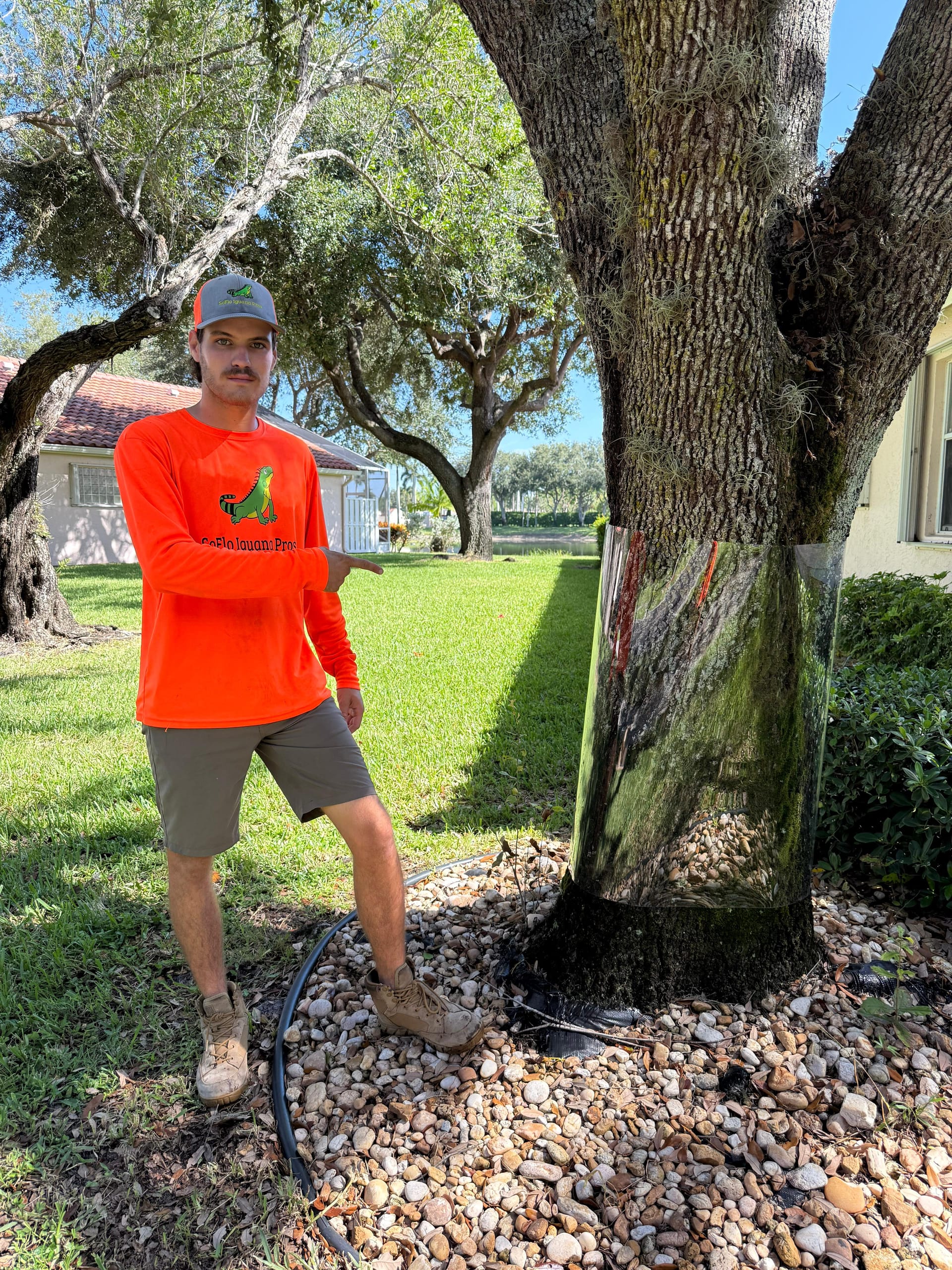
- Wrap nearby trees and pilings so they can't climb in from above onto elevated plantings.
Plant smarter
You can also design the garden to be less of a draw. Iguanas favor soft, colorful, flowering ornamentals and fruit; they tend to leave tougher, more fibrous, and strongly aromatic plants alone. Leaning your near-water and high-exposure beds toward plants they find less appetizing — and keeping the hibiscus-and-bougainvillea buffet away from the seawall where they enter — reduces the reward for the trip.
Nothing is truly iguana-proof as a plant, so treat this as tipping the odds, not a guarantee. But shifting the most tempting plants away from the bank and toward protected spots genuinely helps.
The part a garden fix can't do
Here's the honest limit: protecting the garden doesn't clear the iguanas. If a colony is denned in your bank, caging the orchids just means they graze whatever's next on the menu and keep fouling the yard. On a pressured lot, the durable answer is to pair your garden defenses with removal of the residents and cutting their climb routes — otherwise you're gardening in a zoo.
If the grazing is relentless and the garden fixes aren't holding, that's the sign you've got resident pressure, not just hungry passers-by. A free property walk will tell you whether a single $125 clear-out sorts it or whether a monitored program at $99 a month, no lock-in, fits the pressure you're under.
Questions we hear
Do iguana repellent sprays protect a garden?
Not durably. They wash off in the first storm and iguanas ignore them within days once nothing bad follows. Physical measures — caging prized plants, raising them out of reach, fencing beds with fine mesh, and cutting climb routes — are what actually protect a garden month to month.
What plants do iguanas avoid?
They favor soft, colorful, flowering ornamentals and fruit like hibiscus, bougainvillea, and orchids, and tend to leave tougher, more fibrous, strongly aromatic plants alone. No plant is truly iguana-proof, but shifting the most tempting ones away from the water's edge and toward protected spots tips the odds in your favor.
Why do they keep eating my garden no matter what I try?
Usually because a colony is denned nearby and your garden is simply the closest food. Protecting individual plants helps, but if they're resident in your bank they'll keep grazing and fouling the yard. Relentless damage despite your defenses is the sign you need removal, not just deterrents.
Services in this guide